G6 G9 Geely HS MG Starray Xpeng Tests Rankings SUV
2026 Ranking: The 5 Premium Chinese SUVs with the Best On-Road Dynamic Behaviour
 Iván Navarro
30 September 2026
5 min.
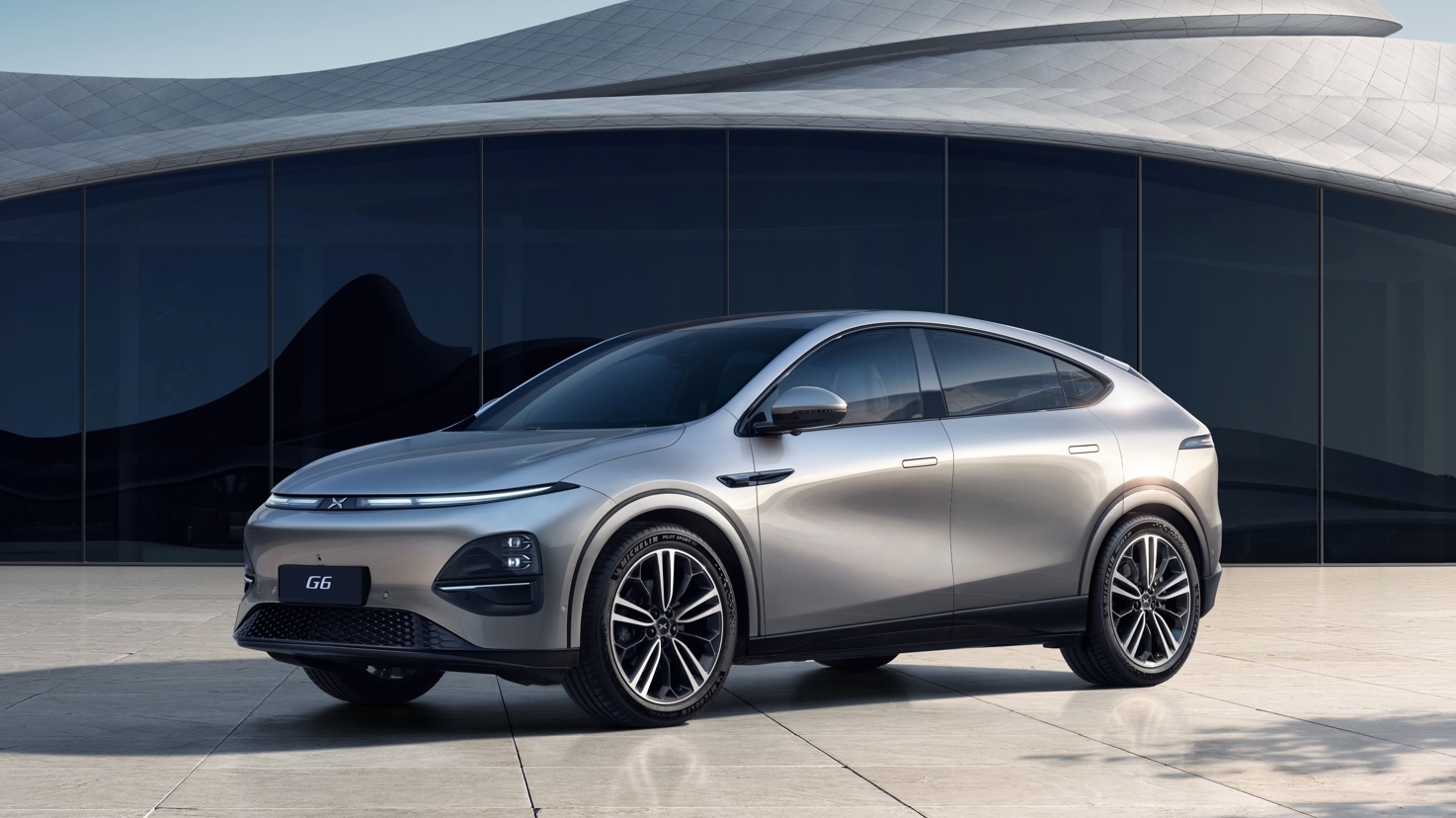
We analyse which premium Chinese SUVs for 2026 offer the best on-road dynamic behaviour on Spanish roads, using verifiable technical criteria for platform, suspension and steering.
The conversation about Chinese cars in Spain has shifted its axis. It is no longer enough to talk about aggressive pricing or giant screens: whoever pays more than 40,000 euros expects the car to perform at the same level on a mountain pass, on a motorway slip road or at a roundabout taken with some spirit. That is where most of them fall short. And where a few are starting to unsettle the European benchmarks.
This ranking deliberately leaves out BYD. Not for lack of product — it has plenty, and in volume — but because, in our view, the brand has stopped being at the centre of the premium Chinese conversation in Spain during 2026: the editorial focus has moved towards manufacturers investing more visibly in chassis, dynamic tuning and high-performance architectures. With that clarified, here are the five that do make the cut.
What we mean by “dynamic behaviour” in a premium SUV
We are not talking about lapping the Nürburgring. We are talking about something more prosaic and more useful: steering with real feel at the centre, a front end that does not give up at the first change of direction, damping that filters without floating, and a weight distribution that lets the driver trust the rear axle when the road gets messy. In an SUV weighing 1,900–2,200 kg, each of these parameters matters — literally — more than in a compact.
The platform is what matters. The rest are nuances.
1. XPENG G6 — from 48,600 €
The G6 is, to my taste, the Chinese SUV that best translates the “dynamic premium” message into something measurable from the driver’s seat. It runs the SEPA 2.0 platform with an 800 V architecture, a structural battery and a near 50:50 weight distribution that you notice as soon as you chain two bends together. The steering has progressive consistency — something many Chinese rivals still fail to achieve — and the suspension, MacPherson at the front and multi-link at the rear, prioritises composure over soft comfort. The AWD version delivers 487 CV with a linearity that is surprising for a young brand.
| Power | CV | WLTP range | Emissions label | Fuel |
|---|---|---|---|---|
| 358 kW | 487 CV | 510 km | 0 emissions | Electric |
We have already gone into its technical proposition in the full review of the XPENG G9, the big brother of the G6 and with many of the same chassis strengths.
2. LYNK & CO 08 — from 52,995 €
There is an interesting nuance here: the 08 shares the CMA 2.0 platform with Volvo and Polestar, which translates into a chassis with Swedish genes and its own tuning. The weight distribution — the electric block sits under the floor, combined with a compact combustion engine — helps the car feel planted even with the battery nearly empty. The steering is lighter than the G6’s, somewhat less communicative, but the damper-tyre combination allows high speeds without the 08 asking for mercy. As a plug-in PHEV it offers 200 km of electric range according to homologation, which in practice comes down to 150–160.
| Combined power | CV | Electric range | Emissions label | Fuel |
|---|---|---|---|---|
| 257 kW | 350 CV | 200 km WLTP | 0 emissions | PHEV |
If you are interested in the direct comparison with its natural rival within the Chinese ecosystem itself, we have already analysed the LYNK & CO 08 versus Omoda 9 duel.
3. Omoda 9 — from 52,053 €
The Omoda 9 arrives with an interesting proposition: the SHS (Super Hybrid System) with a three-speed gearbox dedicated to the electric motor and a division of tasks between combustion and electric that is considerably more sophisticated than the usual PHEV with a dry clutch. On the move, the 9 impresses with the composure of its multi-link rear end and steering that, while not a model of feel, is linear and predictable. That said, the damping setup leans somewhat towards comfort for my taste: in fast corners there is more body roll than a demanding driver would expect.
| Combined power | CV | Electric range | Emissions label | Fuel |
|---|---|---|---|---|
| 395 kW | 537 CV | 145 km WLTP | 0 emissions | PHEV |
4. Geely Starray EM-i — from 33,490 €
The Starray is the most affordable in the ranking and also the one that shows the most balance within its price bracket. It uses the CMA Evo platform shared with products from the Geely-Volvo group, a multi-link rear suspension and a tuning that — unlike many Chinese SUVs below 40,000 euros — does not sacrifice composure for comfort. The steering is artificial in the centre, and that has to be said, but when you load the front axle it responds more honestly than the segment average. As a plug-in hybrid it is effective without being passionate.
| Combined power | CV | Electric range | Emissions label | Fuel |
|---|---|---|---|---|
| 193 kW | 262 CV | 83 km WLTP | 0 emissions | PHEV |
5. MG HS — from 37,340 €
The HS enters the ranking almost as a reminder that MG’s Chinese parent (SAIC) has spent years working on chassis based on European foundations inherited from the British era. It is not the most sophisticated of the group, but its behaviour on open roads — steering with increasing weight, short-travel suspension and good roll control — remains better than its price would suggest. In its PHEV version, with 100 km of real electric range, it is one of the few SUVs that keeps its dynamic coherence with the battery depleted.
| Combined power | CV | Electric range | Emissions label | Fuel |
|---|---|---|---|---|
| 249 kW | 339 CV | 103 km WLTP | 0 emissions | PHEV |
Summary table and editorial score
| Model | Price from | Chassis | Steering | Damping | Overall score (1-10) |
|---|---|---|---|---|---|
| XPENG G6 | 48,600 € | 9 | 8.5 | 8.5 | 8.7 |
| LYNK & CO 08 | 52,995 € | 8.5 | 7.5 | 8 | 8.0 |
| Omoda 9 | 52,053 € | 7.5 | 7 | 7 | 7.2 |
| Geely Starray EM-i | 33,490 € | 7.5 | 6.5 | 7.5 | 7.2 |
| MG HS | 37,340 € | 7 | 7 | 7 | 7.0 |
Frequently asked questions
Which premium Chinese SUV has the best on-road dynamic behaviour in 2026?
The XPENG G6, thanks to its SEPA 2.0 platform, near 50:50 weight distribution and steering with feel noticeably above the Chinese segment average.
Why don’t you include BYD in the ranking?
It is an editorial decision. We consider that in 2026 the focus of the premium Chinese conversation in Spain has shifted towards manufacturers with more visible investment in dynamic development and high-performance architectures.
Do premium Chinese SUVs benefit from the Plan Auto+?
Electric and PHEV models with a 0-emissions label registered in Spain may apply for the Plan Auto+ when its call for applications is in force. It is advisable to check the official website for up-to-date amounts and deadlines.
Is a premium Chinese SUV worth it compared with an equivalent European rival?
It depends on use. In equipment and technology they tend to be ahead at the same price; in dynamic tuning and brand perception there is still room for improvement, although XPENG and LYNK & CO are closing that gap faster than many expected.
Technical specifications of the cars in this article
 Peugeot E-208 GTi: a battery-powered toy that revives the spirit of the 1980s sports cars
 New Lexus ES: luxury grows and goes electric
 First contact with the Dacia Sandero Hybrid 155: power and efficiency from €19,890
Deja un comentario