Astra Born Cupra E-308 EV6 Hyundai ID.3 IONIQ Ioniq 5 KIA Megane Opel Peugeot Renault Volkswagen Electric Cars Compact Comparisons Rankings
2026 ranking: the 6 electric compacts with the most efficient fast charging on the Spanish market
 Iván Navarro
23 October 2026
6 min.
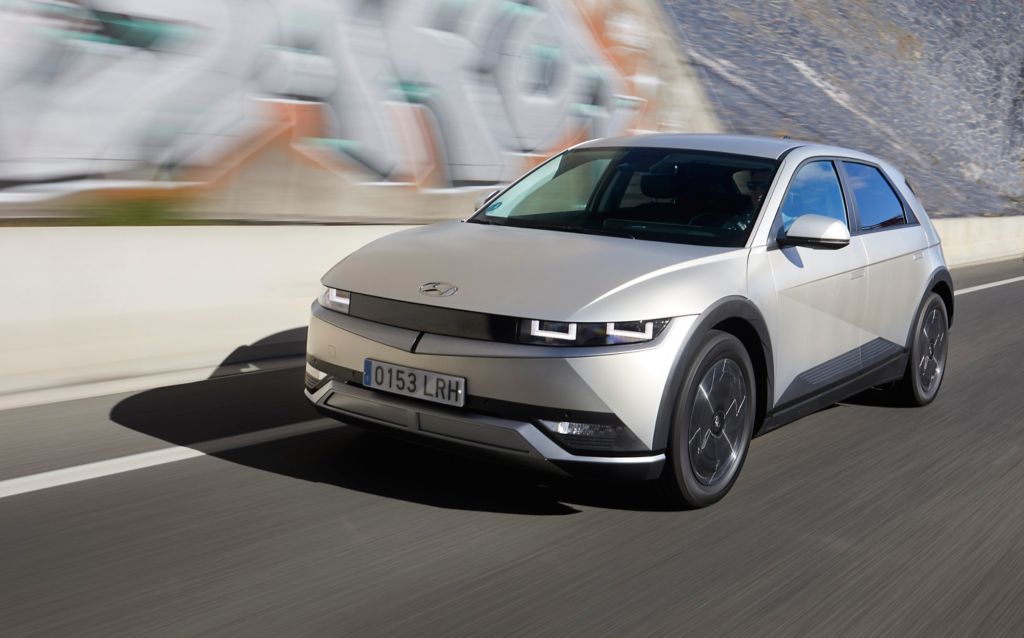
We compare the electric compacts on sale in Spain by sustained peak power, 10-80% charging time and real DC consumption. The 800V platforms of Hyundai and Kia open up a clear gap over European 400V rivals.
There is one figure that almost nobody looks at when buying an electric car and that, in the long run, matters more than the WLTP range: the charging power the car actually sustains at a fast charger, not the one the spec sheet promises. A compact that charges at 150 kW for two minutes and then drops to 60 kW is not the same as one that holds 180 kW for fifteen. That is where the genuinely efficient electric compacts separate from those that merely tick the box.
We have ranked six compacts on sale in Spain according to three objective variables: peak DC power, 10-80% charging time and real consumption in kWh/100km. The result makes one trend clear: the 800-volt architecture still opens up a gap over European 400V cars, although not always by as much as one might expect on paper.
How we measured fast-charging efficiency
We did not judge only the peak announced by the manufacturer, but the sustained curve between 10% and 80% of battery, which is the real operating band on a long journey. We also weighed average consumption, because a car that charges fast but uses a lot of energy ends up losing that advantage in practice. And yes, we took the starting price into account, because charging efficiency is not worth the same if you have to pay an 8,000-euro premium for it.
The 2026 ranking
| Position | Model | Platform | Peak DC | 10-80% | Consumption | Score |
|---|---|---|---|---|---|---|
| Hyundai Ioniq 5 | 800V | 350 kW | 18 min | 16.8 kWh/100km | 9.4 | |
| Kia EV6 | 800V | 240 kW | 18 min | 16.1 kWh/100km | 9.1 | |
| Volkswagen ID.3 | 400V | 175 kW | 26 min | 15.4 kWh/100km | 7.8 | |
| Cupra Born | 400V | 170 kW | 28 min | 15.6 kWh/100km | 7.5 | |
| Renault Megane E-Tech | 400V | 165 kW | 26 min | 16.0 kWh/100km | 6.8 | |
| Peugeot e-308 | 400V | 100 kW | 35 min | 16.5 kWh/100km | 6.0 |
1. Hyundai Ioniq 5 — from €44,790
Since its launch the Ioniq 5 has set the pace in fast charging, and in 2026 it still has no clear rival in this segment. Its 800V architecture allows peaks of 350 kW which, although they are not sustained along the whole stretch, bring 10-80% down to just 18 minutes. In my view, its weak point remains consumption on the motorway above 120 km/h, where it climbs past 19 kWh/100km.
| Power (kW) | Power (CV) | Range | Consumption | Label | Fuel |
|---|---|---|---|---|---|
| 125 | 170 | 440 km | 16.8 kWh/100km | 0 emissions | Electric |
2. Kia EV6 — from €48,995
It shares the E-GMP platform with the Ioniq 5, but the EV6 distributes weight better and is somewhat more agile on the road. The charging difference is minimal: the same 10-80% time and slightly lower consumption. It remains to be seen whether Kia manages to lower the entry price, because it is still the main obstacle compared with its sibling from Hyundai.
| Power (kW) | Power (CV) | Range | Consumption | Label | Fuel |
|---|---|---|---|---|---|
| 125 | 170 | 428 km | 16.1 kWh/100km | 0 emissions | Electric |
3. Volkswagen ID.3 — from €36,700
Here begins the territory of 400V, and the ID.3 is the one that defends it best. It does not reach the Korean times, but its consumption is the lowest in the ranking, which partly offsets the slower charging on long trips. It is quick, yes, but it is not enjoyed as it should be at a 350 kW station, because the car never manages to use even half of that power.
| Power (kW) | Power (CV) | Range | Consumption | Label | Fuel |
|---|---|---|---|---|---|
| 150 | 204 | 554 km | 15.4 kWh/100km | 0 emissions | Electric |
4. Cupra Born — from €37,300
Mechanically it is a first cousin of the ID.3, with very similar charging figures, although Cupra has prioritised sporty character over pure efficiency. In practice the Born charges somewhat worse in the cold than its German sibling, something we noticed especially in winter without the heat pump switched on.
| Power (kW) | Power (CV) | Range | Consumption | Label | Fuel |
|---|---|---|---|---|---|
| 150 | 204 | 547 km | 15.6 kWh/100km | 0 emissions | Electric |
5. Renault Megane E-Tech — from €37,685
The Megane does its job, but without shining. Its 165 kW peak falls short of German competition, and charging time suffers accordingly. Nor is it the answer to range, although its entry price makes it attractive for those who do not make long motorway trips.
| Power (kW) | Power (CV) | Range | Consumption | Label | Fuel |
|---|---|---|---|---|---|
| 160 | 220 | 501 km | 16.0 kWh/100km | 0 emissions | Electric |
6. Peugeot e-308 — from €38,100
The French compact closes the table, with the most modest charging peak of the group. It is questionable whether it is worth paying the same as for a Megane with better charging performance. That said, for almost exclusively urban use the difference hardly shows in day-to-day life. We compare it in depth against its group sibling in our e-308 versus Astra Electric analysis.
| Power (kW) | Power (CV) | Range | Consumption | Label | Fuel |
|---|---|---|---|---|---|
| 115 | 156 | 450 km | 16.5 kWh/100km | 0 emissions | Electric |
800V vs 400V: why the platform still matters
The advantage of Hyundai and Kia is no accident or marketing. An 800V architecture allows lower currents for the same power, which reduces thermal losses and makes it possible to sustain higher peaks for longer. European 400V compacts have improved a great deal over the last two years, but in practice they still need between 8 and 15 extra minutes to complete the same charging stretch. That is no small detail on a 600 km journey.
Which driver profile suits each model
If you make long trips frequently and charging speed is your priority, the Ioniq 5 or the EV6 justify their higher price. For mixed urban and interurban use, the ID.3 or the Born offer a reasonable balance between consumption and charging. And if your day-to-day is basically city driving, the Megane or the e-308 are more than enough without paying extra for charging power you will almost never use to the full. Anyone who also wants maximum range above all can check our ranking of electric compacts with the most real-world range, where the order changes quite a lot.
It is worth remembering that, apart from fast charging, the purchase may benefit from the Plan Auto+ currently in force in Spain; the exact amount should always be checked on the official website before closing the deal.
Frequently asked questions
Which electric compact charges fastest in Spain in 2026?
The Hyundai Ioniq 5, thanks to its 800V platform, with peaks of up to 350 kW and a 10-80% charging time of around 18 minutes at a suitable charger.
Is it worth paying more for an 800V car?
If you make long trips regularly, yes, it pays off. For urban use the practical difference is much smaller, and 400V models such as the ID.3 or the Born are sufficient.
What is 10-80% charging time and why is it used as a reference?
It is the band where the battery accepts power most steadily; outside that range charging slows down considerably, so it is the most realistic indicator of charging speed on a journey.
Does consumption influence fast-charging efficiency?
Yes. A car with lower consumption needs less energy to recover range, which partly offsets a lower charging power, as is the case with the Volkswagen ID.3.
Technical specifications of the cars in this article

 Peugeot E-208 GTi: a battery-powered toy that revives the spirit of the 1980s sports cars
 New Lexus ES: luxury grows and goes electric
 First contact with the Dacia Sandero Hybrid 155: power and efficiency from €19,890
Comentarios cerrados