BYD begins exporting electric models to Europe from Thailand to reduce the impact of tariffs
 Javier Cantagalli
26 August 2025
3 min.
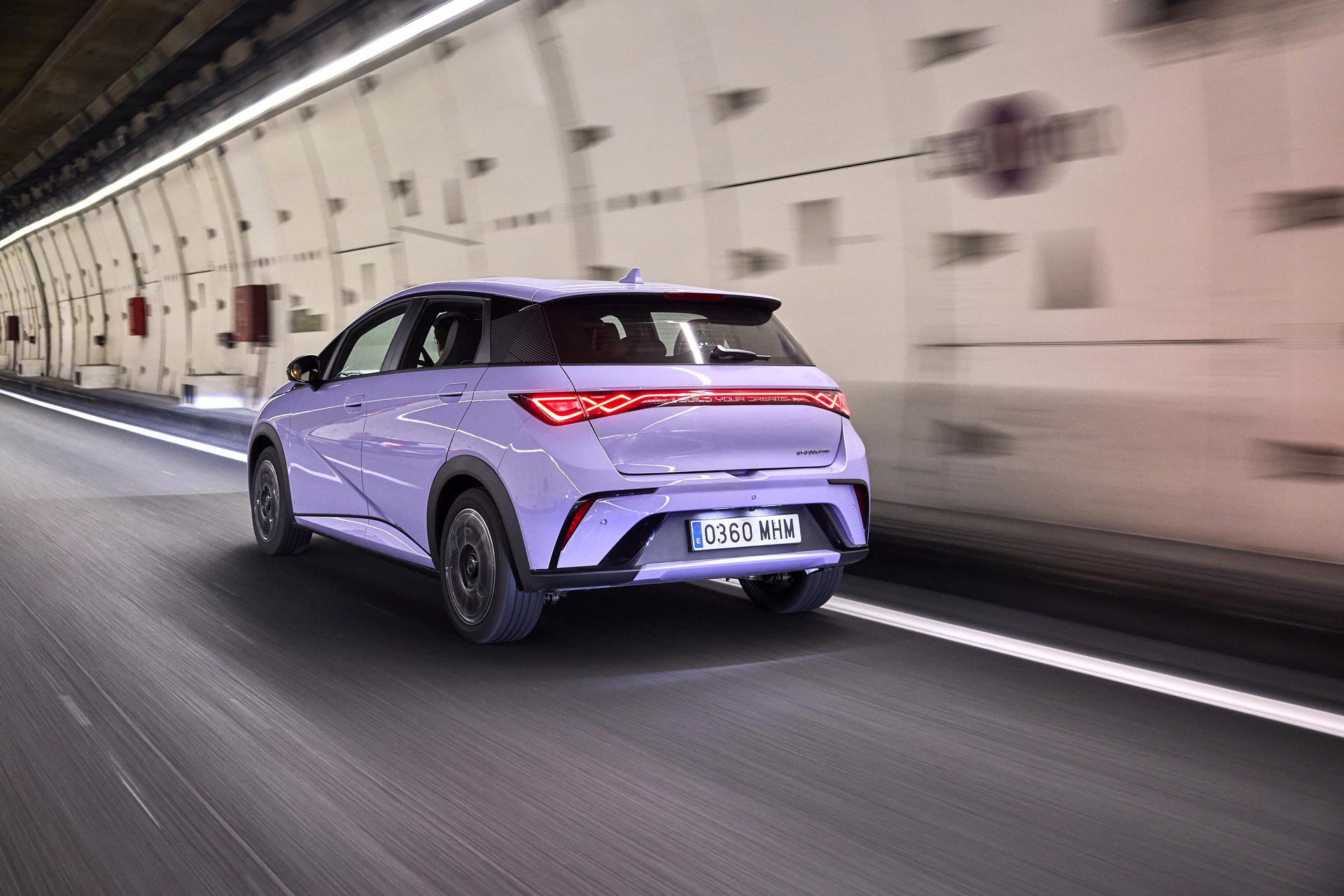
The European Union imposes a standard 10 percent tariff on electric vehicles imported from Thailand, while BYD models imported from China face a total duty of 27 percent.
BYD has just turned its commercial strategy in Europe by starting to export electric cars from Thailand to the continent. The model chosen for this debut is the Dolphin, a compact city electric car that enjoys considerable popularity in this market. With this decision, the Chinese manufacturer strengthens its global presence and bets on diversifying its production, avoiding having it concentrated exclusively in its country of origin.
The first BYD shipment from Thailand has already set sail, using the company’s own vessel, the BYD Zhengzhou, carrying a batch of 959 units of the Dolphin that will be distributed in Germany, Belgium and the Netherlands. If everything goes as planned, the journey to Europe is expected to take approximately 35 days.
Until recently, BYD’s Thai plant was dedicated exclusively to producing right-hand-drive units of the Dolphin, for the local market and for other countries where traffic drives on the left. However, the recent addition of left-hand-drive production has expanded the plant’s global scope, now also allowing it to meet demand from European markets and optimising the production capacity of this plant, which was operating well below its maximum limit.
BYD leaves China
Inaugurated in 2024, BYD’s Thai plant has an annual production capacity of up to 150,000 vehicles. In addition to the Dolphin, BYD assembles at these facilities the Atto 3 electric SUV and the Seal electric saloon. According to some recent reports, current production is barely around 5,000 vehicles a month, roughly 60,000 units a year, so the company still has a great deal of room to grow. Increasing production volume at this plant is crucial for BYD, not only to improve efficiency and profitability, which it does too, but also to meet the requirements of the Thai government’s EV 3.0 programme, in force until 31 December.
This programme established by the Thai government offers BYD significant benefits, such as exemption from import duties, a reduction of the excise tax from 8 to 2 percent, and a subsidy of 150,000 baht for each electric vehicle imported from China. In return, the company must offset its imports with local production of electric vehicles, with a minimum ratio that rose from 1:1 in the previous year to 1:1.5 in 2025. In July, the Thai government adjusted the programme to allow exports of locally manufactured vehicles to count towards this quota, easing the pressure on BYD, which was struggling to meet its domestic sales obligations.
According to some local media, BYD needs to offset its imports with approximately 30,000 locally produced vehicles. That means that with only four months left until the end of the year, the Chinese company must still produce close to 20,000 electric vehicles at its Thai plant to enjoy these benefits.
Exporting from Thailand also offers BYD another strategic advantage, namely avoiding the special tariffs imposed by the European Union on electric vehicles manufactured in China. This tactic not only benefits BYD, but is also being considered by other manufacturers, such as SAIC/MG, which seek to use Thailand as an export base for Europe.
Technical specifications of this car


 Kia offers an electric range of 10 models, 50 versions and 400 possible combinations
 The seven finalists for the 2027 European Car of the Year (COTY) are exclusively electric
 Peugeot E-208 GTi: a battery-powered toy that revives the spirit of the 1980s sports cars
Deja un comentario