Can an electric car tow a caravan? We explain it
 Victor Alós Yus @sepelaci
13 February 2020
3 min.
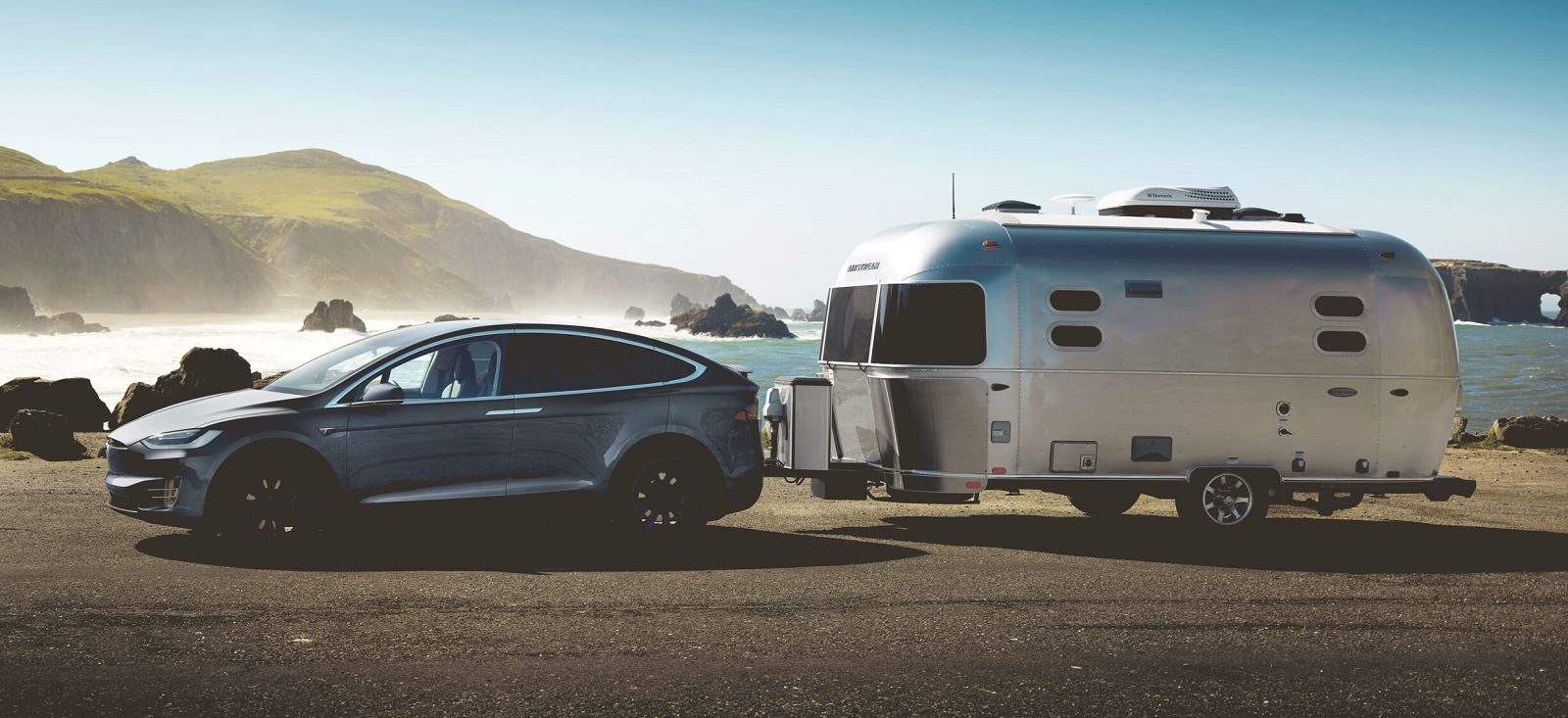
Electric cars are becoming increasingly powerful and have greater range, but when it comes to towing a trailer or a caravan, they may not be efficient
Electric cars seem to be the most immediate future and electric mobility the perfect solution to avoid polluting emissions. However, this type of vehicle presents a few problems that may delay its adoption somewhat. The shortage of components for manufacturing batteries, the excessive cost of cars, the battery range and the characteristics of the cars. Among them, limitations such as the ability to tow a trailer or a caravan.
Electric vehicles are offering more and more improvements and we are sure that in a few years they will be the preferred vehicle for many users. But for now, the best features are reserved for high-end cars, with high-capacity batteries and powerful motors. Most electric vehicles are very practical for urban mobility, and interurban routes are beginning to be taken into account.
Trailers and caravans
Trailers and caravans have a problem: they are heavy. Moving them requires considerable power, and the limitations of electric cars can be a problem for this. Certainly, a car such as the Nissan LEAF or the Renault ZOE is not suitable for this type of task. That said, a car with a combustion engine of these characteristics is not suitable either for towing a trailer or a caravan.
For now, the electric vehicles with the most power are the ones that can carry out this task: towing a medium-weight trailer or a caravan, which is much heavier and requires more energy to be towed. In fact, a Tesla Model X has been tested towing several caravans of different weights.
The electric saloon managed it without problems, but it needs to be recharged to complete a long journey. The weight of the vehicle, plus the payload, added to the weight of the caravan quickly drains the battery. In this case the Tesla Model X could be used, although there are still few models capable of achieving this.
Obviously, the presence on the market of electric SUV and pick-up models increases the possibility of towing trailers and caravans. But the problem with vehicles such as the Tesla Cybertruck is that they are capable of towing a caravan, but not for very long.
Equivalence between combustion engine and electric vehicle
A vehicle well suited to towing a caravan is the Ford F-150, and it has been chosen to make a comparison between the Tesla Model X and this model. In the comparison, it was determined that one gallon of fuel (the test was carried out in the United States, so the imperial measure is used), that is, 3.78 litres, is equivalent to 33.7 kWh. The Ford F-150 has two versions with fuel tanks of 23 and 36 gallons, so the energy it is capable of generating is 775 and 1,200 kWh.
The Tesla Model X has a battery with a capacity of 100 kWh. For the test, a 160-kilometre route was driven at 120 km/h with a 2,268 kg trailer. To this must be added the car’s own 2,495 kg and 295 kg of payload. The calculation is that a total of 100.4 kWh is needed to complete the journey, so the Tesla has to be recharged to complete that route under these conditions.
By contrast, the Ford F-150 would need 176 kWh to complete that same journey when the three weights are added together. This means it can do this work with much less.
So, are electric vehicles capable of towing a trailer or a caravan? Yes, but only vehicles with powerful batteries, and for a very short time. To tow a trailer or a caravan, it is best to use a combustion-engine vehicle with power and certified technical capabilities. At least, for now.


 Peugeot E-208 GTi: a battery-powered toy that revives the spirit of the 1980s sports cars
 New Lexus ES: luxury grows and goes electric
 First contact with the Dacia Sandero Hybrid 155: power and efficiency from €19,890
Deja un comentario