Dacia Spring Electric Electric Cars Urban
Dacia has updated the Spring with significant changes, especially to its engines, which are now more powerful
 David Lopez @espacionblanco
8 October 2025
3 min.
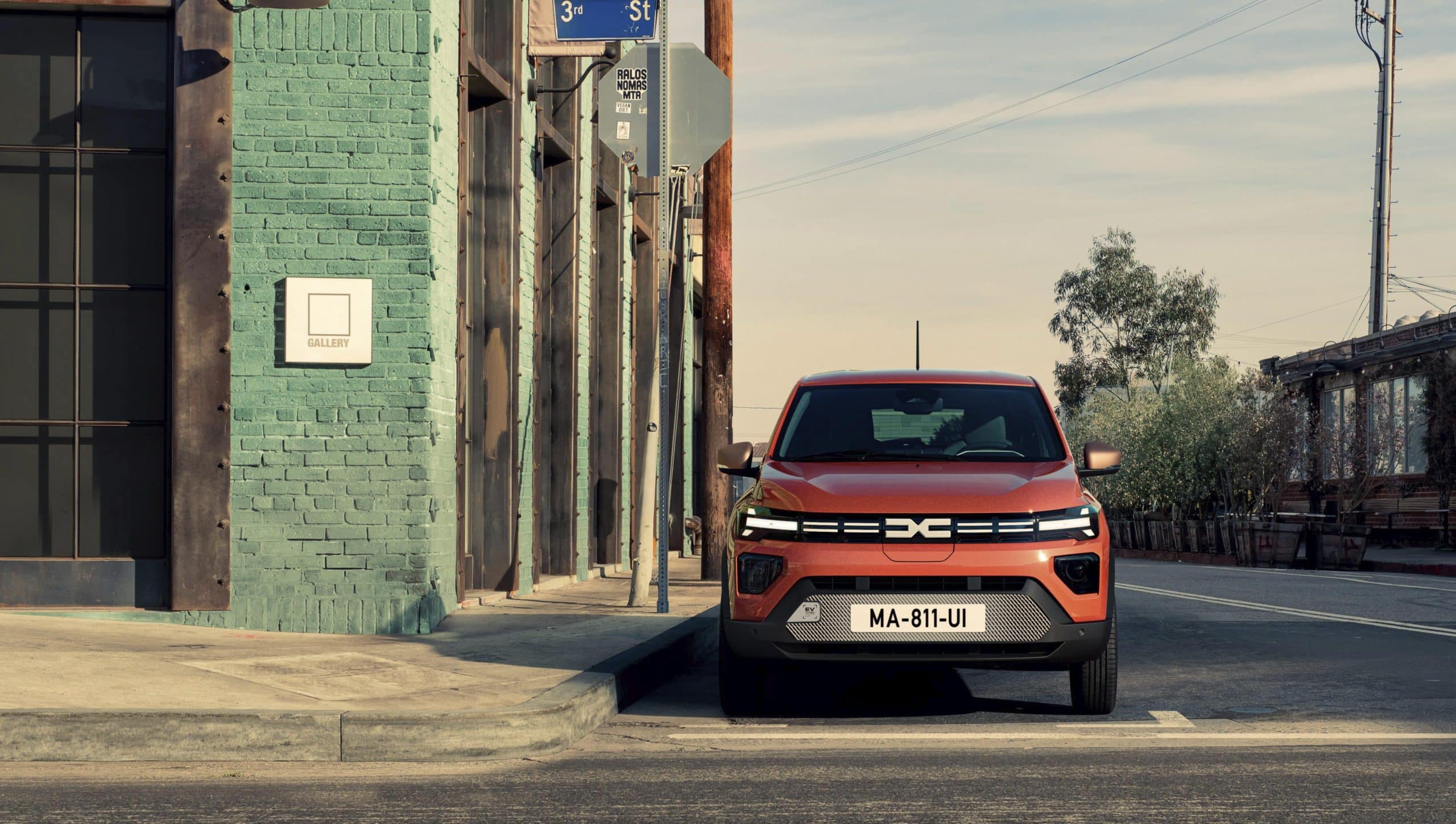
Dacia has introduced a significant update to the Spring, affecting aspects such as its engines, its aerodynamics and its structural strength
Years have passed since its arrival on the market and, luckily for Dacia but unfortunately for those looking for a cheap electric car, the Spring remains the cheapest fully electric vehicle you can find on the market. If you want something more powerful that can take you at least a little beyond the city, you’d better start preparing your wallet. Its still unbeatable price has allowed Dacia to sell more than 179,000 units of the Spring since its launch in Europe, while in 2025 it has already sold more than 17,000 units.
This consolidation of the Dacia Spring in the urban electric market has led the Romanian brand to keep this model continuously updated, with updates arriving in different areas in 2022, 2023 and 2024. This year, 2025, Dacia will also introduce new features on the Spring with important structural changes that will improve its handling, aerodynamic enhancements to improve its consumption, and mechanical upgrades, now with more powerful engines replacing the ones known until now.
Starting with the first point, its structural improvements, the new Dacia Spring now features a reinforced central section of its platform, thereby increasing the rigidity of the structure and optimising the weight distribution between the front and rear axles, improving the overall balance of the Spring. A new, more effective braking system has also been fitted so that braking is safer and, as standard across the entire range, the Spring now has a stabiliser bar for the first time which, together with the recalibration of springs and dampers, has improved stability through corners.
Moving on to the second point, its aerodynamics, these have been improved first of all by fitting a series of underbody fairings at the front, sides and rear, reducing the aerodynamic turbulence generated underneath the vehicle. In this regard, a spoiler on the top of the tailgate has also been installed, reducing the turbulence generated in this area too. These changes significantly improve the Spring’s SCx drag coefficient, which is now 0.660 compared with 0.745 with 14-inch wheels, and 0.665 compared with 0.743 with 15-inch wheels.
Finally, its mechanics: the current 45 CV and 65 CV engines are discontinued, making way for two new engines of 70 CV (52 kW) and 100 CV (75 kW), which deliver their peak power and torque between 80 and 120 km/h. As a result, the Dacia Spring is now generally better suited to venturing out of the city and even driving on motorways and dual carriageways. These engines are also paired with a new 24.3 kWh LFP battery which, as an option, allows V2L bidirectional charging, and offers a range of 225 kilometres on the WLTP cycle, based on the Spring equipped with 15-inch wheels.
Finally, it should be noted that the integrated 30 kW DC fast charger is also eliminated and replaced by a 40 kW unit, available as an option on the Expression and Extreme trims, which can take the battery from 20% to 80% in 29 minutes. As standard, the Spring comes with a 7 kW AC charger which, together with the new battery, allows charging from 20% to 100% in less time: 3 hours and 20 minutes on a 7 kW Wallbox and 10 hours and 11 minutes on a domestic socket.
The new Dacia Spring will be available with a base price starting from 16,900 euros in the Spanish market.


 Peugeot E-208 GTi: a battery-powered toy that revives the spirit of the 1980s sports cars
 New Lexus ES: luxury grows and goes electric
 First contact with the Dacia Sandero Hybrid 155: power and efficiency from €19,890
Deja un comentario