Fiat Panda 1.2 69 CV, road test (Exterior design, interior and finishes)
 Diego G. Moreira
20 July 2012
5 min.
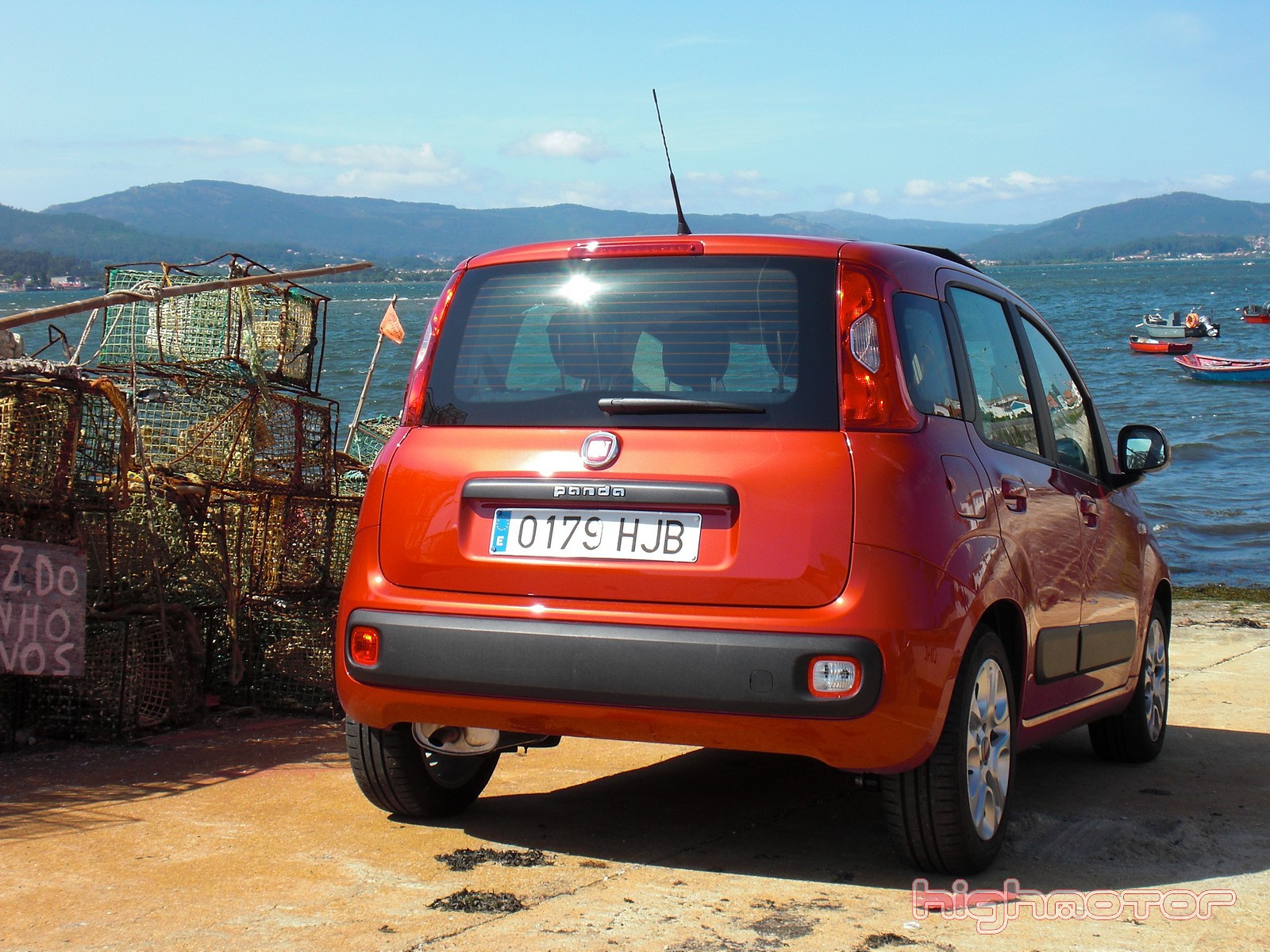
Second part of the Fiat Panda road test, an Italian with plenty of style. In this part we analyse: exterior design, interior, finishes, practicality and boot space.
You already know our little protagonist, an Italian with plenty of style and, above all, good urban skills. That said, to move it we only need 69 CV, since we have tested it with the 1.2-litre petrol engine capable of delivering 69 CV. There are other, more powerful or more fuel-efficient alternatives, but this entry-level engine undoubtedly offers a good price and decent performance.
Everything about the engine of the little Italian we covered in the first part of the road test, where we told you how it performs on the open road, how it handles in the city (with a good turning circle), and its consumption and performance figures. This engine is already a seasoned veteran within the Italian brand.
Now in the second part, as many of you already know, we focus on design, both exterior and interior. That is, we look at practicality, analyse the interior finishes, the space for occupants, the boot, and so on.
Exterior design
Cheeky? Curvy? Manageable?… Perhaps one of these two adjectives may come to mind when you see the photos. The design follows the basic patterns of the previous generation, which marked a break in form with the Panda of old.
But now those tall, compact MPV-style shapes are softened, and more rounded forms appear that were not present in the previous generation. That is the most notable exterior change, because otherwise the basic design follows the same idea as the previous generation.
It has a large glazed surface along the sides, with big windows and, if we also opt for the double sunroof (recommended if we can enjoy it), we gain interior light.
From the front the new bulb-style daytime running lights stand out, with a certain retro feel, while the light clusters take on rounder shapes. The rear changes little, but again we notice small changes aimed at refreshing and renewing its image, such as the new lamps (now fully in the upper part) and the bumper.
The wheels have been completely redesigned, with more curves in the design. It seems that in designing the new Panda, right angles and straight lines have been avoided; the intention appears to be giving it more curvature and a more original, cheerful image.
Interior design, practicality and finishes
Squares with rounded corners everywhere. No, I haven’t gone mad; this is what you will find inside, from the “spheres” of the instrument cluster, to the climate control, through the centre of the steering wheel or various controls (even the gear lever knob). All of it is inspired by this geometric shape.
Even the radio design avoids right angles when designing the sound system. Everything seems perfectly coordinated, especially when we look at the upholstery, where the seats feature squares with rounded corners. These may seem like minor details, but it’s Italian, and you can tell.
That said, once we move past design details, the materials used on the dashboard could be better; hard plastic is abundant throughout, but at least there are no strange creaks or especially sloppy fittings (something that can happen with other brands’ models close to 10,000 euros).
The gear lever position stands out, and the driving position, when we sit at the wheel, is an elevated one with good visibility, imitating the SUVs that are so well received on the market. Meanwhile, the gear lever position gives it an MPV touch, as does the number of storage spaces the car has (14 in total according to the manufacturer).
The seats are comfortable; the headrests are not active, but they do their job (they are identical to those of the Fiat 500). At the front, legroom is sufficient and the journey is comfortable, but for headroom the panoramic roof takes away some height, so anyone over 1.80 metres will travel a bit tight.
At the back, there is ample space, especially considering its dimensions, and there is adequate room for feet and head. The work done on the rear seats is very good, because the feeling inside the car is one of space, which in a city car that does not reach 4 metres in length is a point in its favour. This is achieved thanks to its generous wheelbase, which allows more legroom in the rear seats.
Storage spaces and boot
According to Fiat the new Panda has 14 storage spaces inside. I tried to count them and they are not mistaken. Honestly, the interior of the Panda is not short of storage spaces; some are small, but there are spaces even for a handbag.
Yes, for a handbag. Otherwise, I can’t explain the large glovebox on the passenger side, where practically any handbag fits. It may seem a minor detail, but if we remember the target audience this car is aimed at, it is a plus for the brand and a practical detail worth considering.
Finally, the boot has a capacity of 225 litres, which is not exactly large, but a Mini has around 190 litres, for example.
In the third part of the road test we will focus on safety, equipment and prices, and we will close the test with our overall assessment of the Fiat Panda.
Photos | Diego G. Moreira and the test team


 Peugeot E-208 GTi: a battery-powered toy that revives the spirit of the 1980s sports cars
 New Lexus ES: luxury grows and goes electric
 First contact with the Dacia Sandero Hybrid 155: power and efficiency from €19,890
Deja un comentario