Gas vs electricity: which is better for freight transport?
 Victor Alós Yus @sepelaci
14 February 2018
3 min.
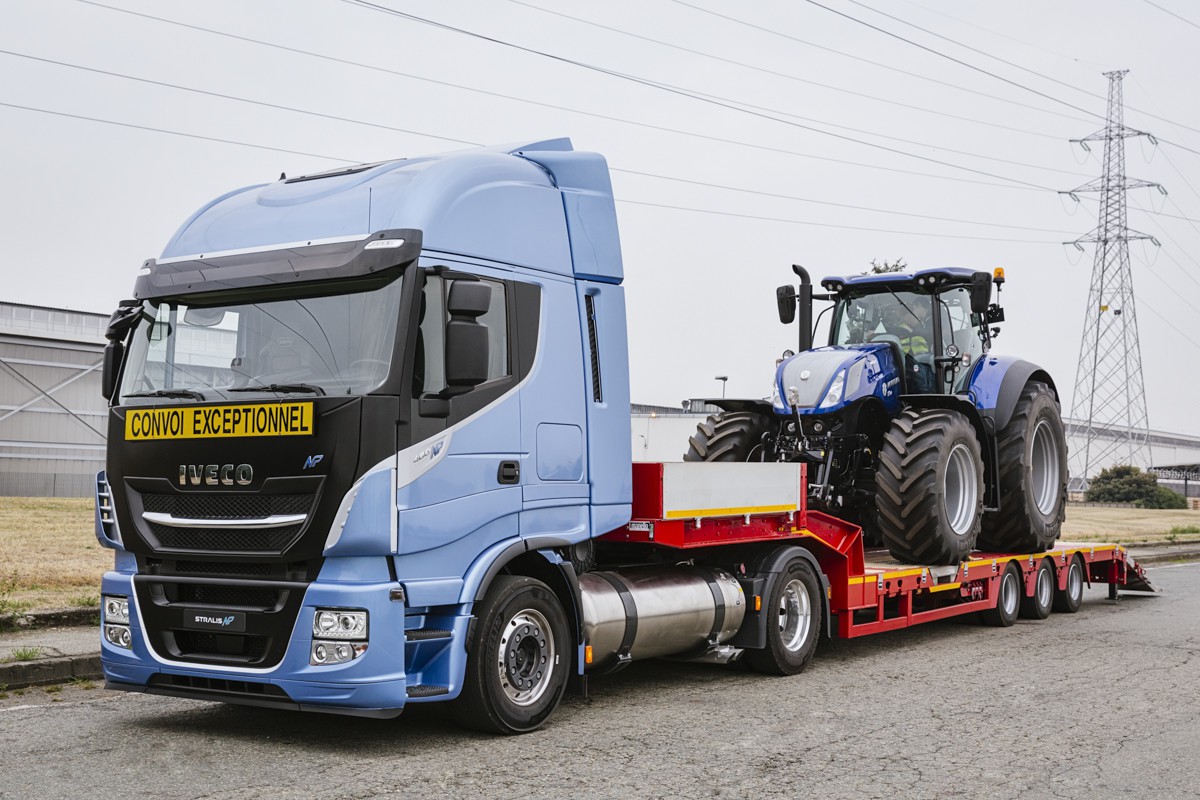
Currently, there are several truck models powered by Liquefied Natural Gas that match and even surpass diesel, and that are ahead of electric ones.
In recent months we have been reading a great deal about new electric-powered truck models, such as the Tesla Tesla Semi or the Nikola One, which seem set to be ready very soon. There are also models powered by a hydrogen-fed fuel cell. But although in smaller vehicles electric mobility seems likely to become the most common type of car beyond combustion engines, in the case of large trucks the mobility of the future seems to come hand in hand with Liquefied Natural Gas.
This appears to be the conclusion reached by Germany’s Federal Ministry of Transport and Digital Infrastructure, which has placed this fuel ahead of the fuel cell and electric trucks as alternatives to diesel. One of the reasons for considering this alternative to diesel is the emergence of LNG-powered trucks, which have improved their range and power in a very short time. In fact, there are models that have appeared in the last five years that match the power and range of diesel engines.
Iveco, for example, has specialised in this type of truck and has presented several models with these characteristics. For this manufacturer, the only efficient alternative to diesel is this fuel, which produces fewer polluting elements and delivers performance similar to diesel. Some of the current models using LNG-fuelled engines reach 460 CV and offer a range of up to 1,000 kilometres. Something that is still very far off for electric and fuel-cell trucks.
Diesel seems to have become the enemy to beat, and we can already see that it is even losing ground in European registrations. If that is already a fact for cars, in the transport world everything seems to be moving towards eliminating large, powerful engines of this type. With Liquefied Natural Gas engines, emissions are reduced but so is the noise they produce, something that is also taken into account when designing the tractors of the future.
Electric trucks still need a great deal of development. What works for cars does not seem to be a valid solution for trucks, which require far greater power and capacity. With LNG, it is already possible to access the power needed to move heavy loads over many kilometres. Iveco launched several months ago the Iveco Stralis NP, the top-of-the-range gas truck, which emits 10% less than its diesel equivalent, but which can reach 95% if biomethane is used, which can also power this truck. The NOx and particulate emissions are 50% lower than with diesel, and the noise produced is also roughly halved.
The engine is fed by gas stored in two 400 kg tanks and has a range of up to 1,500 kilometres. And all of this is already on the market, unlike electric models that are still being tested by manufacturers. The coming years will be dominated by this type of vehicle, and we will have to wait for fully developed electric and fuel-cell trucks to see whether they prove as efficient as trucks powered by Liquefied Natural Gas already are.


 Peugeot E-208 GTi: a battery-powered toy that revives the spirit of the 1980s sports cars
 New Lexus ES: luxury grows and goes electric
 First contact with the Dacia Sandero Hybrid 155: power and efficiency from €19,890
Deja un comentario