Guardia Civil motorcyclists will also carry mobile speed cameras to improve road enforcement
 Victor Alós Yus @sepelaci
7 November 2017
2 min.
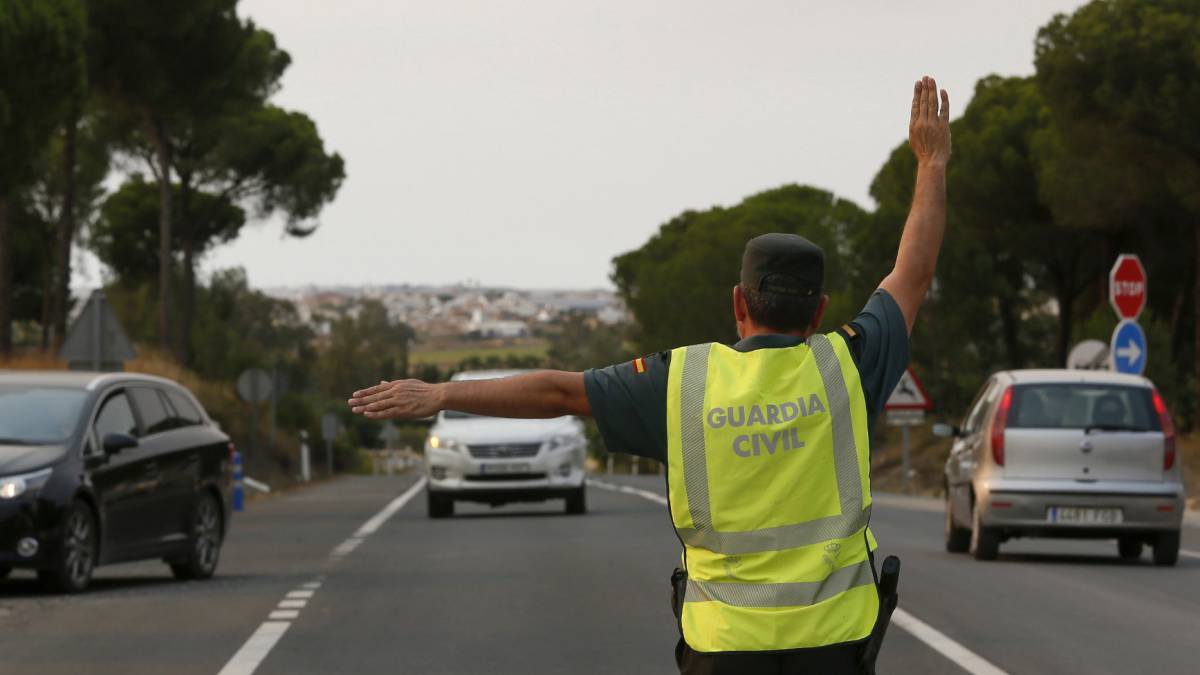
Guardia Civil motorcyclists will carry 60 new mobile laser speed cameras to monitor speed at various points of the Spanish road network
Speed control is one of the DGT’s priorities, and that is why the Guardia Civil is well stocked with different types of speed cameras, in order to catch those who exceed speed limits on the various roads. From fixed cameras, to mobile units fitted to some camouflaged vehicles, to helicopters that operate at the most unexpected moments, we are well covered with this type of device, which make us drive carefully on certain stretches where extra caution is needed.
Now, it has become known that the Guardia Civil has equipped its motorcyclists with a new mobile speed camera to carry out random checks along the Spanish road network. For now, this measure is still in the administrative phase, which means that 860,000 euros has been authorised for the purchase of 60 mobile laser speed cameras. These will be transported on Guardia Civil motorcycles.
The news was announced by Gregorio Serrano, the director of the DGT, through his personal Twitter account, although we had known about it for some time. In fact, the announcement of the launch of the project was made before the summer 2016 campaign, although cutbacks and procurement procedures have delayed the purchase until now.
The supplier of the 60 units is the company Saima Seguridad, which won the contract for 860,130 euros, compared with a tender of 1,357,620 euros, making it considerably cheaper than expected. According to the conditions of the tender specifications, the portable units must be able to measure the speed of vehicles at a specific point, record the data and capture an image of the offender, and display it on a computer or tablet screen.
Furthermore, each unit must capture a maximum speed of 250 km/h over a distance of between 15 and 50 metres, across two lanes, and operate at temperatures between 0 and 50º. Its battery must last at least five hours and come with a case and various mounts so that it can be installed in several locations. With all this, the acquisition process is under way, and we will soon have more news about this new equipment, which aims to be part of the DGT’s fight against speeding, responsible for a large share of the deaths in road accidents in Spain.


 Kia offers an electric range of 10 models, 50 versions and 400 possible combinations
 The seven finalists for the 2027 European Car of the Year (COTY) are exclusively electric
 Peugeot E-208 GTi: a battery-powered toy that revives the spirit of the 1980s sports cars
Deja un comentario