Astra CR-V Cupra Golf Honda León Opel RAV4 Toyota Volkswagen Hybrid Cars Compact Comparisons Buying Guides
How to Choose a PHEV Compact in 2026: Real Electric Range, Charging Costs and Taxation
 Iván Navarro
28 October 2026
6 min.
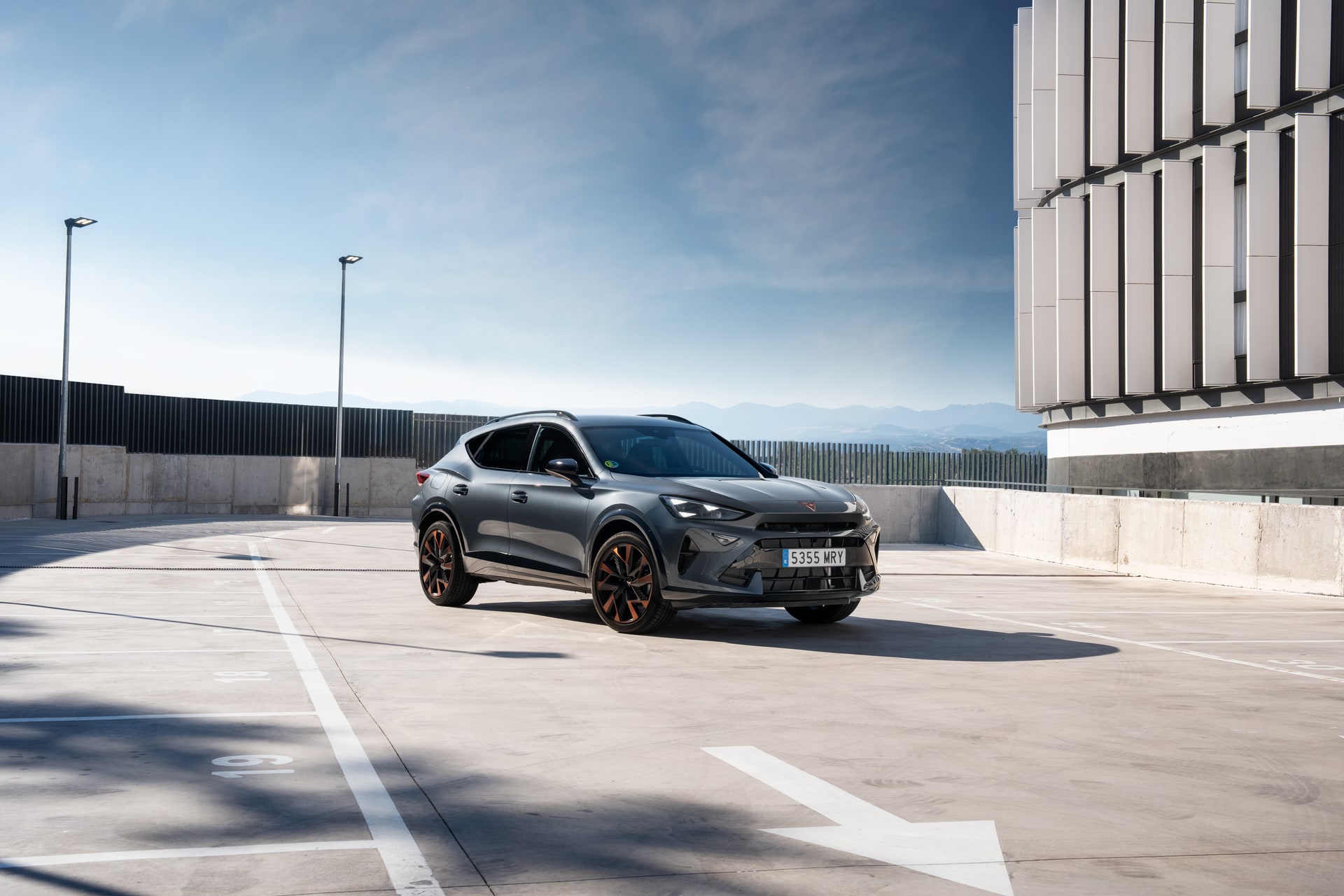
Buying a plug-in hybrid compact in 2026 is no longer an act of faith. There is enough track record in the Spanish market, real consumption data and a tax framework that, although it has been tightened, still rewards those who choose well. The problem is that technical data sheets promise very different worlds from real-world use, and that is where it pays to stop before signing.
A well-chosen compact PHEV can do 80% of urban trips in pure electric mode. A poorly chosen one—small battery, slow charger—ends up behaving like a conventional hybrid with extra weight. The difference between the two scenarios comes down to three variables: homologated electric range, charging power and the fine print of taxation.
Real electric range: what to expect from a PHEV compact in 2026
WLTP electric range figures for compact PHEVs today range from 80-85 km for versions with a 17.2 kWh battery to 130-142 km on the most recent platforms, with batteries close to 19.7 kWh usable. In practice, and in a temperate climate, the loss compared with the homologated figure is usually around 15-20%. In winter, with heating on, it can reach 30%.
In our view, the battery is the first figure you should look at, even ahead of combined power. A 17 kWh battery covers the commute to work. A 20 kWh one also covers the return trip, without plugging in at midday.
Charging cost: home, public AC and DC fast charging
This is where a PHEV earns—or loses—its reason to exist compared with a conventional hybrid.
At home, on off-peak tariff, charging a 17 kWh battery costs around 1.7-2.5 euros; a 20 kWh one, between 2 and 3 euros. These figures make the first 50-60 km a day practically free compared with filling up with petrol.
At a public alternating current (AC) charging point, the cost per kWh is usually double the domestic price, so those same 17-20 kWh cost between 5 and 9 euros depending on the operator.
On direct current (DC), very few compact PHEVs accept fast charging beyond 3.7-7.4 kW on AC (some VW Group models up to 50 kW DC), so DC hardly makes sense in this segment: the time saving is minimal and the cost per kWh is the highest of the three scenarios. For anyone who considers fast charging a priority, a pure electric car probably suits better than a compact PHEV.
Taxation and the CERO label: what is still worth it
For a compact PHEV to obtain the DGT’s CERO label, it must homologate at least 40 km of WLTP electric range. All the relevant models in the segment in Spain comfortably exceed this today, which translates into unrestricted access to low-emission zones (ZBE), discounts of up to 75% on the IVTM vehicle tax in many municipalities and parking benefits in regulated zones.
When buying, it is advisable to check the current Plan Auto+ aid, which still covers PHEVs with sufficient electric range within its criteria; the amounts change frequently, so the prudent course is to consult the official website before placing the order. It is debatable whether it pays to force a purchase just for the subsidy if the model does not fit real-world use of the car.
Compact PHEV models on sale in Spain in 2026
Cupra Leon e-Hybrid, from 39,500 €
The sportiest proposal in the group Volkswagen in the compact PHEV field, with the most generous battery in the lineup.
| Power | Electric range | WLTP consumption | Label | Fuel |
|---|---|---|---|---|
| 204 CV (150 kW) | 133 km | 1.3 l/100 km | CERO | PHEV |
Volkswagen Golf eHybrid, from 40,600 €
Shares its mechanics with the Cupra, with a more conservative approach in chassis and a little more ride comfort.
| Power | Electric range | WLTP consumption | Label | Fuel |
|---|---|---|---|---|
| 204 CV (150 kW) | 142 km | 1.1 l/100 km | CERO | PHEV |
Peugeot 308 Hybrid, from 33,800 €
A 17.2 kWh battery, enough to cover everyday urban driving, with an interior design that remains among the most carefully crafted in the segment.
| Power | Electric range | WLTP consumption | Label | Fuel |
|---|---|---|---|---|
| 195 CV (144 kW) | 85 km | 2.3 l/100 km | CERO | PHEV |
Opel Astra Plug-in Hybrid, from 35,000 €
The most affordable in the comparison, with the same technical base as the 308 but a more aggressive price positioning.
| Power | Electric range | WLTP consumption | Label | Fuel |
|---|---|---|---|---|
| 196 CV (144 kW) | 84 km | 2.1 l/100 km | CERO | PHEV |
Comparison and score
| Model | Electric range | Power | Price from | Score |
|---|---|---|---|---|
| Cupra Leon e-Hybrid | 133 km | 204 CV | 39,500 € | 8.5/10 |
| Volkswagen Golf eHybrid | 142 km | 204 CV | 40,600 € | 8.3/10 |
| Peugeot 308 Hybrid | 85 km | 195 CV | 33,800 € | 7.6/10 |
| Opel Astra Plug-in Hybrid | 84 km | 196 CV | 35,000 € | 7.4/10 |
The score weighs real electric range, power-to-price ratio and estimated charging cost. The Cupra Leon leads on battery, but the Opel Astra is, in my opinion, the one that best solves the equation for those who only need to cover short trips without overpaying.
How to choose according to your use
If you drive less than 50 km a day and can plug in at home, a 17 kWh battery like that of the Peugeot 308 or the Opel Astra is more than enough, and the saving over their larger-battery versions shows in the final price. If your trips are around 80-100 km or you cannot always charge daily, stepping up to a Cupra Leon or a Volkswagen Golf with a large battery pays off, especially if use is mixed city-motorway. For those who already know that 90% of their kilometres will be electric, it is probably worth also looking at our ranking of compact PHEVs with the greatest real electric range, where the analysis focuses exclusively on that criterion.
It remains to be seen how taxation evolves up to 2027, but today, with the CERO label and Plan Auto+ aid still in play, the compact PHEV remains a defensible option for anyone who does not want to give up the combustion engine entirely.
Frequently asked questions
How much real electric range does a PHEV compact have in 2026?
Between 60 and 110 km in real conditions, depending on battery capacity. Models with 17 kWh batteries (Peugeot 308, Opel Astra) reach around 65-70 real km; those with large batteries, close to 20 kWh (Cupra Leon, Volkswagen Golf), can exceed 90-100 km.
How much does it cost to charge a plug-in hybrid at home?
On an off-peak tariff, charging a 17 kWh battery costs between 1.7 and 2.5 euros; a 20 kWh one, between 2 and 3 euros. At a public AC charging station the cost usually doubles.
What requirements does the CERO label impose on a PHEV?
Homologating at least 40 km of WLTP electric range. All current compact PHEVs on sale in Spain exceed that threshold.
Is a compact PHEV worth it compared with a conventional hybrid in 2026?
If you can plug in daily and your trips are mostly urban, yes: the fuel saving and tax advantages justify it. If you do not have access to a regular charging point, a conventional compact hybrid is more practical and avoids carrying the extra weight of a battery that will hardly be used.
Technical specifications of the cars in this article


 The seven finalists for the 2027 European Car of the Year (COTY) are exclusively electric
 Peugeot E-208 GTi: a battery-powered toy that revives the spirit of the 1980s sports cars
 New Lexus ES: luxury grows and goes electric
Deja un comentario