EV9 Hyundai ID.4 IONIQ Ioniq 5 KIA Model Y Tesla Volkswagen Electric Cars Comparisons Family SUV
How to Choose a Family Electric SUV in 2026: Real-World Range, Fast-Charging Capacity and Interior Space
 Iván Navarro
28 October 2026
7 min.
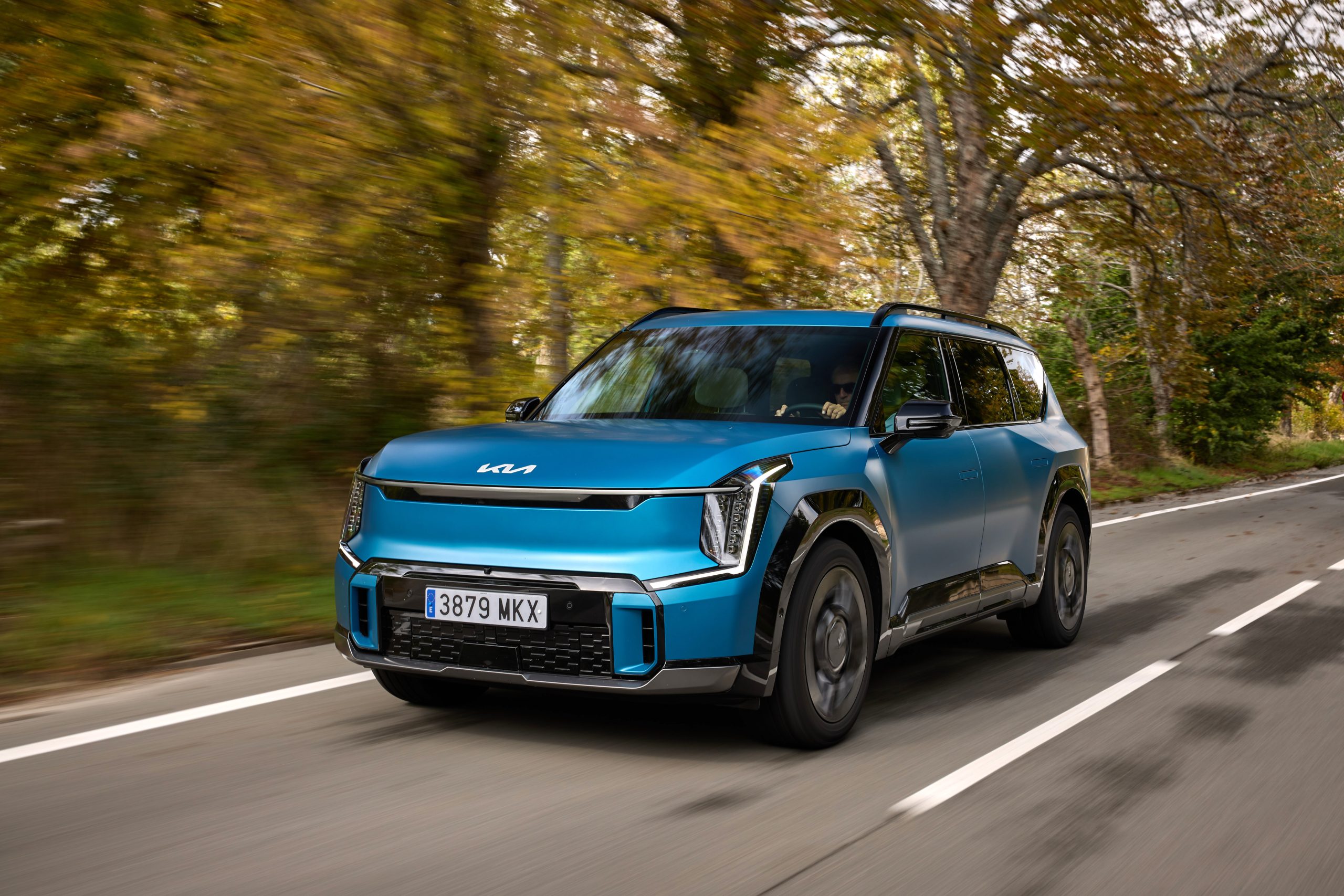
Choosing a family electric SUV in 2026 is no longer about looking at a big number in the brochure. It is about understanding what happens when you load four people, two large suitcases and a child seat, and then drive onto a motorway with the air conditioning at full blast. That is where the cars that promise separate from the ones that deliver. This guide prioritises measurable data —real kWh/100 km, the full charging curve, boot litres— over lab-based WLTP, which remains useful as a comparative reference but is not a reliable promise for everyday use.
Real-world range vs WLTP: how to read the figures in 2026
The WLTP cycle is useful for comparing cars with each other, not for predicting your range on the A-2 in August. In practice, the gap between the homologated figure and real consumption at 120 km/h on the motorway is around 15–20% on most current electric SUVs. A car rated at 560 km WLTP can end up at 440–460 real km in adverse weather or with a full load. Our recommendation: always calculate consumption in declared kWh/100 km and multiply it by a factor of 1.15 for long journeys. It is the only honest way to plan charging stops without surprises.
Fast charging: peak power, 10–80% curve and 400 V vs 800 V architecture
Here is the trap that brochures explain least. A car can advertise 230 kW peak and take as long to charge as one rated at 150 kW if its curve drops off just after passing 50%. What really matters is the actual 10% to 80% time, not the most eye-catching number in the catalogue. 800 V architectures —still a minority in the affordable family segment— sustain high power for longer and allow 18–25 minute top-ups in optimal conditions. 400 V systems, the majority in 2026, work well but demand more patience: we are talking about 28–35 minutes in the best cases. That is no drama for day-to-day charging at home, but it does affect long summer journeys.
Interior space and boot: what a family really needs
A family SUV is not measured by gross boot litres alone. The shape of the space, the height of the loading lip and whether the floor sits flat when the seats are folded all matter. For a family of four with holiday luggage, the recommended minimum is around 500 litres in five-seat configuration; below that, the boot starts to show its limits on trips longer than a weekend. Rear-seat legroom and the width between wheel arches —key for fitting three child seats— count as much as the figure on the spec sheet.
7 seats? When it pays off and when it doesn’t
A third row in an electric SUV is usually for occasional use, not permanent. It makes sense if you regularly travel with more than five people —grandparents, nephews, the children’s friends— and you don’t mind giving up some range for the extra weight of the structure. If your real use is five seats with a generous boot, a well-packaged conventional SUV will probably serve you better; we have already devoted a full guide to how to choose a seven-seat family SUV based on the real usability of that third row, not just whether it exists on paper.
The best family electric SUVs in Spain in 2026
Kia EV9 — from €65,713
The largest on the list and, in my view, the one that best solves the equation of genuine seven seats without the third row being a punishment box. 99.8 kWh battery and homologated range of around 563 km in the entry long-range version.
| Power (kW) | Power (CV) | Range | Consumption | Label | Fuel |
|---|---|---|---|---|---|
| 150 kW | 204 CV | 563 km | 20.2 kWh/100 km | ZERO | Electric |
Hyundai Ioniq 5 — from €44,800
Balance made into a car. 800 V charging, which in practice means 10–80% top-ups in around 18 minutes when the charger cooperates. It has no seven seats, but its boot and rear-seat space suit families of up to four.
| Power (kW) | Power (CV) | Range | Consumption | Label | Fuel |
|---|---|---|---|---|---|
| 168 kW | 228 CV | 570 km | 16.0 kWh/100 km | ZERO | Electric |
Tesla Model Y — from €39,990
It remains the reference for real-world efficiency and for its own charging network, now open to other brands. Its consumption below 14 kWh/100 km is, today, hard to match in the segment.
| Power (kW) | Power (CV) | Range | Consumption | Label | Fuel |
|---|---|---|---|---|---|
| 220 kW | 299 CV | 534 km | 13.9 kWh/100 km | ZERO | Electric |
Volkswagen ID.4 — from €40,820
Correct in everything, outstanding in nothing. And yet it is one of the best-selling family electric SUVs in Spain for a reason: it doesn’t fail on the essentials, with a regular, easy-to-use boot.
| Power (kW) | Power (CV) | Range | Consumption | Label | Fuel |
|---|---|---|---|---|---|
| 210 kW | 286 CV | 560 km | 15.9 kWh/100 km | ZERO | Electric |
Skoda Enyaq — from €45,080
It shares its platform with the ID.4 but wins on boot space and on value-for-money in terms of space, something we already covered when reviewing the electric SUVs with the best range-to-price ratio below €45,000.
| Power (kW) | Power (CV) | Range | Consumption | Label | Fuel |
|---|---|---|---|---|---|
| 210 kW | 286 CV | 583 km | 15.1 kWh/100 km | ZERO | Electric |
Peugeot e-5008 — from €48,640
The only European mainstream option on this list with seven seats as standard. It is not the most efficient, but it fills the gap between the Ioniq 5 and the EV9 well.
| Power (kW) | Power (CV) | Range | Consumption | Label | Fuel |
|---|---|---|---|---|---|
| 157 kW | 213 CV | 502 km | 17.7 kWh/100 km | ZERO | Electric |
Mercedes EQB — from €58,526
The most expensive and the shortest-range of the group, questionable whether it pays off against the Ioniq 5 unless the purchase argument is the brand or the premium dealer network.
| Power (kW) | Power (CV) | Range | Consumption | Label | Fuel |
|---|---|---|---|---|---|
| 140 kW | 190 CV | 536 km | 15.2 kWh/100 km | ZERO | Electric |
Renault Scenic E-Tech — from €39,900
The pleasant surprise of the group. In long-range form it offers the best homologated range per euro invested on the whole list, with an interior that feels considerably more refined than previous generations of the model.
| Power (kW) | Power (CV) | Range | Consumption | Label | Fuel |
|---|---|---|---|---|---|
| 160 kW | 220 CV | 642 km | 16.4 kWh/100 km | ZERO | Electric |
Comparative summary table
| Model | From | Range | 7 seats | Score (1–10) |
|---|---|---|---|---|
| Kia EV9 | €65,713 | 563 km | Yes | 8.5 |
| Hyundai Ioniq 5 | €44,800 | 570 km | No | 9 |
| Tesla Model Y | €39,990 | 534 km | No | 8.8 |
| Volkswagen ID.4 | €40,820 | 560 km | No | 7.8 |
| Skoda Enyaq | €45,080 | 583 km | No | 8.3 |
| Peugeot e-5008 | €48,640 | 502 km | Yes | 7.9 |
| Mercedes EQB | €58,526 | 536 km | Yes | 6.9 |
| Renault Scenic E-Tech | €39,900 | 642 km | No | 8.6 |
Total cost of ownership and incentives: Plan Auto+
The sticker price is only half the picture. You must add home charging —between €4 and €8 per 100 km depending on your electricity tariff—, the lower maintenance compared with a combustion car and the public incentives currently in force. In Spain, the Plan Auto+ remains the reference framework for buying electric vehicles, with amounts that should be checked on the official website before signing, as they change fairly often. In practice, if managed well, a family electric SUV can recover its higher upfront cost compared with an equivalent hybrid in around 4–5 years of intensive use.
Frequently asked questions
What is the best family electric SUV in 2026?
There is no single winner: the Hyundai Ioniq 5 offers the best range-charging-price balance for families of up to four, while the Kia EV9 is the benchmark if you need genuine seven seats.
What real range should I expect on long journeys?
Subtract 15–20% from the WLTP figure to estimate motorway consumption with climate control on; it is the most reliable margin with the data available in 2026.
Is it worth paying more for a car with 800 V architecture?
If you make long journeys often, yes: the difference in 10–80% charging time can be around 10–15 minutes compared with a 400 V system.
Is a seven-seat electric SUV worth it if I only use the third row occasionally?
Probably not. You lose range and boot space in five-seat configuration without making use of the third row; a well-sized five-seat SUV is usually the more sensible choice.
Technical specifications of the cars in this article


 Kia offers an electric range of 10 models, 50 versions and 400 possible combinations
 The seven finalists for the 2027 European Car of the Year (COTY) are exclusively electric
 Peugeot E-208 GTi: a battery-powered toy that revives the spirit of the 1980s sports cars
Deja un comentario