Audi BMW Cayenne GLE Mercedes Porsche Q7 Volvo X5 XC90 Buying Guides Tests SUV
How to Choose a Premium SUV for Travelling in 2026: Range, Ride Comfort and Load Capacity
 Iván Navarro
25 September 2026
8 min.
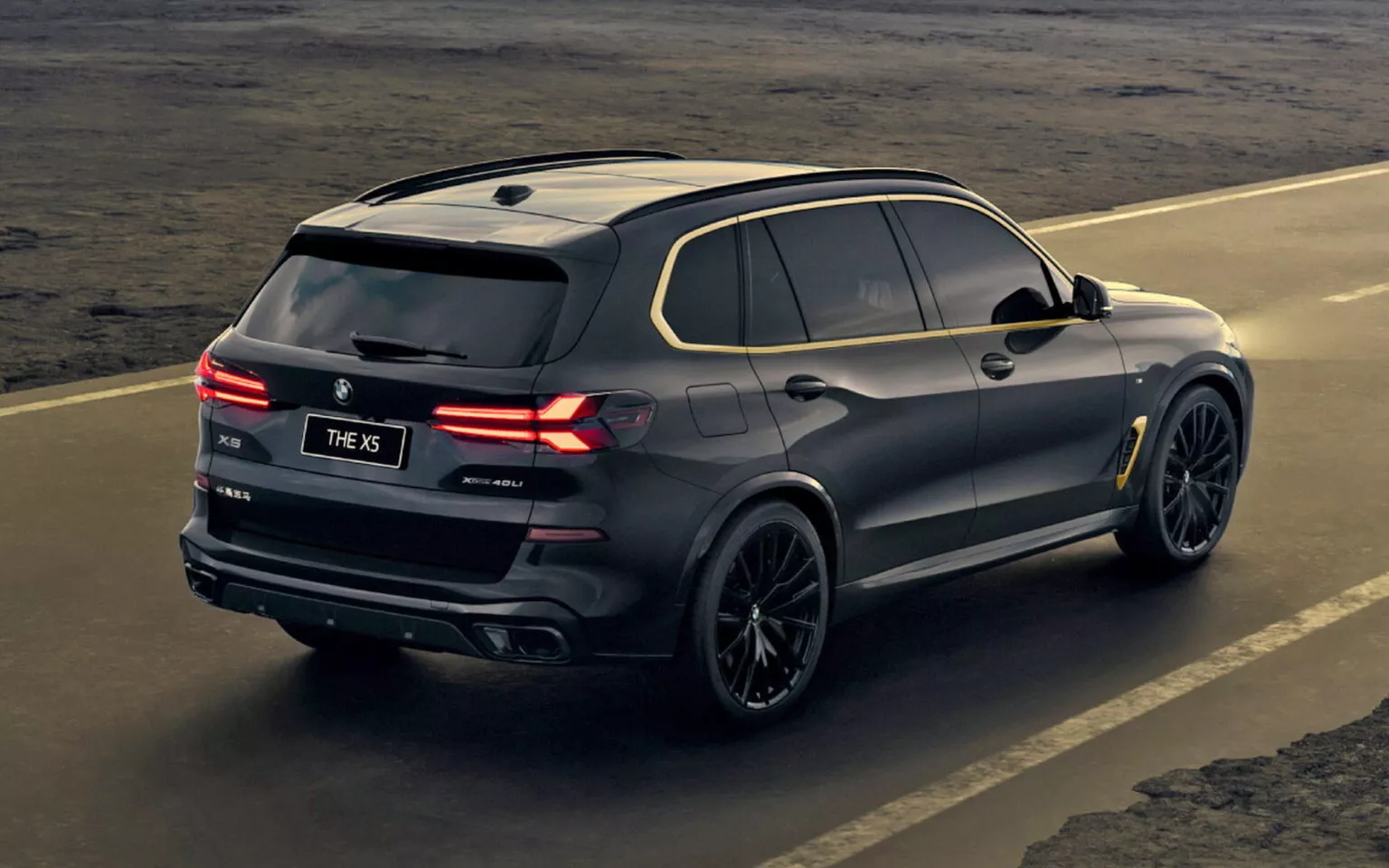
An editorial guide to choosing the ideal premium SUV for travelling in 2026, focusing on real-world range, dynamic comfort and verified load capacity. Analysis by profile with BMW, Mercedes, Audi, Volvo, Land Rover and Porsche.
Choosing a premium SUV for travelling in 2026 is no longer about asking for the biggest one on the showroom floor and adding leather. The car has to sustain 900 kilometres of motorway without leaving the driver battered, swallow five large suitcases with room to spare and —something many buyers overlook— not ruin the weekend as soon as a broken surface appears on a secondary road. Real-world range, ride comfort and verified load capacity: that is the triangle that matters.
A clarification before we begin the analysis: this guide deliberately leaves out the SUVs from Nissan and BYD. Not for lack of technical merit, but because, in our editorial judgement, other proposals in this segment offer a better balance today between perceived quality, dynamic refinement and price. With that said, let us move on to the ones that do qualify.
What defines a premium SUV geared towards travelling today
It is not the badge. It is the combination of a platform with a long wheelbase, serious acoustic insulation, genuinely supportive lumbar seats and a powertrain that can hold 130 km/h for hours without punishing the fuel tank or the occupants. A premium SUV for travelling in 2026 earns its top marks from kilometre 400 onwards, when an ordinary car starts to tire and a good one still does not ask for a break.
Real-world range: why diesel and large PHEVs still win on the motorway
On long journeys, real-world range matters more than homologated figures. A well-calibrated six-cylinder diesel still delivers 900-1,000 real kilometres on a full tank at motorway speeds, something not even the most efficient premium electric car in the segment achieves without two charging stops. Large PHEVs with new-generation batteries —Volvo with 70 WLTP electric kilometres in the XC90, for example— change the equation for mixed use, but on sustained trips they consume like a normal combustion car once the battery is depleted.
For a premium SUV with long range, the clean equation today is still a six-cylinder 3.0 diesel or a PHEV with a large battery and an efficient combustion engine behind it.
Ride comfort: air suspension, wheelbase and acoustic insulation
This is where the gentlemen are separated from the shopkeepers. Air suspension with adaptive damping is no whim: it is the difference between arriving at Sanxenxo intact or arriving with a bad back. It makes a real difference on uneven surfaces, absorbs expansion joints without transmitting a sharp jolt to rear passengers, and allows the car to be lowered on the motorway to improve aerodynamics.
A wheelbase above 2.90 metres helps stabilise the car in a straight line and keeps the rear seats from becoming a cocktail shaker. And acoustic insulation —laminated glass, door sealing, anti-vibration mats— is what allows conversation at 130 km/h without raising your voice.
Load capacity: a usable boot, not just brochure litres
Catalogue litres are misleading. What matters is the shape of the boot, the loading height, the width between wheel arches and whether the floor is flat when the second row is folded. A premium SUV with a large, usable boot typically offers 640-700 litres in five-seat configuration, rising above 1,700 with the second row folded. Below those figures, be cautious.
BMW X5 xDrive30d — from €95,437
The X5 in 3.0 mild-hybrid diesel form remains, in our view, one of the best-resolved premium SUVs for covering distance. Precise steering, a chassis that filters road imperfections without becoming soft, and a 650-litre boot with usable shapes. The air suspension on the rear axle is standard and helps with loads; the front air suspension is optional and worth including.
| Power kW | Power CV | Fuel | Label |
|---|---|---|---|
| 219 kW | 298 CV | Diesel MHEV | ECO |
Mercedes-Benz GLE 300 d 4MATIC — from €92,339
The GLE is probably the most “travelling car” of the group. Front seats with ventilation, massage and an adjustment you appreciate after four hours. Optional AIRMATIC suspension transforms the feel on poorly maintained secondary roads. A well-squared 630-litre boot. The interior has a notable perceived quality, although MBUX still has, in our view, too many menu layers for what should be a car screen.
| Power kW | Power CV | Fuel | Label |
|---|---|---|---|
| 198 kW | 269 CV | Diesel MHEV | ECO |
Audi Q7 50 TDI quattro — from €92,400
The Q7 is the quintessential “sensible premium” option. Seven seats as standard, a generous wheelbase, a 286 CV diesel V6 that at 130 km/h hovers around 8 l/100 km in real driving. The boot with all seven seats folded reaches 780 litres; with the second row folded, close to 2,000. For a large family travelling seriously, few alternatives surpass it in pragmatism.
| Power kW | Power CV | Fuel | Label |
|---|---|---|---|
| 210 kW | 286 CV | Diesel MHEV | ECO |
Volvo XC90 T8 AWD PHEV — from €91,150
The recent renewal of the XC90 PHEV reaches 70 electric kilometres, which completely changes the proposition for those who charge at home and make mixed journeys. Seven seats, a serene Scandinavian interior, benchmark seats for the segment. On long journeys the 2.0 petrol engine pulls without drama, although consumption with a depleted battery rises above 9 l/100.
| Power kW | Power CV | Electric range | Fuel | Label |
|---|---|---|---|---|
| 335 kW | 455 CV | 70 WLTP | PHEV petrol | CERO |
Land Rover Discovery D250 — from €87,620
The Discovery is the most serious proposition in the group. Seven genuinely adult-sized seats, ground clearance that helps on tracks and a 3,500 kg towing capacity that none of its German rivals matches with the same solidity. Air suspension is standard on the upper trims and transforms the feel on the road. A huge boot and exemplary modularity. That said, the brand’s historical reliability remains the asterisk in the conversation.
| Power kW | Power CV | Fuel | Label |
|---|---|---|---|
| 221 kW | 249 CV | Diesel MHEV | ECO |
Porsche Cayenne E-Hybrid — from €121,497
The Cayenne plays in a different dynamic league. It is the best-driving SUV in the segment —full stop— and in its plug-in hybrid version it combines almost 90 electric kilometres with a turbo V6 that really pushes. Optional three-chamber adaptive air suspension adjusts each wheel independently. The boot, at 645 litres, is not the largest in the comparison, and the price climbs quickly once you open the configurator. For those who prioritise driving pleasure over pure practicality, it has no rival here.
| Power kW | Power CV | Electric range | Fuel | Label |
|---|---|---|---|---|
| 346 kW | 470 CV | almost 90 km WLTP | PHEV petrol | CERO |
Recommendation by user profile
- Pure traveller, motorway and short breaks: Audi Q7 50 TDI or BMW X5 xDrive30d. Six-cylinder diesel, a thousand kilometres per tank, no drama.
- Large family with seven genuine seats: Land Rover Discovery or Audi Q7. Real third-row space for adults.
- Mixed use with home charging: Volvo XC90 T8. Its 160 electric **70-71 km WLTP** means that during the week it barely touches petrol.
- Prioritising driving and refinement: Porsche Cayenne E-Hybrid, if the budget allows.
- Best comfort-technology balance: Mercedes-Benz GLE 300 d with AIRMATIC.
Summary table and editorial ranking
| Model | Engine | Travel range | Comfort | Load | Score /10 |
|---|---|---|---|---|---|
| BMW X5 xDrive30d | Diesel MHEV 298 CV | 9 | 8.5 | 8.5 | 8.7 |
| Mercedes-Benz GLE 300 d | Diesel MHEV 269 CV | 8.5 | 9 | 8 | 8.5 |
| Audi Q7 50 TDI | Diesel MHEV 286 CV | 9.5 | 8.5 | 9.5 | 9.2 |
| Volvo XC90 T8 PHEV | PHEV 455 CV | 8 | 8.5 | 9 | 8.5 |
| Land Rover Discovery D300 | Diesel MHEV 249 CV | 8.5 | 8 | 9.5 | 8.3 |
| Porsche Cayenne E-Hybrid | PHEV 470 CV | 7.5 | 9.5 | 7.5 | 8.4 |
If we had to choose one as the best premium SUV for 2026 travel in the strict sense —range, seven seats and load— the Audi Q7 50 TDI takes the prize. If the criterion is dynamic, the Cayenne. And if it is pure refinement, the GLE.
Frequently asked questions
Is a premium diesel SUV still worth it in 2026?
For those driving more than 25,000 km a year, predominantly on the motorway, yes. The six-cylinder mild-hybrid diesel offers the best real-world range in the segment, consumption below 8 l/100 on long trips and an ideal torque curve for loading and towing. In town and on short trips, it does not pay off.
Is a premium PHEV SUV a good idea for lots of travelling?
Only if you charge at home or at your destination frequently. On continuous journeys with a depleted battery, a PHEV weighs more and consumes more than an equivalent diesel. Its sweet spot is mixed use: electric during the week, combustion at the weekend.
What real-world motorway range can be expected from these models?
Six-cylinder diesels (X5 30d, GLE 300 d, Q7 50 TDI, Discovery D300) deliver between 900 and 1,050 real kilometres on a full tank at 120-130 km/h. PHEVs manage around 600-700 km once the battery is depleted.
Is air suspension worth the extra cost?
In a premium SUV focused on ride comfort for travelling, yes, without hesitation. It provides comfort on poorly maintained roads, improves stability under load and allows height adjustment. It is the option with the best subjective return in the catalogue.
Technical specifications of the cars in this article

 Peugeot E-208 GTi: a battery-powered toy that revives the spirit of the 1980s sports cars
 New Lexus ES: luxury grows and goes electric
 First contact with the Dacia Sandero Hybrid 155: power and efficiency from €19,890
Deja un comentario