EV6 Hyundai Ioniq 5 KIA Electric Cars Comparisons Tests
Hyundai IONIQ 5 vs Kia EV6: which compact electric SUV from the Hyundai group performs best in 2026
 Iván Navarro
1 August 2026
5 min.
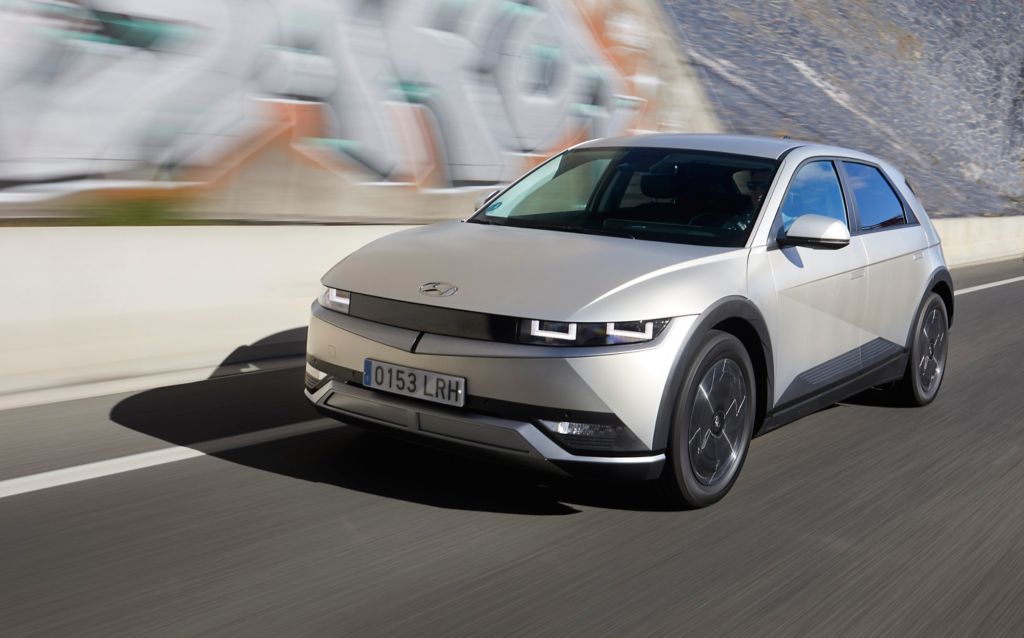
We compare head-to-head the entry-level versions of the Hyundai IONIQ 5 and the Kia EV6 in Spain: 63 kWh, 170 CV and two different ways of understanding the same car.
They share a platform, battery and even the same entry-level motor. And yet, they are not the same car. The Hyundai IONIQ 5 vs Kia EV6 is probably the most interesting internal duel in the Spanish electric market in 2026: two sibling compact SUVs, born from the same technical factory—the E-GMP architecture of the Hyundai group—that have divided up the roles using different criteria. One leans towards retro-futurism and comfort. The other towards sportiness and attitude. But which performs better for what it costs today?
Two siblings, two philosophies: shared E-GMP platform
The technical base is identical: a native 800 V electric platform, modular architecture, common thermal management and fast-charging capability that in theory reaches 350 kW in the higher versions. On that same skeleton, Hyundai and Kia have sketched two cars with opposite personalities. The IONIQ 5 stretches out, becomes angular, almost a shooting brake with 80s pixel styling. The EV6 crouches down, lengthens at the rear and flirts with the silhouette of a tall coupé.
In our view, neither is better. They are aesthetic decisions that appeal to different buyers, and that is where the real comparison begins.
Hyundai IONIQ 5 from ≈44,700 €: the bet on space and iconic design
The entry-level IONIQ 5 in Spain comes with 125 kW (170 CV), a 63 kWh battery and offers a homologated range of around 440 km. A car designed to live inside. Its almost three metres of wheelbase translate into genuinely spacious rear seating.
Driving the IONIQ 5 goes another way: softer suspension, light steering, quietness. It is not a car for attacking bends—that is what its sibling is for—but on a long journey, such as a weekend Madrid–Cádiz trip, it is enjoyed with a calm that very few rivals in the segment match.
| Power kW | Power CV | Top speed | Range | Consumption | Label | Fuel |
|---|---|---|---|---|---|---|
| 130 kW | 170 CV | ≈185 km/h | ≈440 km | ≈16.7 kWh/100 km | ZERO | Electric |
Kia EV6 from ≈49,000 €: the dynamic approach of the group
The EV6 Standard Range starts at a somewhat higher price, around 49,000 €, with the same 125 kW / 170 CV motor and the same 63 kWh battery. The homologated range drops slightly, to 430 km, penalised by its lower-slung bodywork and a less aerodynamically efficient, more dynamic approach.
Because that is what the EV6 is about: heavier steering, firmer suspension calibration, a centre of gravity that feels somewhat lower behind the wheel. On a mountain pass, the Kia has more fun. In the rear seats, however, the feeling is coupé-like: the sloping roofline takes its toll on headroom, especially if the passenger is taller than 1.85 m.
| Power kW | Power CV | Top speed | Range | Consumption | Label | Fuel |
|---|---|---|---|---|---|---|
| 130 kW | 170 CV | ≈185 km/h | ≈430 km | ≈17.2 kWh/100 km | ZERO | Electric |
IONIQ 5 and EV6 range: ten kilometres and an aerodynamic lesson
On paper, the difference is minimal: 440 km versus 430 km WLTP. In practice, those ten kilometres come from the bodywork. The IONIQ 5, despite looking like a cube, hides a surprisingly good drag coefficient thanks to its smooth surfaces and optimised mirrors. The EV6, with its more aggressive rear end, loses efficiency exactly where one would not expect it.
On the motorway at 120 km/h and in low temperatures, the real difference may widen slightly in favour of the Hyundai. It is not decisive, but it is there. If the buyer’s usage pattern includes many long-distance trips, it matters. If it is mostly urban-metropolitan driving, it fades. For additional reference, something we already discussed when analysing what to look for in a compact urban electric SUV.
Price of the Hyundai and Kia electric SUVs: where the real difference lies
Here is the key nuance: the IONIQ 5 starts from 44,700 € and the EV6 from 49,000 €. That is about 4,300 € of difference for the same mechanics, the same battery and practically the same range in kilometres. Is it worth it? It depends.
The EV6 Air adds slightly more standard equipment over the IONIQ 5 Light, so the real gap is not as large as it seems when comparing equivalent specifications. But if the criterion is “a pure electric car for less money, with a ZERO label and a solid brand behind it”, the IONIQ 5 wins on entry price. That said, these are manufacturer’s recommended retail prices, without discounts, dealership campaigns or purchase grants—real street prices can shift the picture considerably.
2026 compact electric SUV comparison: summary table with score
| Model | Power | Range | Price from | Design | Dynamics | Space | Value | Overall score |
|---|---|---|---|---|---|---|---|---|
| Hyundai IONIQ 5 | 170 CV | ≈440 km | ≈44,700 € | 9 | 7.5 | 9 | 8.5 | 8.5 |
| Kia EV6 | 170 CV | ≈430 km | ≈49,000 € | 8.5 | 8.5 | 7.5 | 7.5 | 8.0 |
Best electric SUV of the Hyundai group in 2026: verdict
If use is family-oriented, with regular long journeys and priority given to comfort and space, the Hyundai IONIQ 5 is the most rational choice. It costs less, offers slightly more range and its interior feels a step more designed for spending hours inside.
If the driver wants an electric car with character, one that responds with more composure through corners and a more aggressive look—and does not mind paying the extra ≈4,300 €—the Kia EV6 makes sense. It is not the dynamic panacea, but it is more enjoyable behind the wheel than its sibling.
Frequently asked questions
Which has more real range, the IONIQ 5 or the EV6?
The Hyundai IONIQ 5 homologates ≈440 km versus the ≈430 km of the Kia EV6 in their 63 kWh entry versions. The difference widens slightly on the motorway thanks to the Hyundai’s aerodynamics.
How much is the price difference between the IONIQ 5 and EV6 in Spain?
Approximately 4,300 € in the entry versions: ≈44,700 € for the IONIQ 5 Light versus ≈49,000 € for the EV6 Air, as indicative RRP without discounts or grants.
Do the IONIQ 5 and EV6 share the motor and battery?
Yes. Both use the E-GMP platform with a 125 kW (170 CV) rear motor and a 63 kWh battery in their entry versions. The differences lie in bodywork, calibration and equipment.
Which should I choose if I prioritise interior space?
The Hyundai IONIQ 5. Its straighter bodywork without a sloping rear roofline offers more headroom and superior habitability in the rear seats compared with the EV6’s coupé profile.
Technical specifications of the cars in this article

 Peugeot E-208 GTi: a battery-powered toy that revives the spirit of the 1980s sports cars
 New Lexus ES: luxury grows and goes electric
 First contact with the Dacia Sandero Hybrid 155: power and efficiency from €19,890
Deja un comentario