Instant fuel consumption: what is it and why should you ignore it?
 Antonio Roncero @roncero_antonio
4 August 2021
4 min.
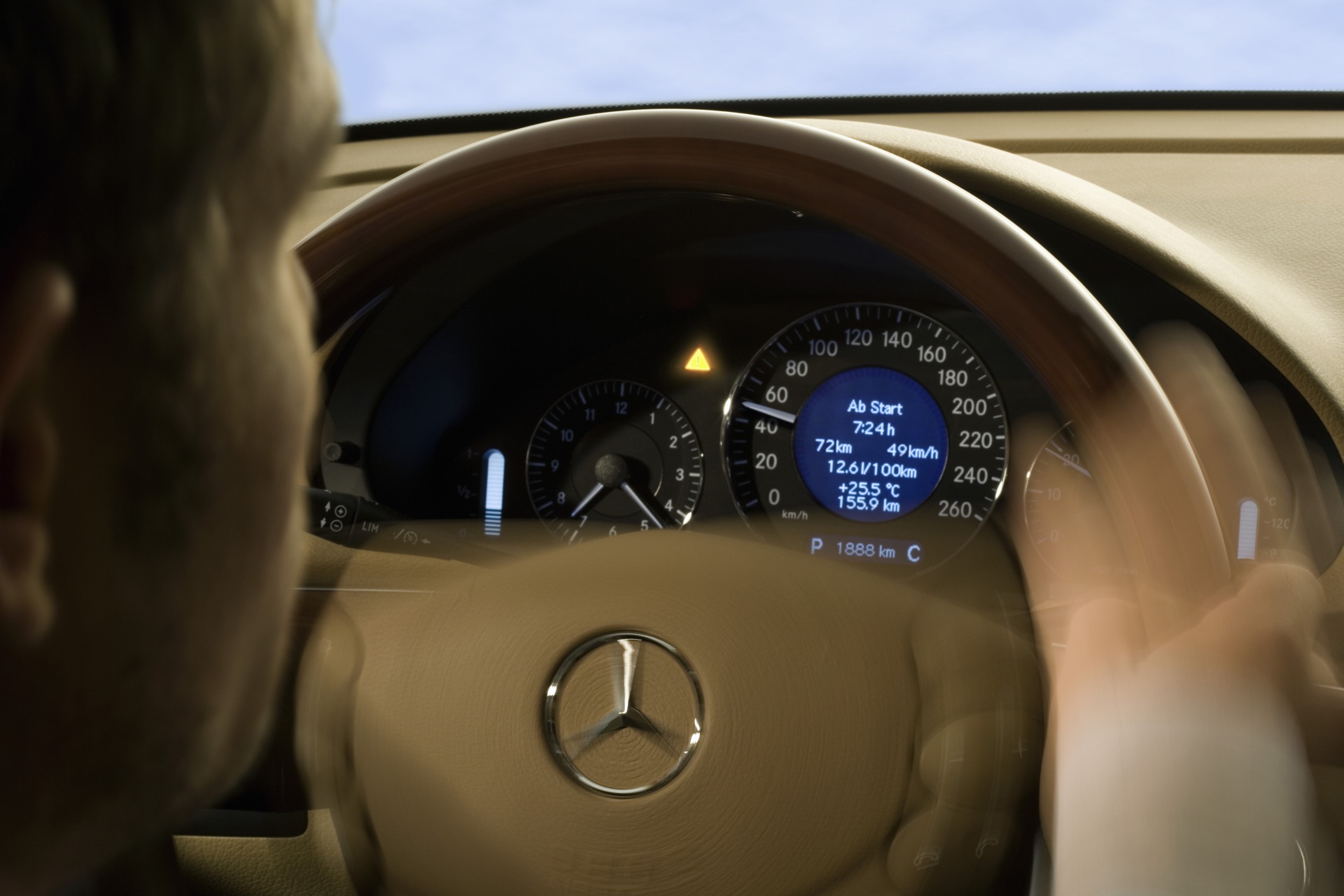
We explain what the instant fuel consumption measured by the car’s computer is and why it is best not to pay attention to this indicator
Almost all cars with a combustion engine, whether petrol or diesel, allow you to monitor the vehicle’s average consumption through the on-board computer. Some even offer the option of monitoring this consumption in two stages: one with the accumulated distance, and another that you can reset to measure partial trips.
This average consumption is usually a good indicator of what your car uses in real-world driving conditions. After all, the system calculates it based on the fuel entering the cylinders and the kilometres travelled. For this reason, it is normal for the average consumption shown by your car to be higher than the homologated consumption, which, with the WLTP standard, comes much closer to real consumption than with the former NEDC regulation, but is still lower than the real figure.
Therefore you should not worry if your car uses more than the manufacturer states: it is completely normal, since homologation tests are still roller-dynamometer tests that try to reproduce real conditions.
In any case, and although the accuracy of average consumption meters in today’s cars is very high, you can always check the deviation against real consumption. Simply make sure to fill the tank to the top, refill after a few hundred kilometres (the measurement will be more reliable the more kilometres you drive before refuelling) and do the calculation by dividing the litres consumed by the kilometres travelled.
The instant consumption indicator, which many cars also have, is another matter. And I can tell you upfront that its usefulness is… minimal or nil. What’s more, I have always argued that paying attention to it can even be dangerous. I am going to explain why.
How does the instant consumption indicator work?
The instant consumption meter works in a somewhat more complex way. Without going into the details of the formulas, it uses the fuel flow data (microlitres per second) that the engine control unit injects into the cylinders and converts it into litres per hour. As the control unit knows the speed at which the car is travelling at any given moment, it can perform a second calculation to provide the instant consumption figure in litres per 100 km. The measurement can be taken every second.
For this reason the instant consumption indicator shows a continuous fluctuation with a large difference between values, unlike the average consumption indicator, which changes slowly and progressively when we reset it, stabilising after the first few kilometres. For example, when accelerating to overtake or gain speed, we can see the car’s instant consumption “spike” momentarily to figures that can be up to 3 times, or even more, the average consumption.
Assuming we are driving on a straight road with no headwind (even the slightest gradient or gust of wind affects instant consumption), for a constant load on the accelerator pedal, the higher the speed, the better the instant consumption, and vice versa. That is why some cars do not display instant consumption below a certain speed, so as not to “scare” the driver. It is also common for the instant consumption to be measured in litres per hour when the engine is running and the car is stationary.
What is the instant consumption indicator for?
Precisely this fluctuation is what highlights the ineffectiveness of the instant consumption indicator… and its danger. At least from the driver’s point of view, what really matters is the accumulated average consumption. Each driver can reset the partial trip counter if they want to monitor their car’s consumption on certain routes, for example, in town or on the motorway, which may indeed be useful. Instant consumption measurement, therefore, is of no real use, and focusing on it can cause more than one scare.
Some people use this measurement as an aid to practise efficient driving in cars that do not have a gear-change recommendation indicator or an “eco-meter”.
And between being inevitably alarmed when we see figures on the instant consumption indicator easily exceeding 20 l/100 km when accelerating – for example, climbing a steep slope – the figure dropping practically to zero when we lift off the accelerator, and the numbers on these indicators in the instrument cluster usually being small, using it as a reference, especially if we obsess over the figures it shows, can lead us to suffer a distraction and a serious setback.
Related information of interest


 Peugeot E-208 GTi: a battery-powered toy that revives the spirit of the 1980s sports cars
 New Lexus ES: luxury grows and goes electric
 First contact with the Dacia Sandero Hybrid 155: power and efficiency from €19,890
Deja un comentario