Kawasaki ventures into electric adventure with the new Ninja-e1 and Z-e1 for A1 and B licence holders
 David Lopez @espacionblanco
15 September 2023
3 min.
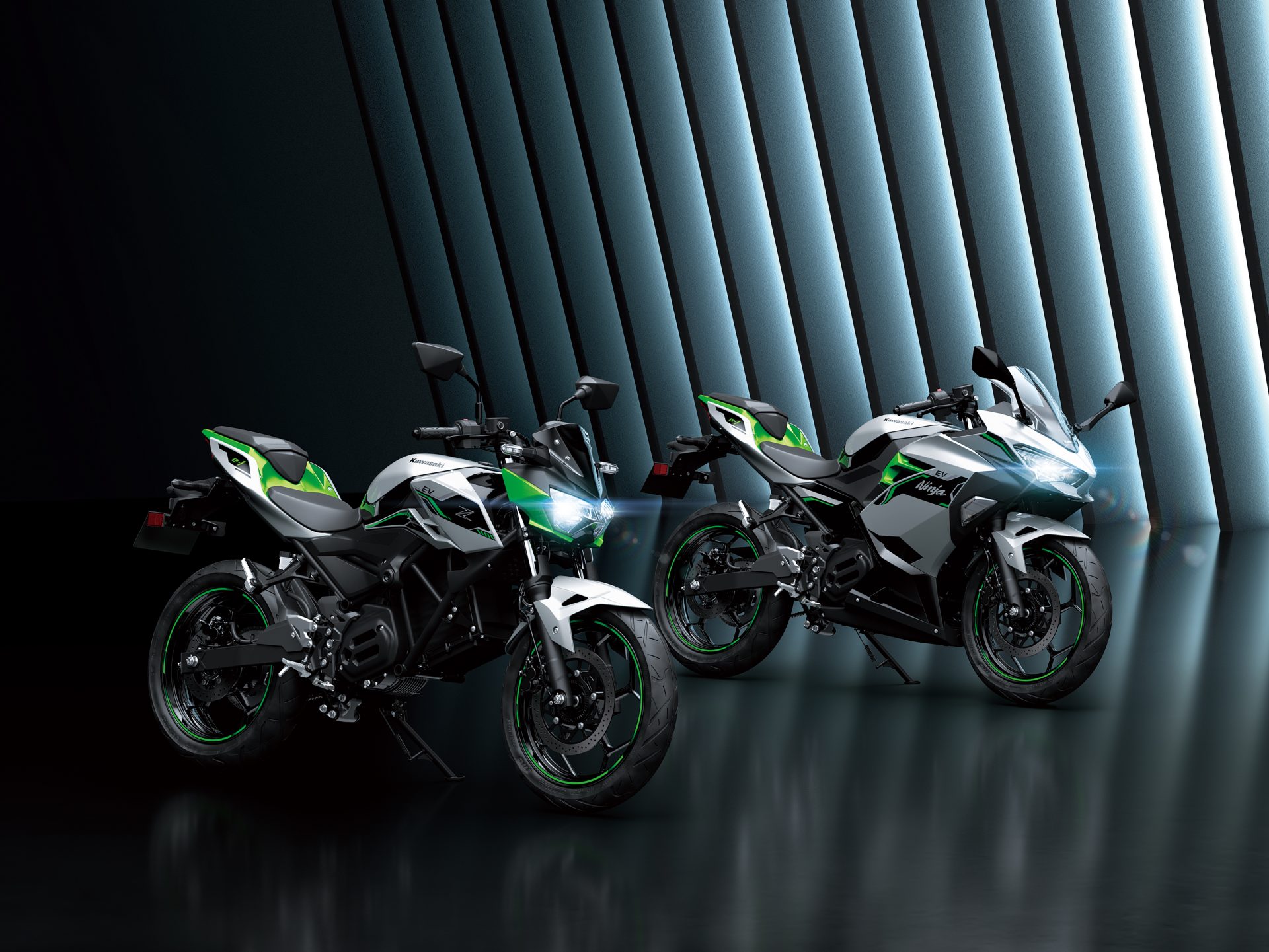
Kawasaki enters the electric mobility arena by officially unveiling the new Ninja-e1 and Z-e1, aimed mainly at A1 and B licence holders
Just as in the four-wheeled world, traditional motorcycle manufacturers are gradually moving into electric mobility, although so far cautiously and with motorcycles aimed mainly at urban use. This is the case of Kawasaki, as the Japanese brand has just officially presented its first two electric models.
Last year, during the EICMA show in Milan, the Japanese brand announced that in 2023 it would present what would be its first two electric motorcycles, and they are now a reality: the new Ninja-e1 and Z-e1. These two new models are aimed at users with A1 and B licences, with a styling that takes as reference the respective 400 cc combustion models although, as you can see in the image, they are much more stripped-down given the absence of components, as seen in the naked version.
Both models can be ordered in Brilliant Metallic Silver and Metallic Matt Lime Green, colours that will represent the brand’s future electric models. The fairing suits the Ninja-e1 much better, hiding the absence of an engine and components, which the Z-e1 lacks, giving it a look that is undoubtedly very strange, if not outright hideous, and which not even the brand’s characteristic multi-tubular chassis can save. They will also share the same TFT display with smartphone connectivity, which will show information such as the bike’s status, range or riding modes.
One point in favour of the new Kawasaki Ninja-e1 and Z-e1 is that, just as they use the same chassis as their combustion-engine siblings, they also share other components such as the brakes, equipped as expected with an ABS system and a single disc on both the front and rear axles, measuring 310 mm and 220 mm respectively; plus a telescopic fork.
Mechanically, the Kawasaki Ninja-e1 and Z-e1 use the same “brushless” electric motor rated at 5 kW (with a maximum usable output of 9 kW), together with dual removable lithium-ion batteries connected in parallel, which provide a range of 72 kilometres. Once discharged, these batteries can be recharged at a charging station where a battery can be swapped, or via a cable that connects the external charging unit to the machine through a socket located under the seat.
This electric motor allows the Ninja e-1 and Z-e1 to choose between the Road and ECO riding modes, in which the top speed is limited to 88 and 64 km/h respectively. However, if we press the “e-boost” button located below the throttle, we enjoy the 9 kW peak power in both modes, increasing the top speed to 99 and 75 km/h respectively. They also feature Walk mode, which allows manoeuvring at walking pace both forwards and in reverse, making it easier to park in tight spaces or on slopes and to move their 135 kilograms kerb weight with ease.
At the moment Kawasaki has not announced the availability of the Ninja e-1 and Z-e1 in the Spanish market or their price, something we will undoubtedly learn soon.


 Peugeot E-208 GTi: a battery-powered toy that revives the spirit of the 1980s sports cars
 New Lexus ES: luxury grows and goes electric
 First contact with the Dacia Sandero Hybrid 155: power and efficiency from €19,890
Deja un comentario