Lancia Ypsilon Electric Cars Urban
Lancia is back: first impressions of the new Ypsilon and its HF version
 Antonio Roncero @roncero_antonio
9 July 2024
8 min.
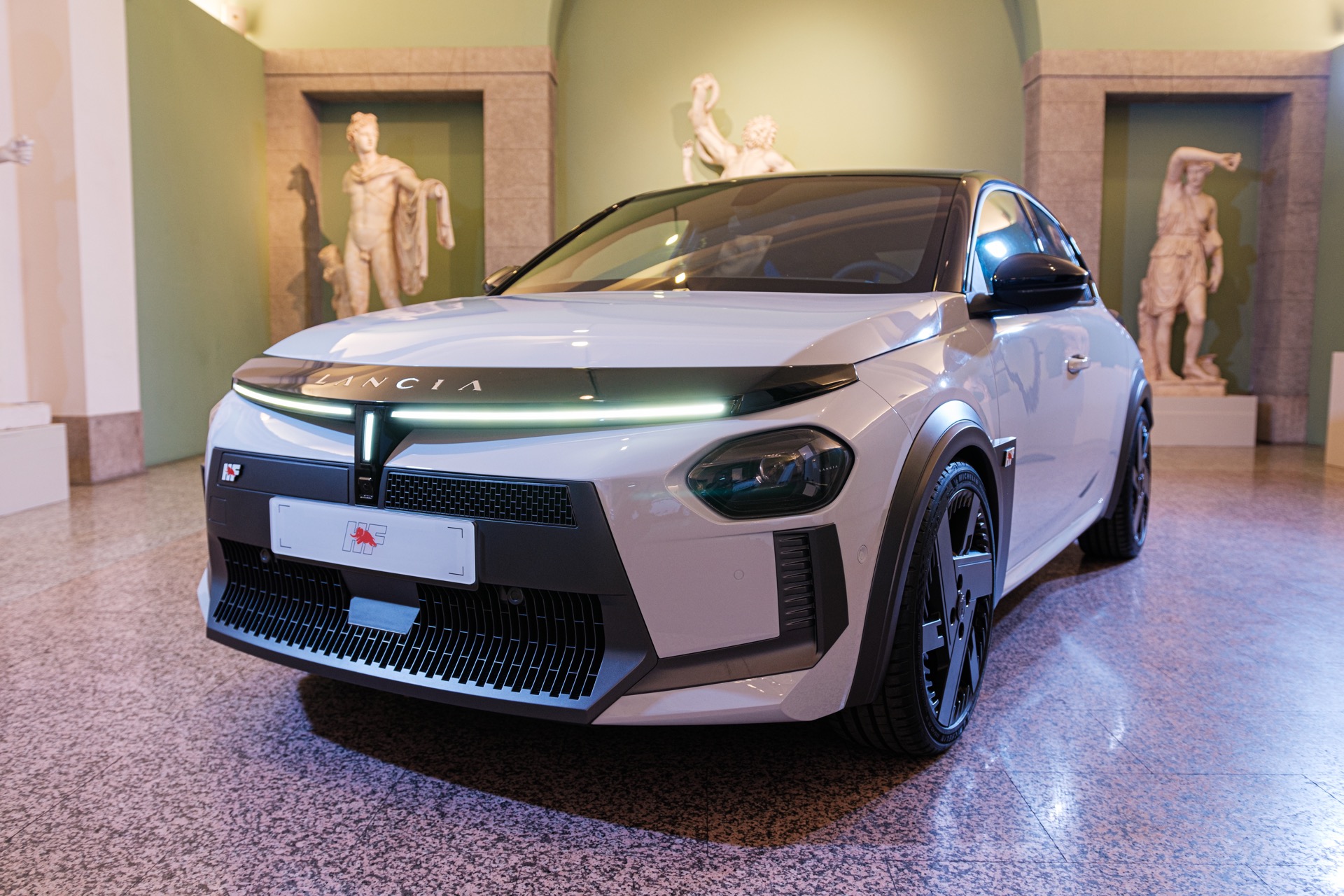
The new Lancia Ypsilon is now on sale. It is the model with which the Italian brand returns to the Spanish market, and next year it will have a HF electric performance version.
I must admit that I have a special fondness for the return of Lancia to the Spanish market, a brand I hold in particular affection. And not only because of everything behind its almost 120 years of history (which will be completed in 2026), or the countless successes achieved in competition. Specifically, one of the cars that has left the deepest mark on me in these more than three long decades dedicated to motoring journalism was the Lancia Delta HF Integrale: I spent an entire night driving it, when, just after joining the magazine where I took my first steps as a road tester, I was given the chance to take it home for an afternoon and return it the next day. I think I must have spent practically what I was going to earn in a whole month on petrol. But the “investment” was well worth it: unforgettable memories like that have no price.
In the following years I had the opportunity to test every Lancia model that reached the market: the second generation of the Delta, the MPVs Musa and Phedra, the saloons Thema, Kappa, Lybra and Thesis… and, of course, every generation of today’s protagonist, the Ypsilon. All of these cars stood out for that plus of luxury, refinement and distinction that Lancia knows so well how to deliver, but they always faced the difficulty of the “battle” in the demanding premium segment, all the more so the higher up the segments one goes.
But let us leave the war stories aside and return to today’s protagonist, the new generation of the Lancia Ypsilon, with which the Italian brand begins its new chapter in our market. Orders are already being accepted, and the first deliveries will begin at the end of the year. For 2025 the arrival of the HF version is expected, while 2026 will be the year of the Gamma, a new compact SUV, and by 2028 it will be the turn of the brand’s most iconic model, the Lancia Delta.
Lancia Ypsilon: mild hybrid and electric
The new Ypsilon’s launch in the Spanish market comes with two versions: the so-called “Ibrida”, with the 1.2-litre three-cylinder petrol engine assisted by an MHEV mild hybrid system, producing 100 CV; and the Ypsilon Electric, with a 156 CV motor, a 51 kWh battery and a homologated range of 403 km. There is nothing new under the bodywork or the bonnet: both the CMP2 platform and the engines are the same as those used in other small cars of the Stellantis Group. The only difference, beyond the specific adjustments to suspension and steering to deliver the agility, dynamism and comfort as Lancia understands them, is that the Ypsilon’s track has been widened by 3.5 centimetres compared with a Peugeot 208, for reference.
I must say that, until I saw it in person, the design of the new Ypsilon struck me as a little “difficult”, to put it one way. But in the flesh it changes completely, especially depending on the body colour chosen, which can always be paired with a black roof and other contrasting black elements. Personally I like the rear much more, with those lamps reminiscent of one of my all-time favourite cars, the Lancia Stratos. But there is no denying the car has a certain “something” that is different.
The cabin immerses you completely in the Lancia world, with a very accomplished design in which the obligatory screens and the “tavolino” share the spotlight, that multifunction “table” integrated into the dashboard which also features a induction wireless phone charging tray. The feeling is very good in terms of materials, textures and shapes, although in this first static contact I think some details still need refining -the meeting points of the roof with the windscreen and the pillars, for example- for a car that boasts premium credentials. It should also be said that these are the first pre-series units. Still, the atmosphere inside the Ypsilon is very sophisticated, and the SALA infotainment system (Sound Air Light Augmentation) contributes to this, adjusting the interior ambience through a single button that simultaneously controls functions such as the multimedia system, climate control and lighting. The idea is for the car to give the user “feedback” whenever there is some kind of interaction, and it achieves this in a pleasant and enjoyable way.
Rear-seat space is what you would expect from a car 4.08 metres long, rather tight. In return, the boot offers a usable 352 litres in the MHEV version, dropping to 309 litres in the electric variant.
Lancia Ypsilon HF: the first Lancia HF without exhaust pipes
At the static presentation Lancia arranged in Madrid we were also able to see and touch the new Lancia Ypsilon HF, for which we will have to wait until mid-2025. And the first sensation it provokes as soon as you look at it is… “what a shame it doesn’t have a turbo petrol engine of no less than 200 CV”. Mind you, given what we have seen with electric cars that also aim at sportiness, such as the Hyundai Ioniq 5 N, we are sure to be surprised.
With tracks widened by a further 3 centimetres and distinctive styling elements, including some beautiful wheels, the Ypsilon HF makes its presence felt even when stationary. It will be equipped with a 240 CV electric motor and 350 Nm of torque, and the only thing we know for now is that it promises a 0 to 100 km/h acceleration of under 6 seconds, and that it will feature a self-locking mechanical differential. The owner of the new Alpine A290 promises to be interesting.
At the brand and new Ypsilon launch event Lancia also showed us the HF Rally4 version, with which the brand will return to competition in 2025, initially in the Rally4 category and only in Italy, with a programme to train young drivers and move step by step towards more ambitious goals. The rally car, decorated in Martini colours, immediately takes us back to the glory days of the legendary 037 and Delta, which we hope Lancia can recreate very soon. That said, although according to Lancia itself the future of racing is electric, for now the return to competition with the Ypsilon HF Rally4 will use a combustion engine.
Lancia Ypsilon range and prices: from 23,900 euros
The prices of the Lancia Ypsilon in its Hybrid 100 CV version start from 23,900 euros. The monthly instalment on finance, with a deposit of 5,400 euros, is 150 euros over 36 months. In the case of the electric version the price starts from 34,500 euros. Translated into a finance instalment, with a deposit of 6,000 euros there are 36 monthly payments of 190 euros, deducting in this case from the list price the 4,500 euros of aid from the Plan Moves III without scrapping a car.
All versions include as standard from the base trim 16-inch alloy wheels, a gloss black grille with the Lancia logo in stainless steel, rear LED lights, digital instrumentation and a 10.25-inch multimedia screen each, air conditioning, cruise control, rear parking sensors, automatic full LED lights, hands-free start and a lane keeping system.
The next step up is the LX versions, which represent a price increase of 3,000 euros over the base trim. These add 17-inch wheels, tinted glass, gloss black exterior trim details, Velvet upholstery, door sills with the Lancia monogram, adaptive cruise control, front and rear cameras, front parking sensors, a 15-watt wireless charger, an ambient interior lighting system, steering wheel paddles for the MHEV versions and blind spot detection.
At launch the car is also offered with both engines in the Cassina edition limited to 1,906 units (in reference to the year the brand was founded), which adds 1,100 euros to the price over the LX trim and adds dark diamond-finish wheels, an electric massage driver’s seat, heated front seats, keyless entry with proximity sensor, and level 2 autonomous driving system (adaptive cruise control with distance control and lane keeping).
As a first point of comparison, the Ypsilon is between 1,800 and 2,000 euros more expensive than the Peugeot 208 and Opel Corsa, with which it shares its platform and engines, although the Lancia’s standard equipment is more complete, though not enough to offset that difference, which is down to the details that give the model the more luxurious and refined character the brand wants to convey.
Lancia Ypsilon – Image gallery
 Kia offers an electric range of 10 models, 50 versions and 400 possible combinations
 The seven finalists for the 2027 European Car of the Year (COTY) are exclusively electric
 Peugeot E-208 GTi: a battery-powered toy that revives the spirit of the 1980s sports cars
Deja un comentario