Animal LIUX Electric Cars ECO Family
LIUX Animal: the Spanish electric car that surprises with its design and technology
 Antonio Roncero @roncero_antonio
11 November 2022
8 min.
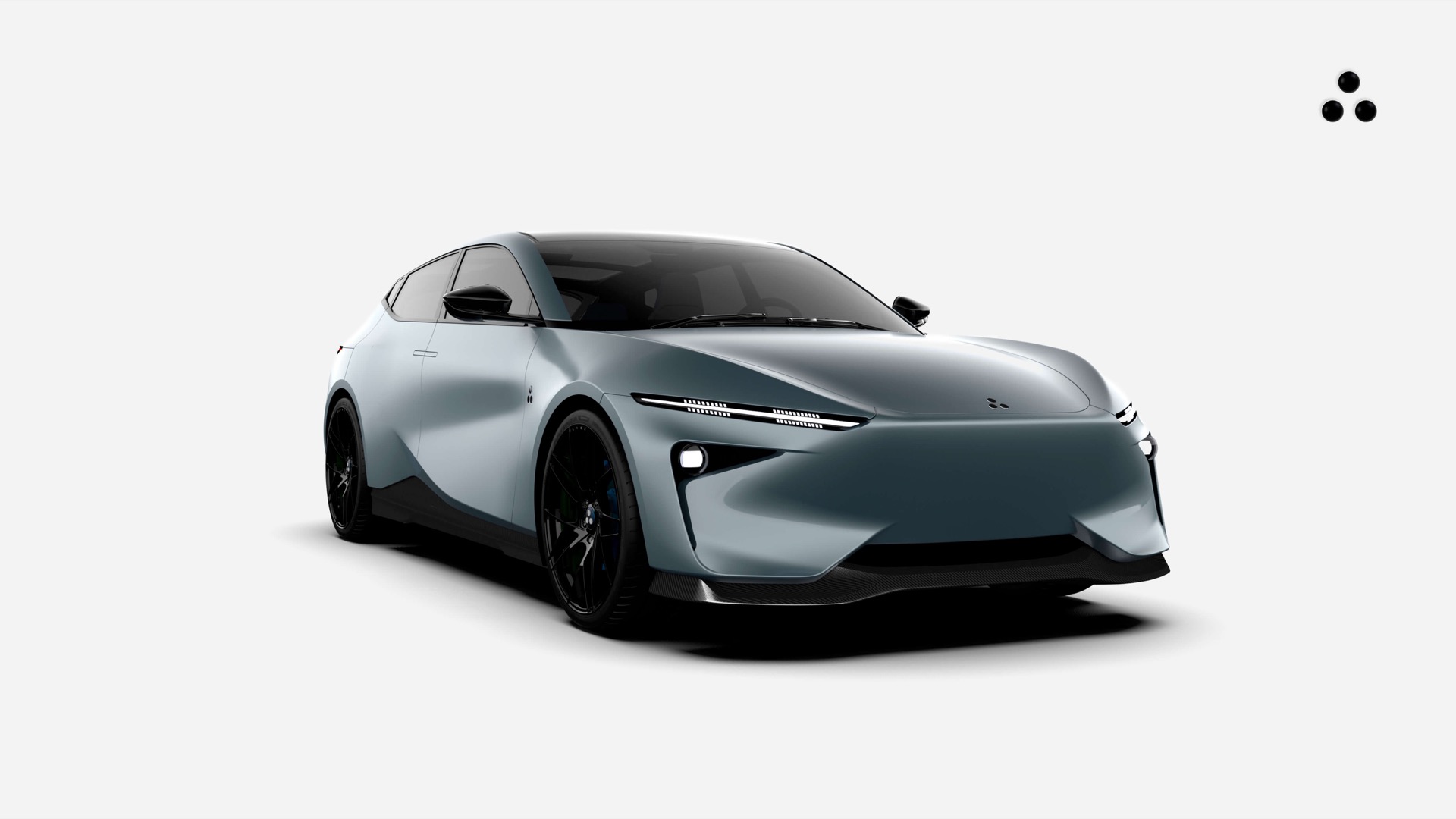
The LIUX Animal is the first car from the new Spanish brand based in Alicante, an innovative electric sporty estate with up to 600 km of range, for which pre-reservations are already being accepted.
I was particularly looking forward to the event: the first presentation of a new Spanish brand, LIUX, to introduce ourselves with its first model, the LIUX Animal, and to learn a little more about its future plans and a project that, with only a few initial brushstrokes, had already captured all my attention: “building the first car of plant-based origin in history, with a bodywork made from plant-based materials and produced by 3D printing”. And after attending the presentation, I must admit that I approach the keyboard with mixed feelings.
On the one hand, the project strikes me as very, very fascinating. We will look in more detail at the features of the car shortly, as spectacular as the very “Apple-style” staging of the presentation event. But I confess I expected to see a more finished first final prototype, and not what I felt was a full-scale model hastily finished at the last minute.
Well, perhaps I was a little predisposed, given how excited I am about the birth of a new brand like this and, above all, because the invitation claimed that what we were going to see was not a concept car, but a car already in the pre-industrialisation phase, ready to move into series production.
But what surprised me even more was the fact that, at this first presentation, when it is not yet even known where and when the foundation stone will be laid for what should be the future factory where the LIUX Animal will be produced in series from January 2024, the opening of pre-reservations and the prices, very competitive, by the way, were already announced, assuming the car lives up to its promises. Either the way things are done in this blessed car industry and in the world of communication is changing far too quickly, or I am getting older at an accelerated pace… or both.
That said, let’s get down to business and talk about the birth of a new Spanish brand, LIUX, and its first car, the LIUX Animal, which will surely surprise you as much as it did me.
What is LIUX and what are its objectives?
LIUX is a Spanish startup based in Alicante, created a little over a year ago by Antonio Espinosa and David Sancho, which currently has a team of around twenty young technology experts in different fields: design, engineering, mechanics, computing…
Trained as an architect, Antonio co-founded in 2014 the social enterprise AUARA (you’ll surely know it), a water brand that invests its profits in projects to make water drinkable in developing countries, and which recently acquired the San Miguel group. AUARA launched the first 100% recycled plastic bottle in Europe. As for David Sancho, his career has always been linked to the automotive world, first as a mechanic and later as a designer. Among other projects, he is responsible for the Boreas hybrid supercar, presented together with Michelin at the 2017 24 Hours of Le Mans.
What LIUX aims to do is, quite simply, to revolutionise the automotive industry with its way of understanding mobility, committing to decarbonisation, promoting recycling and the circular economy and, above all, simplifying the car manufacturing process to the greatest possible extent. To this end, they are committed to reducing parts and components (up to 25% fewer than a conventional car), to an architecture that allows easy assembly and disassembly (which will also make repairs easier) and, hold on tight because there are twists ahead, to plant-based materials for manufacturing the bodywork, such as polymers and composites based on natural fibres and resins.
This still sounds a bit utopian. But remember that Michelin has already presented tyres made with more than 50% biological and sustainable materials, and announces that it will reach 100% of these materials in the future. And we have also recently seen proposals such as the Citroën Oli, with its bodywork made from recycled cardboard.
Where does the project stand now? After the presentation of the Animal, the next step is the opening of the second capital investment round to attract investors for starting construction of the factory, with the aim of beginning car production in January 2024. The initial forecast is to manufacture between 4,000 and 5,000 units that year, with a capacity of up to 50,000 units per year by 2026. In the future, two other models are planned: a two-seat city car and a GT.
For the moment, agreements have already been reached with major companies in the sector for industrialisation, while sales will be carried out exclusively online. Agreements are also being made to provide the after-sales service through a network of large workshops.
The car: LIUX Animal, with up to 240 CV and 600 km of range
As for the car, as you can see in the images, the renders show a very sporty design shooting brake, which in person looks compact and tremendously eye-catching, with sharp and very clean lines, thanks to the door handles being integrated into the bodywork. The prototype we saw at the presentation did not have conventional mirrors but video cameras, and the doors did not seem functional, as they had no handles. The huge panoramic roof also draws attention.
We are looking at a car that is entered through a system of rear doors that open in the opposite direction to the front ones and without a central pillar, which is uncommon because of the difficulties this configuration entails, especially in achieving the necessary rigidity to pass demanding crash tests. This is yet another sign, without doubt, of the boldness with which LIUX approaches this project, in which metal is found only in its platform, made of aluminium.
For the bodywork, as we already mentioned, a combination of plant fibres (different types of resins, flax) is used, which are shaped using 3D printing machines, thus eliminating the entire pressing or stamping process for sheet metal, which allows weight to be reduced… and simplifies manufacturing. Up to 90% of the materials used in its manufacture will be recycled or of biological origin.
A very interesting feature is the modular “battery pack” configuration, which allows batteries to be removed and exchanged, also designed to allow new batteries with superior technology to be fitted in the future, to be used in other LIUX vehicles or even for self-consumption.
Depending on the engine and the battery modules installed (two or four, each weighing about 100 kg and with a capacity of about 23 kWh), a range of 300 km or 600 km is announced, along with the option to choose between a 190 CV version or the more powerful 240 CV one. Propulsion is always provided by a single electric motor located on the rear axle.
For now, the performance figures, beyond the range figure itself, give an acceleration from 0 to 100 km/h of around five seconds, and a top speed that, according to the website, will be 200 km/h.
As for the cabin, we can only speak about it based on what we see in the images. It will be homologated for five seats; we will have to see to what extent adults can use the rear seats, as the impression from seeing the prototype is that there is not much headroom available. The dashboard follows the increasingly widespread trend among new electric cars, with a minimalist design in which physical controls are conspicuously absent, and with a large vertically oriented multimedia screen based on an Android Auto operating system.
Reservation period now open, prices from 39,000 euros
LIUX is already accepting pre-reservations for the LIUX Animal, requiring a deposit of 200 euros (refundable if you change your mind) when configuring the vehicle on its website, where you can choose between two trims, Habibtat or Wild, the version with two or four batteries, and four body colours (blue, red, black and grey).
Prices start at 39,000 euros for the version with 2 batteries and 300 km of range, while the battery pack with 4 batteries and 600 km of range carries a surcharge of 9,000 euros. For the same engine/battery, the Wild trim costs 6,000 euros more, although its optional equipment is not detailed beyond the fact that it will include sport suspension, more powerful brakes, a specific interior, different wheels and a special body colour as well.
We expect more details very soon… and to get behind the wheel of the LIUX Animal as soon as possible, which would mean the project has moved forward, undoubtedly a splendid piece of news.
LIUX Animal – Image gallery


 The seven finalists for the 2027 European Car of the Year (COTY) are exclusively electric
 Peugeot E-208 GTi: a battery-powered toy that revives the spirit of the 1980s sports cars
 New Lexus ES: luxury grows and goes electric
Deja un comentario