Mercedes Sedans Coupés Photos Tests
Mercedes CLS 350 CDI, test drive (Engine and performance)
 Diego G. Moreira
11 February 2012
5 min.
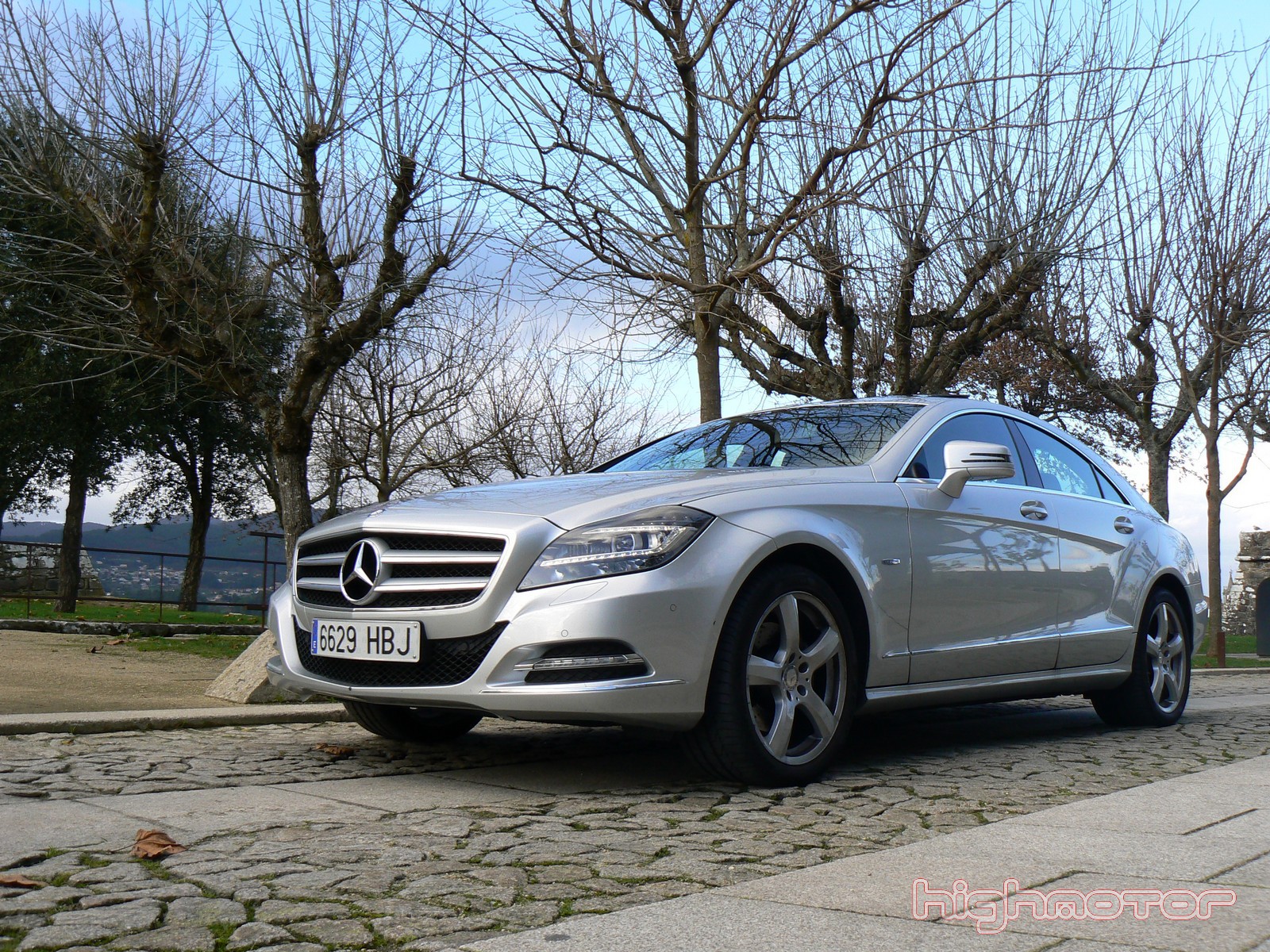
We take the wheel of the Mercedes CLS coupé-saloon, the CLS with the 265 hp V6 diesel engine.
It has been a few weeks since we had the Mercedes CLS in our garage for testing, but as we write this test, the memory still comes back to me of the good taste the CLS left us with. First, let me set the scene: we’re talking about the revamped Mercedes CLS with the 350 CDI diesel engine. A V6 that produces 265 hp, together with a powerful torque of 620 Nm.
Looking at the figures, we have a saloon almost five metres long (4.94 m), with 0 to 100 km/h acceleration in 6.2 seconds, a forceful response to the accelerator and a consumption that, on the motorway, settled at 5.8 litres per 100 km.
And the design of the new Mercedes CLS is also distinctive. Who said Mercedes was for older people? During the week we had the CLS, it was the centre of every eye. The aggressive front end and its elegant design drew attention from most of the pedestrians we passed (of all ages, from young people to the more senior).
Engine and performance
I don’t want to linger any longer on the presentation of the car, because throughout the three parts of this test we will tell you everything about this Mercedes CLS in full detail. But now we must start with the engine, a huge unit hidden beneath a massive bonnet.
Under the 350 CDI designation lies a three-litre V6 diesel engine (specifically 2,987 cc) that delivers 265 hp. The improvements BlueEFFICIENCY mean that, at the same time, consumption does not shoot up despite performance that is more than interesting, where the figure that surprised us most is its torque of 620 Nm at just 1,600 rpm.
Now that we know the engine, let’s talk about how all of this behaves in practice, beyond the figures. As soon as you pull away and press the accelerator, you have to dose your foot carefully, because with so much torque and horsepower on a single axle (rear) it won’t take much to break traction, and at that moment the elegant and civilised CLS turns into a real beast with a thrust that leaves you literally pressed into your seat.
The torque available at such low revs translates into an almost immediate response at any engine speed, with good operation of its 7G-Tronic seven-speed gearbox (with Sport mode). The strongest response comes between 2,500 and 3,500 rpm, where we again feel a strong push that does not fade until 4,000 rpm.
The gearbox responds correctly. Since it is not a dual-clutch unit, we miss a bit more speed, but overall the response is adequate. At this point, if you want to opt for this diesel engine, our recommendation is to choose 4Matic all-wheel drive, since it improves responsiveness.
When driving on country roads or the motorway, overtaking with the CLS 350 CDI is one of the easiest tasks, you simply press the accelerator gently and the surge of power is guaranteed, responding ferociously to our commands.
Top speed is limited to 250 km/h. It is a genuinely agile car despite its weight of around 1,800 kg or its almost 5 metres in length.
Handling
What best defines the CLS in terms of behaviour is comfort, this is a comfortable vehicle that isolates its passengers from the outside, wrapping them in a pleasant atmosphere, shielded from the imperfections of the road surface and outside noise.
This is thanks to good exterior sound insulation and a suspension tuned to seek interior comfort without completely giving up sportiness.
The air suspension of our test unit allowed us to choose between several firmness modes: normal and Sport, which is firmer with less travel, ideal when we decided to drive more dynamically. That said, how does it behave when we want a bit more sportiness?
The answer to this question comes down to agility. It is a heavy yet agile car. Moving 1,800 kg together with five metres of length is no easy task, but despite these factors, on winding or twisty roads it passes the test with flying colours, being quicker through corners than other smaller cars.
That said, let us clarify that it is not a sports car, or at least not a radically sporty one. It allows a certain degree of sportiness on the road, but above all it seeks the comfort of its occupants. Finally, the braking system stands out: it keeps the car under control at all times and stops it without problems, even when our tyres were not in their best condition (the test unit’s tyres were nearly worn out).
We will talk about the safety of the car in the equipment section, but it is one of the strong points of the Mercedes CLS.
Consumption
During our usual route on the motorway of 1,200 km, the car consumed an average of 5.8 litres per 100 km. Meanwhile, on country roads the Mercedes CLS was satisfied with just 6.2 litres per 100 km over several runs along our usual test routes.
The place where consumption rose somewhat more was, logically, the city, since the car’s dimensions and urban environment do not suit it. Consumption settled at 9.5 litres per 100 km.
In the second part of the test we will focus on the exterior design of this imposing CLS and also look at the interior, with only four seats. At the same time we will analyse the finishes, the boot and the storage spaces.
Photos | David Taboada, Diego G. Moreira


 Peugeot E-208 GTi: a battery-powered toy that revives the spirit of the 1980s sports cars
 New Lexus ES: luxury grows and goes electric
 First contact with the Dacia Sandero Hybrid 155: power and efficiency from €19,890
un comentario
Deja un comentario
Estética impresionante y motor bestial. Yo conozco el 320 cdi de 235 CV, su anterior generación, es un tiro y su consumo asombra con sus 8 litros.
Este coche no acaba de ser un clase S, por mucho que los comerciales lo afirmen. Sin embargo, está a un nivel muy superior de su competencia más directa.
Chao,