Dacia Spring Electric Electric Cars ECO Urban
New Dacia Spring: the "fine print of the electric city car you can drive home for 55 euros a month
 Antonio Roncero @roncero_antonio
20 December 2024
5 min.
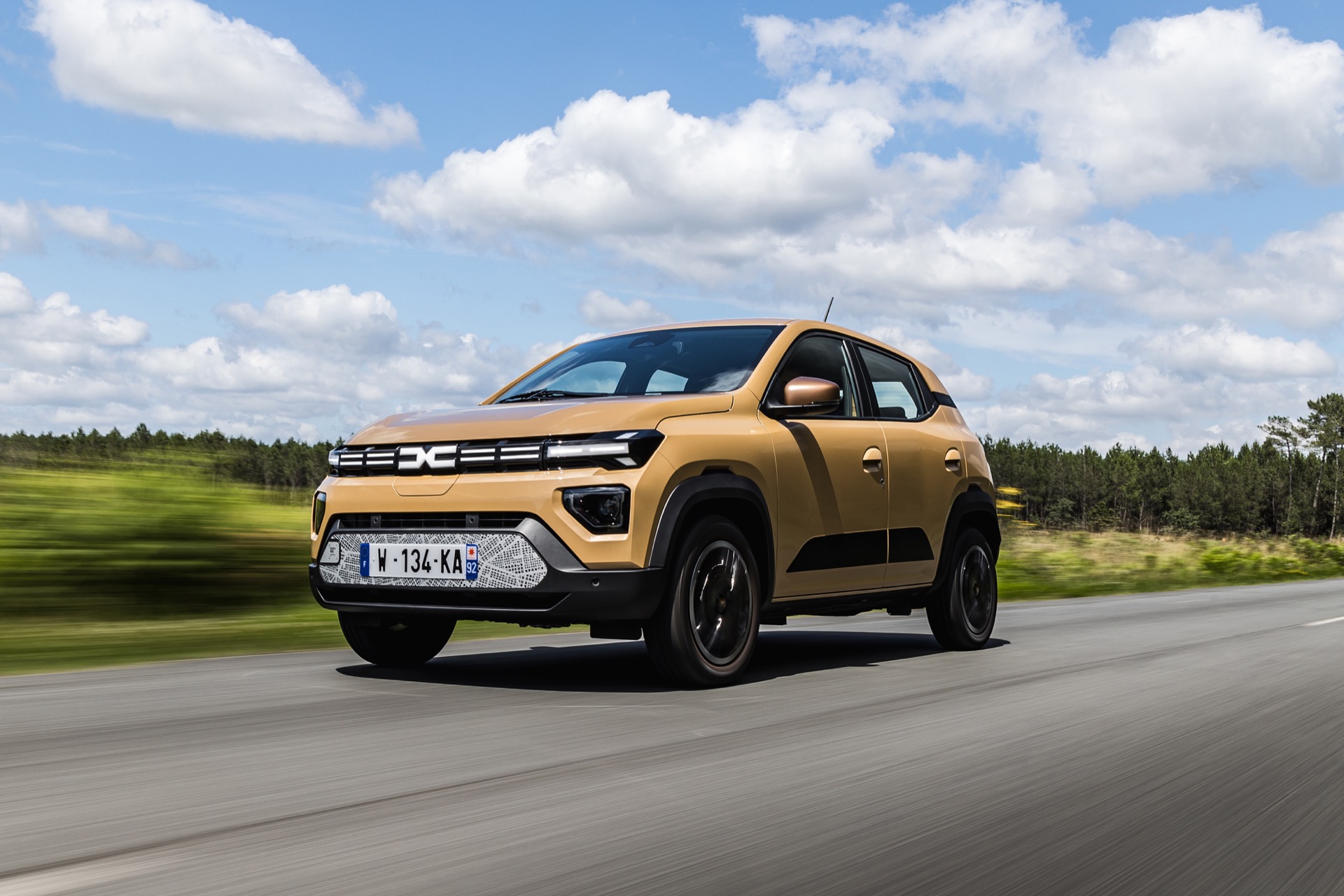
Little has changed in essentials for the Dacia Spring compared with the version we tested in 2021, which later received design and equipment updates in summer 2023, including a version with more power. Here you can read the road test of the 65 CV Dacia Spring in the Extreme trim that we carried out at the time. Now, Dacia is improving its electric city car again to make it more attractive, keeping that approach of a simple and affordable car that offers a lot for very little.
There are no mechanical changes, with the range still offering two versions, with 45 CV and 65 CV motors, always with a 26.8 kWh battery and a homologated range of about 225 km. Well, there are actually two novelties, but small ones. The first affects driving: you can now select a “B” mode on the gearbox that increases the level of energy recovery when you lift off the accelerator, which can be useful in certain situations, for example to reduce speed (when approaching a roundabout or a red light) without using the brakes. The second is an additional feature, the V2L function, which, using an adapter, allows the vehicle’s battery to supply power to electrical appliances. It is optional on the top trim and costs 600 euros.
Among the notable equipment updates, there are new headlights that promise better lighting, 15-inch alloy wheels for the top trim versions and three new driver assistance systems: fatigue detector, speed assistant with traffic sign recognition, and lane change warning system with lane-keeping assist. Inside, there is a step forward in the quality of the materials used, and the digital instrumentation is complemented by a new 10-inch touchscreen for the multimedia system that offers wireless Apple CarPlay and Android Auto integration, standard on the Expression trim.
As for price, the Dacia Spring is starting to face rivals among the cheapest electric cars on the market. For this reason, Dacia is boosting its commercial offer and offers a Spring with the more powerful motor and the top Extreme trim from 55 euros a month, since the brand advances the up to 7,000 euros of the MOVES III Plan aid to customers as an 18-month interest-free loan, a period in which the customer should already have received the aid and could repay the loan.
Another additional incentive from Dacia for potential Spring buyers is the Dacia Connected insurance, which the brand already launched with the new Duster. An insurance policy offered through Mapfre, which allows savings of up to 25% by “rewarding” customers thanks to the analysis of vehicle usage data, earning premium discounts during the first three years based on the journeys made, the actual use of the vehicle (it takes into account days when the car is parked) and rewarding safe driving.
Behind the wheel of the Dacia Spring
For the 1,000 euro difference between the two versions, forget the 45 CV or you’ll regret it. The 65 CV Spring is no “lightning bolt”, but it feels much better from a standstill and copes with some solidity on ring roads or when you leave the city and have to tackle a stretch of motorway, something that cannot be said of the less powerful version.
The steering feel remains the same, although Dacia says they have again made adjustments to the steering to improve precision, which was one of the Spring’s weak points. And I get the impression that something has improved, especially in town or when manoeuvring. On country roads or motorways, however, the excessive assistance, especially in the first degrees of steering rotation -which is also a new design-, works against it, and you have to “aim” carefully when changing direction. An area where there is still room for improvement. Without doubt, the natural habitat of the Spring is the city, where it moves wonderfully and takes advantage of its small size both when driving… and parking.
Otherwise, the Spring still stands out for its very low consumption, around 14 kWh/100 km, which makes it easy to reach and even exceed 200 km before needing to recharge, leaving some margin. Charging can be done comfortably at home overnight from a domestic socket, or by using a wallbox to charge with alternating current at up to 7 kW, reducing charging time to around 4 hours. As an option, only on the Extreme trim, for 600 euros you can equip compatibility with DC fast charging of up to 30 kW, which allows going from 20 to 80% charge in 45 minutes, although for the kind of use the Spring is intended for, I don’t think it’s necessary for the vast majority. In fact, according to Dacia, Spring users cover an average of less than 40 km a day, and 75% use home charging.
Without purchase aid, the price of the Dacia Spring in Expression trim starts at 17,890 euros, while the 65 CV Spring in the same trim costs 18,890 euros. The 65 CV version with the most complete equipment level, the Extreme, costs 19,890 euros. If you take advantage of the MOVES III Plan and have a car to scrap, you can get a Spring from 10,890 euros, and from 12,890 euros the most recommended version, the 65 CV Extreme.
Dacia Spring – Image gallery

 Kia offers an electric range of 10 models, 50 versions and 400 possible combinations
 The seven finalists for the 2027 European Car of the Year (COTY) are exclusively electric
 Peugeot E-208 GTi: a battery-powered toy that revives the spirit of the 1980s sports cars
Deja un comentario