Particulate filter: how regeneration works and how to maintain it
 Miguel Lorente
22 January 2019
3 min.
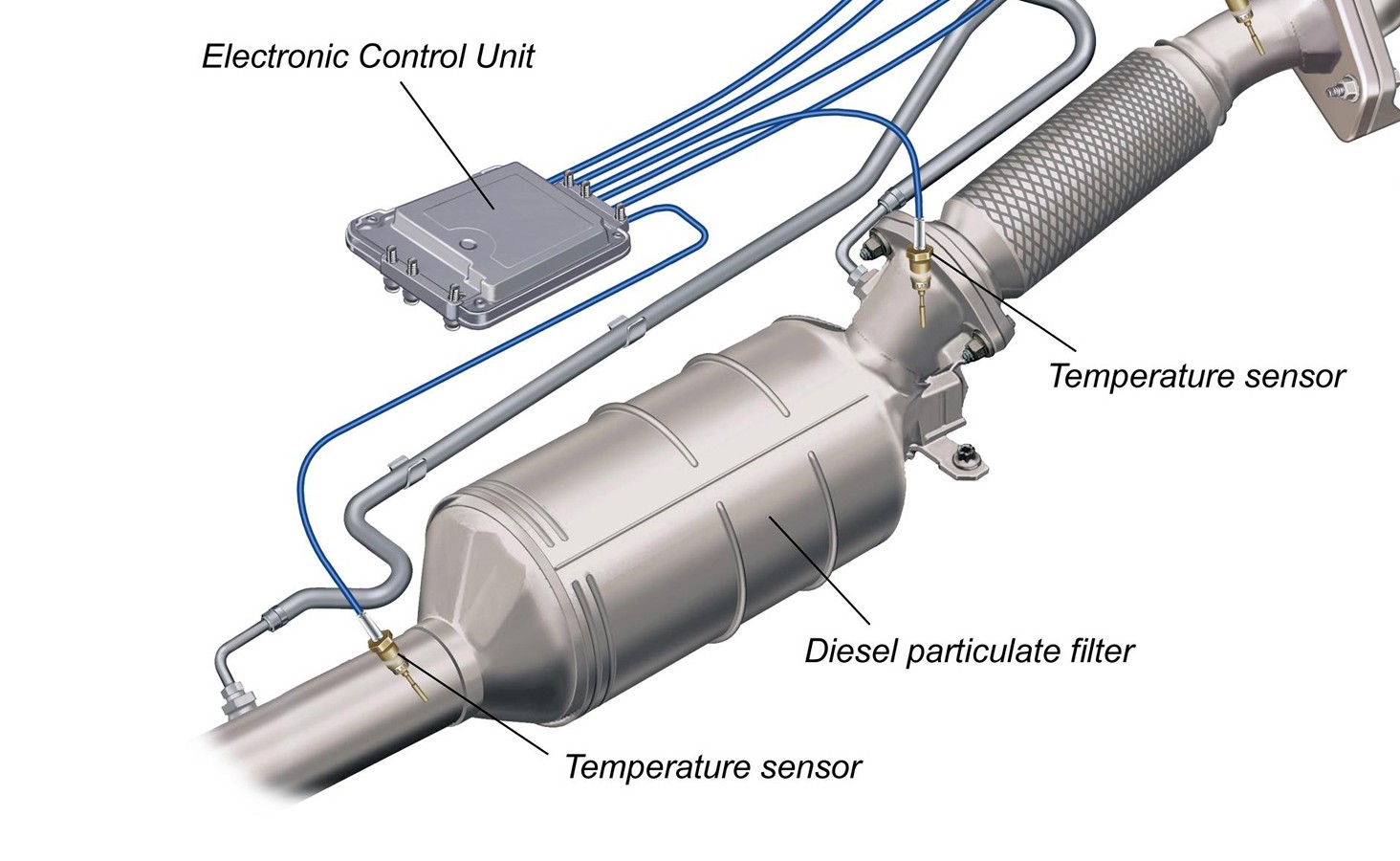
How the regeneration and maintenance of the particulate filter, DPF, work in diesel and petrol cars, and tips to prevent its deterioration.
The particulate filter was, until recently, an element associated with diesel cars. This device acted as an ally against the solid residues produced by diesel fuel but, according to studies carried out on new engines, the use of a particulate filter on petrol cars also reduces the environmental impact and, therefore, improves air quality.
Because of its installation in diesel and petrol cars, the particulate filter, or anti-particulate filter, has become one of the most popular components in cars in general over recent times. It is a part of the exhaust system that was already the subject of the article describing what the DPF is and how it works.
However, in this article we are going to cover the regeneration of the anti-particulate filter and its care.
Regeneration of the particulate filter
Regeneration of the anti-particulate filter refers to the burning off of the solid residues from the gases. This process does not occur constantly. It depends on how the car is used and how it is driven. It can take place every 300, 500 or up to 1,000 km, depending on the vehicle.
It is the car’s ECU that, according to established parameters, identifies the ideal moment for the heat destruction of the solid particles. Then, the car should be driven for about 20-30 km above 2,500 rpm and at speeds above 60 km/h.
The DPF regeneration phase has a variable duration. It can last from 10 to 20 minutes. During this period, the vehicle, besides being in motion, should not be switched off. If it is not carried out successfully and, after several autonomous attempts, the vehicle will light a fault warning light which, through diagnosis, will identify the need for a cleaning of the anti-particulate filter at a workshop.
The price of cleaning a particulate filter depends on the procedure carried out. The cheapest ones, where the DPF cleaning is done with chemical products, some of these liquids cost just over 20 euros, but their effectiveness is not the highest; then come other, more expensive treatments, whose prices start at 200 euros, such as thermal treatments (application of high temperatures, a procedure similar to the one the car would do itself but involving removing and reinstalling the part), up to the use of ultrasound to clean the anti-particulate filter, with which the vast majority of residues can be removed. However, it has been proven that the most effective method for cleaning the DPF is using specific filter washing machines that manage to remove between 98 and 99% of the residues.
How to care for the particulate filter
It can happen that, in vehicles used mainly for short trips, for example cars used primarily in the city, the particulate filter becomes clogged and deteriorates.
Moreover, this would be one of the reasons why a car could receive an unfavourable result in the new MOT inspection, either because one of the warning lights on the instrument cluster is on, or because it is detected through the reading of the ECU via OBD, due to the anti-particulate filter being clogged.
To prevent it from clogging, it is recommended to routinely carry out, for example once a month or every 200 km in urban driving, a journey like the one described in the DPF regeneration: driving for about 20 km at over 2,500 revolutions outside built-up areas.


 The seven finalists for the 2027 European Car of the Year (COTY) are exclusively electric
 Peugeot E-208 GTi: a battery-powered toy that revives the spirit of the 1980s sports cars
 New Lexus ES: luxury grows and goes electric
Deja un comentario