Atto 2 Austral BYD C-HR Ford HAN Honda HR-V Hyundai KIA Kuga Nissan Qashqai Renault S-Cross Sportage Suzuki Symbioz Toyota Tucson ZR-V Hybrid Cars Buying Guides Rankings SUV
Ranking 2026: the 6 best value-for-money hybrid SUVs under 35,000 euros
 Dani Montesinos
24 September 2026
7 min.
Analysis of the six most recommended self-charging hybrid SUVs under 35,000 euros in Spain, based on equipment, consumption and total cost of ownership
The hybrid SUV segment under 35,000 euros has become the most hotly contested ground in the Spanish market. And with good reason: it is where the ECO label, real-world consumption that holds its own against a well-tuned diesel, and reasonable maintenance costs all converge. The range has widened, prices have held steady—only just—and the Spanish buyer has, in 2026, a serious shortlist to choose from without exceeding the budget.
From the initial list of candidates we have ruled out two names that many readers would expect to see. The Nissan Qashqai e-Power, in our view, offers a package that falls short of Korean and European rivals when standard equipment, on-board technology and real consumption are weighed against a similar outlay. The case of the BYD Atto 2 hybrid follows a similar logic: in our opinion, the Chinese manufacturer’s offering still does not quite match what Toyota, Hyundai or Renault deliver in this price bracket when proven reliability, service network and three-year resale value are measured. With that clarified, let us move on to the seven that do qualify.
What we mean by “good value for money” in a hybrid SUV in 2026
The RRP alone is not enough. A well-designed hybrid SUV is judged by its real WLTP consumption (and its deviation from mixed-use figures), the standard equipment that avoids having to step up trim levels, the warranty on the hybrid system—key if you plan to keep the car for more than five years—and its residual value at 36 months. The after-sales network also counts: the difference between a workshop 15 km away and one 60 km away shows up on the annual bill.
Another factor that carries increasing weight: eligibility for the Plan Auto+ incentives when the model falls within its criteria, and the premium over the same car in pure petrol form. If the hybrid’s extra cost is not recovered within five years of normal use, something is wrong.
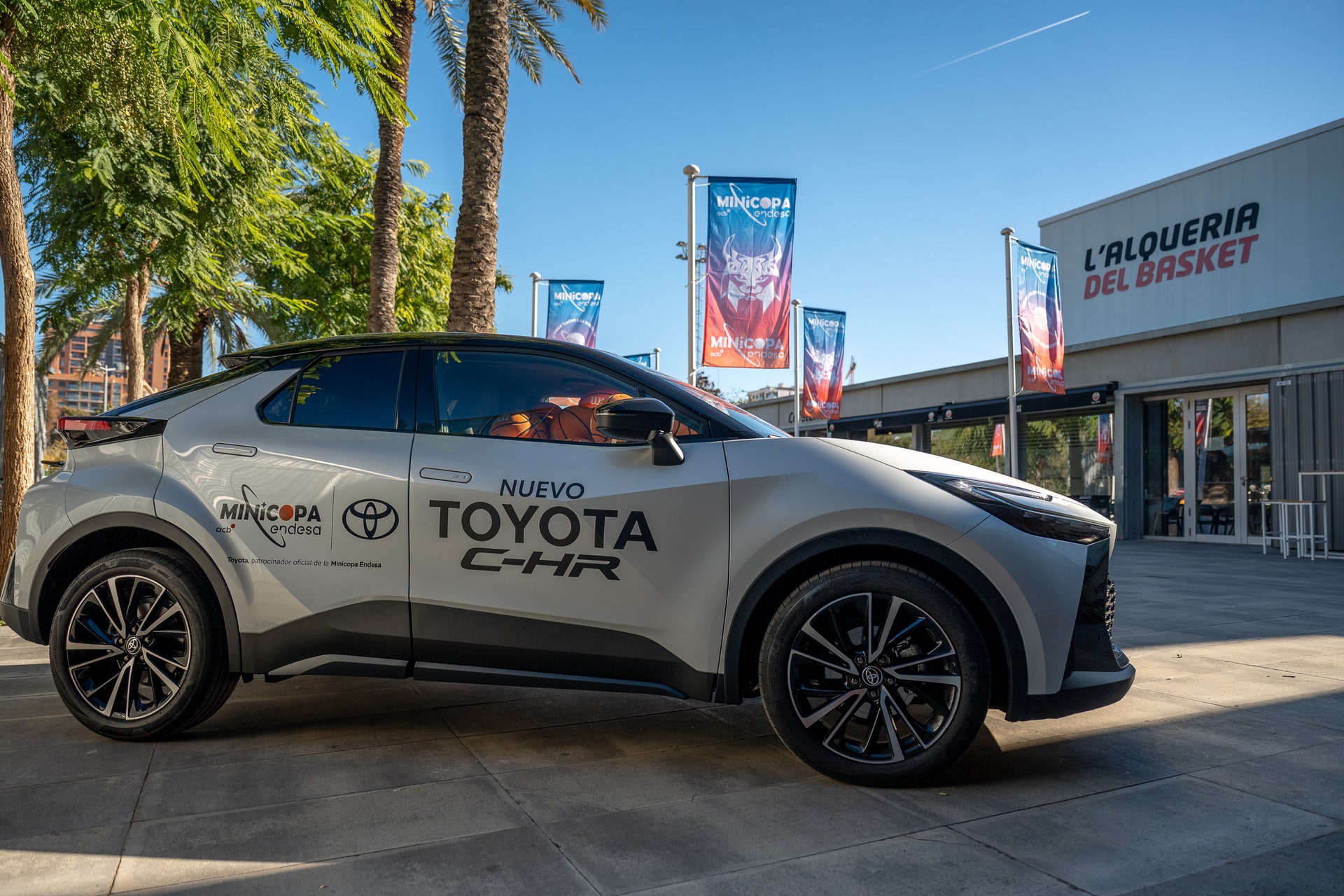
1. Toyota C-HR 1.8 Hybrid — from 30,050 €
The benchmark. The fifth generation of the Toyota hybrid system has smoothed out the brand’s two historical weaknesses: the noise under acceleration and the rubbery feel of the brake pedal. The C-HR remains the most efficient compact hybrid SUV on the market in real mixed use, and its standard equipment—latest-generation Toyota Safety Sense, 12.3″ screen, dual-zone climate control—has moved up a step from the previous generation.
Striking design, yes, but with a trade-off: the rear seats feel a step behind more practical rivals, and the boot (388 litres) is not its strong point. Even so, for urban-mixed use with two adults in front and children behind, it is hard to beat.
| Power | WLTP consumption | Label | Fuel |
|---|---|---|---|
| 140 CV (103 kW) | 4.8 l/100 km | ECO | Hybrid |
Hyundai Tucson2. Hyundai Tucson 1.6 T-GDI HEV — from 31,445 €
The hybrid Tucson plays in a different league in size (4.50 m) and presence. The 239 CV combination pairs a 1.6 turbo with an electric motor and a conventional six-speed automatic gearbox, not a CVT—and that shows on the motorway, where the car behaves with a linearity that the Toyota models find harder to match.
The interior is among the best in the segment for materials and ergonomics, the five-year warranty with no mileage limit gives peace of mind, and the entry-level equipment already includes what you need. The catch? Real urban consumption drifts quite far from the WLTP figure; on the open road is where it shines.
| Power | WLTP consumption | Label | Fuel |
|---|---|---|---|
| 239 CV (175 kW) | 5.7 l/100 km | ECO | Hybrid |
3. Kia Sportage 1.6 T-GDI HEV — from 27,460 €
The Tucson’s technical sibling, with the same mechanics and a different philosophy. The Sportage opts for a bolder design, a dual curved-screen dashboard as standard from mid-level trims, and a seven-year warranty that remains the market reference. In practice, choosing between the Sportage and the Tucson comes down to styling and which dealership treats you better.
| Power | WLTP consumption | Label | Fuel |
|---|---|---|---|
| 239 CV (175 kW) | 5.7 l/100 km | ECO | Hybrid |
4. Renault Symbioz E-Tech 145 — from 30,149 €
The recent revelation. The Symbioz builds on what was learned with the Austral and offers it in a more compact format (4.41 m) at an entry price that reshuffles the deck. The E-Tech system with its multimode claw-type gearbox works surprisingly well in town—where it runs on electric power much of the time—and the interior is well above what Renault offered three years ago.
It costs less than an equivalent Toyota C-HR and offers more interior space. On paper, the candidate with the strongest value-for-money argument on the list.
| Power | WLTP consumption | Label | Fuel |
|---|---|---|---|
| 160 CV (117 kW) | 4.7 l/100 km | ECO | Hybrid |
5. Ford Kuga FHEV — from 31,076 €
The hybrid Kuga has been on the market for years and has steadily refined its details. It is spacious, comfortable on the open road and has a boot (475 litres) above the average. The recent cosmetic update has done it good, and the SYNC 4 interface responds smoothly.
That said, in urban consumption it sits a step behind the Japanese models, and its dashboard plastics do not compete with those of the Tucson. For those who cover monthly mileage on motorways and value space, it remains a rational purchase.
| Power | WLTP consumption | Label | Fuel |
|---|---|---|---|
| 180 CV (132 kW) | 5.3 l/100 km | ECO | Hybrid |
Suzuki S-Cross6. Suzuki S-Cross Full Hybrid — from 27,222 €
The most affordable in the ranking and the only one offering AllGrip all-wheel drive in this price bracket without the cost spiralling. It is not as sophisticated a hybrid as the previous ones—the system is more modest and real consumption does not drop as much—but for someone living in a rural area, with occasional snow and needing an ECO label, it is a hard option to beat on value.
| Power | WLTP consumption | Label | Fuel |
|---|---|---|---|
| 110 CV (81 kW) | 5.4 l/100 km | ECO | Hybrid |
Summary table and editorial score
| Model | Price from | Power | WLTP consumption | Score /10 |
|---|---|---|---|---|
| Toyota C-HR Hybrid | 30,050 € | 140 CV | 4.8 l | 9.0 |
| Renault Symbioz E-Tech | 30,149 € | 160 CV | 4.7 l | 8.8 |
| Hyundai Tucson HEV | 31,445 € | 239 CV | 5.7 l | 8.7 |
| Kia Sportage HEV | 27,460 € | 239 CV | 5.7 l | 8.6 |
| Ford Kuga FHEV | 31,076 € | 180 CV | 5.3 l | 8.0 |
| Suzuki S-Cross Hybrid | 27,222 € | 110 CV | 5.4 l | 7.8 |
For a methodological guide to the segment, it is worth reviewing the buying criteria for compact hybrid SUVs we have already published.
Frequently asked questions
Which hybrid SUV has the best real-world consumption under 35,000 euros?
The Toyota C-HR 1.8 Hybrid remains the benchmark for real urban and mixed consumption, with figures that in everyday use range between 5.0 and 5.5 l/100 km. The Renault Symbioz E-Tech has come very close and in pure urban driving can match it.
Is it worth paying more for a plug-in hybrid instead of an HEV at this budget?
Below 35,000 euros, the PHEV SUV offer is limited and tends to be confined to entry-level trims. If you do not have daily home charging, the HEV makes more sense: lower weight, lower price, no need to plug in, and an ECO label that is equally valid in most low-emission zones.
What warranty covers the hybrid system on these models?
Toyota extends the hybrid system warranty to 10 years if official servicing is carried out. Kia keeps its seven years in total, Hyundai five years with no mileage limit, and the rest follow the European standard of three years or 100,000 km.
Do hybrid SUVs qualify for the Plan Auto+?
The Plan Auto+ prioritises vehicles with a CERO label, although it also covers certain hybrids with an ECO label depending on the current criteria. It is advisable to check the official website before purchase to verify the amount and the conditions applicable to the specific model.
Technical specifications of the cars in this article


 Peugeot E-208 GTi: a battery-powered toy that revives the spirit of the 1980s sports cars
 New Lexus ES: luxury grows and goes electric
 First contact with the Dacia Sandero Hybrid 155: power and efficiency from €19,890
Deja un comentario