Seven decades and seven models: these are the most iconic Porsche of all time
 Javier López @jlopezbryan96
29 May 2018
6 min.
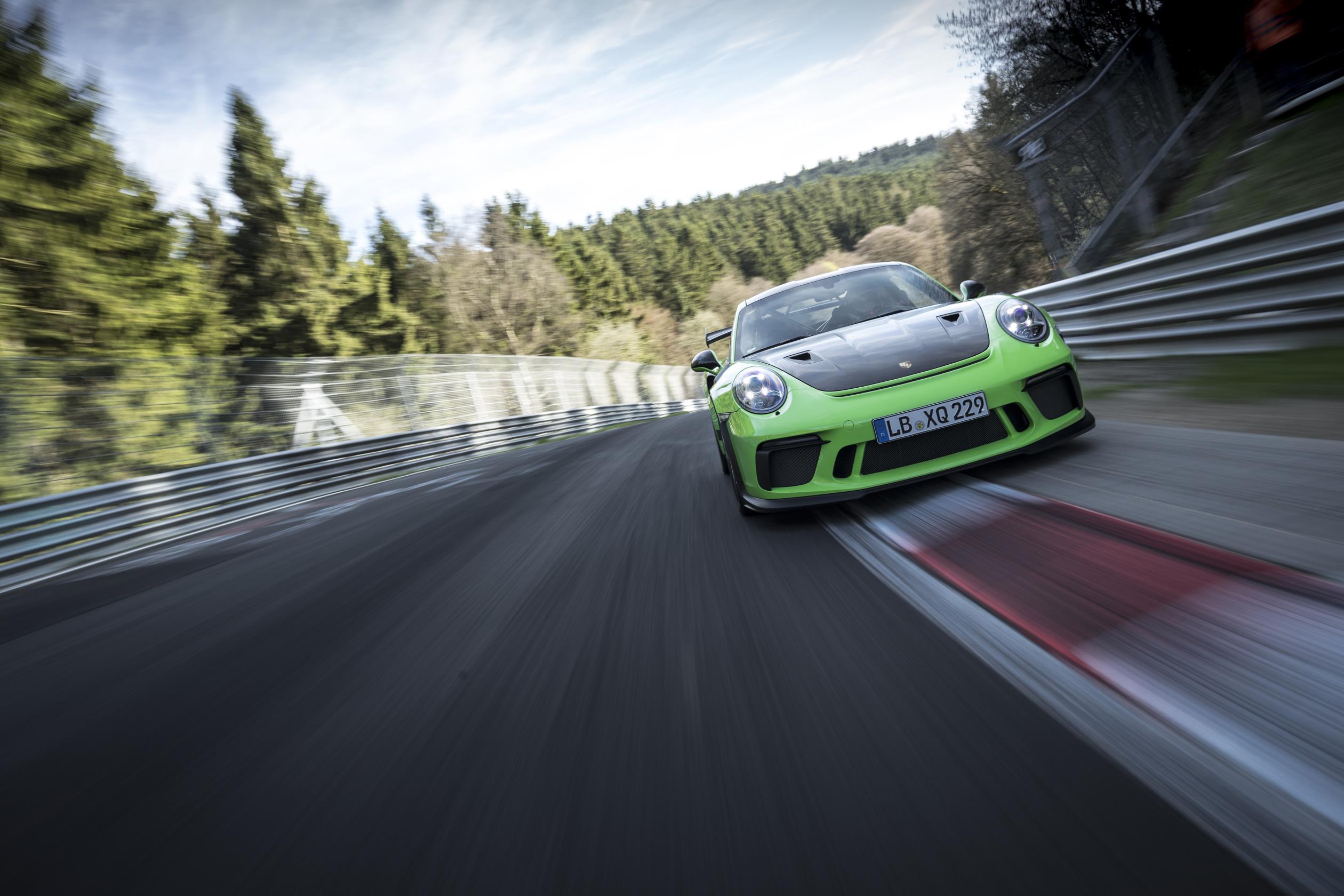
Porsche has put together a list of the 7 most iconic vehicles from 7 different decades, ranging from models like the 356 to the Cayenne or the 918.
We’re not exaggerating when we say that Porsche is one of the brands with some of the most iconic vehicles of all time, which have evolved throughout history. However, the German manufacturer has carefully selected its 7 most special models, spread across 7 different decades, each of which marked a before and after in the world of motoring. To do so, Porsche has produced this interesting video, where we can enjoy a brief history of these automotive icons.
Within this group of models, the Stuttgart brand has made sure to choose those vehicles that left their mark on motoring history, where we will find everything from classics to SUVs. Without a doubt, Porsche has known how to revolutionise the automotive industry with the creation of vehicles that are versatile as well as sporty.
Porsche 356 SL: the first steps of a great story
Porsche showed promise with its first creations, and it was in the 1950s that the 356 SL made its appearance. As we saw recently, the 356 was the first Porsche production model, and the SL designation gave it an even more sporty character.
The letters SL stand for “Super Leicht” (super light), a very important characteristic in the motoring world, both today and in the past. This designation gave the 356 a considerably lower weight, which was combined with its 4-cylinder horizontally opposed engine capable of producing 46 CV and reaching a top speed of 160 km/h. These features turned it into one of the most iconic models in motoring history and it set the pace for the German brand.
Porsche 911: the birth of a legend
Few cars today are as famous as the 911, a Porsche model that has passed on its legacy from generation to generation since the 1960s. It was in 1963 that the German firm presented the 901, a name that was later changed to the current 911 because Peugeot asserted its copyright.
After arduous work to develop a successor to the Porsche 356, the company managed to bring to life what we know today as the 911. Its 2+2 sports car layout, together with its road efficiency, charmed everyone present and, over time, it became a true milestone of the automotive world.
Porsche 917 KH: sportiness for the world of competition
Porsche has always stood out for its creations focused on the world of racing, which have countless times claimed first place. In the 1970s, the German brand decided to unveil the 917 to the world, a vehicle designed to revolutionise competition and to be crowned absolute champion of the 24 Hours of Le Mans.
Under its bodywork was a powerful 12-cylinder engine capable of delivering 630 CV and reaching a top speed of 360 km/h. These figures allowed the 917 to achieve glory in numerous competitions and this is why the German firm has decided to keep it a place among the 7 most iconic vehicles.
Porsche 959: passion raised to the next level
The 1980s were the perfect era to introduce the iconic Porsche 959, one of the brand’s first hypercars, which went on to create a legacy. It was initially conceived as a Group B rally car, but it was later decided to adapt it for the road. From this idea the 959 was born as we know it today, becoming one of the most beloved Porsche models, thanks as much to its beauty as to its efficiency.
Its direct rival was the Ferrari F40, one of the few vehicles it could be compared with at the time, since the 959 housed a 6-cylinder boxer engine capable of producing 450 CV. This output was sent to all four wheels, which made it an unstoppable car on the road and served as the basis for the first Porsche Carrera 4. At the same time, exclusivity is another hallmark of the 959, as only 292 units were built worldwide.
Porsche Boxster: open-air enjoyment
In the 1990s Porsche decided to let its hair down and offer a more carefree vehicle that never compromised on sporting performance. Thus the Boxster emerged, a two-seater convertible offered as a more modest alternative to the 911 Cabrio, yet one that remained faithful to what it meant to be a Porsche.
Under its skin sat a 6-cylinder boxer engine capable of producing 204 CV in its most modest version, a figure that rose to 252 CV if the S variant was chosen. In this way the German firm once again achieved success, as the Boxster is one of the best-selling models in the brand’s history.
Porsche Cayenne: because sportiness and versatility can go hand in hand
In the 2000s Porsche decided to break all the conventions and offer the world something never seen before: an SUV. This concept combined the luxury and sportiness typical of a Porsche with the versatility of five doors and five seats. The Cayenne was a risk for the company and, although many were sceptical about this creation, it proved to be a concept that fitted perfectly.
Today Porsche has created the third generation of its flagship SUV, which is faithfully accompanied by another of the brand’s great successes, the Macan. In this way the German brand has managed to expand its horizons and reach a new type of customer who does not want to give up either sportiness or comfort.
Porsche 918 Spyder: the king of kings
Porsche entered a few years ago into a battle with Ferrari and McLaren, two brands that were both developing a hypercar. After countless years of experience building the 959 and the Carrera GT, the brand decided to create one of the fastest vehicles in the world, which led them to shape the 918 Spyder.
This vehicle combines a combustion engine with an electric motor, which allows it to generate more than 800 CV and reach 100 km/h in just 2.5 seconds, a time that crowns it as one of the fastest production vehicles in the world.
https://youtu.be/2ue28GTcf4U


 Kia offers an electric range of 10 models, 50 versions and 400 possible combinations
 The seven finalists for the 2027 European Car of the Year (COTY) are exclusively electric
 Peugeot E-208 GTi: a battery-powered toy that revives the spirit of the 1980s sports cars
Deja un comentario