Subaru WRX STI, road test (exterior design, interior design and boot)
 Daniel Valdivielso @valdi92
11 March 2015
5 min.
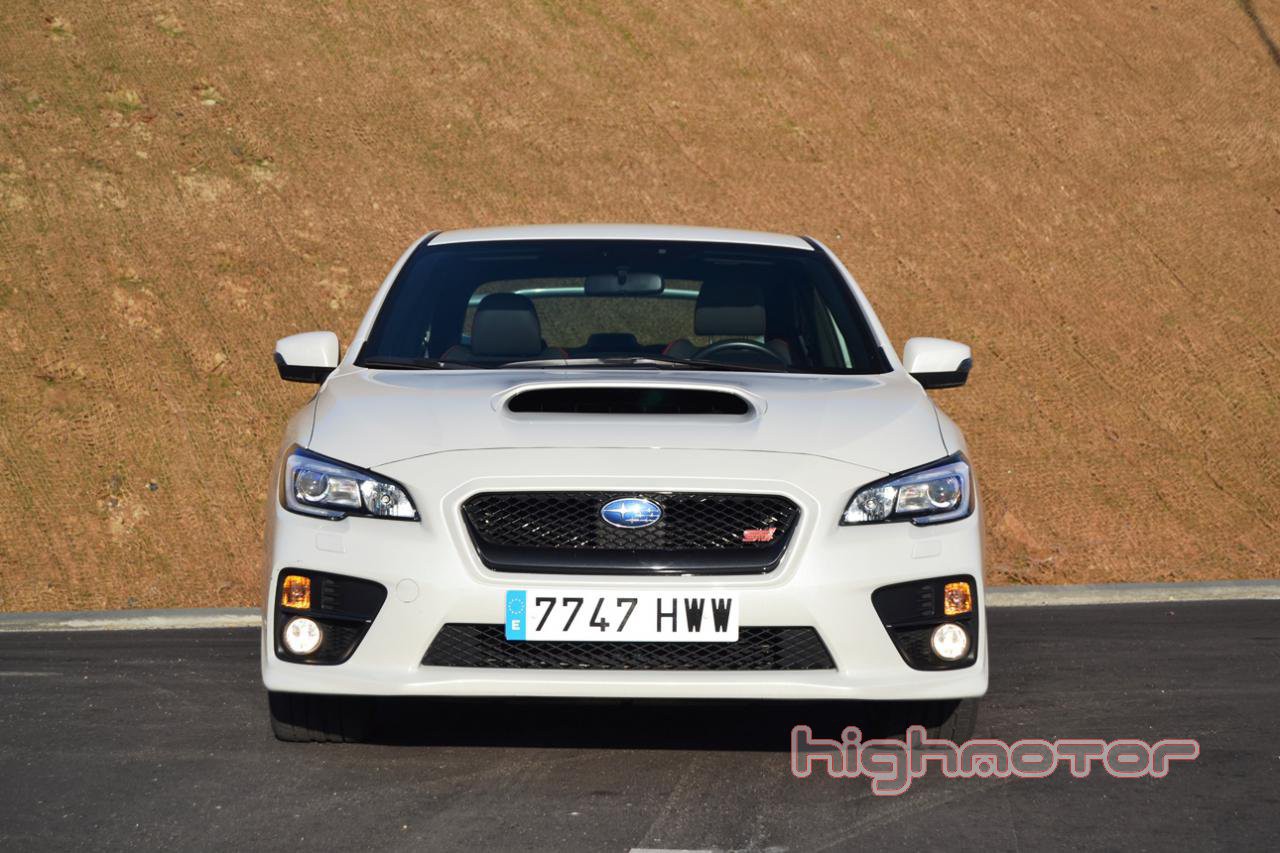
We move on with the test of the Japanese sports car. The Subaru WRX STI presents itself with a very sporty look that undoubtedly turns heads wherever it goes.
In the previous instalment we reviewed everything related to the dynamics of the STI, while today we will focus on its design and interior capacity.
Exterior design
The Subaru catches the eye. Basically, it catches the eye of everyone around. Its stance is imposing; at a single glance you realise you are looking at a very serious machine. This new generation debuts a completely renovated design, with absolutely all the panels, both interior and exterior, being new, which gives it a fresh and up-to-date image.
The front end is perhaps the part that has generated the most controversy since its launch. It has been compared with that of the previous generation, and criticised for the excessive use of right angles and overly vertical surfaces. Personally I find the nose of the previous generation more attractive, but I understand that this is a purely personal and subjective matter. The front nevertheless remains fully recognisable. The large central grille, with the logo on one side, is flanked by the headlights, which use LED technology for the dipped beam.
At the bottom we find an even larger grille, necessary for the correct cooling of the car’s mechanical systems. The daytime running lights (incomprehensibly) remain in the same housing as the fog lights, which, in my opinion, adds an air of age to the image, considering that the main headlight units, with the position lights and dipped beams, are made up of attractive LED strips.
The side profile has also undergone changes. It is, broadly speaking, a more voluminous vehicle, something that is evident in the size of the doors and windows. The drop of the roofline is not extremely pronounced, which benefits other aspects such as visibility or interior spaciousness. An air outlet on the front wing, behind the wheel, adds the touch of “muscle” that fans of this type of car so enjoy. The 18-inch alloy wheels have a very attractive multi-spoke design and are painted anthracite.
At the rear there are changes, but the car in question is still unmistakable. The first thing that catches the eye is the enormous fixed spoiler above the boot lid, which, besides its looks, serves an aerodynamic function. In addition, the rear bumper is now more voluminous, something that extends to the large (functional) diffuser from which four large exhaust outlets emerge, two on each side.
Interior design and boot
Inside, the leap has been more than notable, both in terms of design and ergonomics and in quality and build. The general lines of the dashboard are similar to those of other Subaru models, with a relatively simple design. The instrumentation, with red backlighting, is very complete thanks to a central colour screen where we can check the operation of the different driving modes or the differential settings.
Arranged on two levels, the dashboard displays a great deal of information thanks to the two colour screens. In the upper part we find a screen which, operated with a controller located between the air vents, shows everything related to the car’s operation, as well as the on-board computer data. It would have been preferable to place this controller somewhere more accessible, but the people at Subaru have chosen to do it this way. It is complemented by a small monochrome display with the climate control data. On the lower screen, which is touch-sensitive and larger, we find the navigation and the audio system.
On the centre console we find, within reach, the gear lever as well as the controls for the DCCD and SI-Drive systems. It also features switches for the seat heating, and an armrest where a USB device can also be plugged in.
The seats, with a sporty cut, offer sufficient grip and are also genuinely comfortable. They are upholstered in a mix of leather and Alcantara in black and red tones. The interior space is really generous. There is more than enough room in every dimension, both in the front and rear seats, which is a welcome surprise in these times.
Moving on to the boot, the first thing we encounter on opening the tailgate is a loading aperture somewhat smaller than we would like. In addition, the upper part is not upholstered, which is not especially pleasant as it leaves various cables and chassis details exposed, although it must be acknowledged that this is a minor detail. In its normal configuration, the boot has a capacity of 460 litres, a figure in line with the segment average, although the rear seat backs can be folded in a 60:40 split, making it possible to carry larger and bulkier items.
Photograph | Daniel Valdivielso


 Peugeot E-208 GTi: a battery-powered toy that revives the spirit of the 1980s sports cars
 New Lexus ES: luxury grows and goes electric
 First contact with the Dacia Sandero Hybrid 155: power and efficiency from €19,890
Deja un comentario