911 Porsche Hybrid Cars Sports Cars
The first Porsche 911 Carrera hybrid has arrived, and its figures are impressive: 541 CV and 0 to 100 km/h in 3 seconds
 Antonio Roncero @roncero_antonio
29 May 2024
5 min.
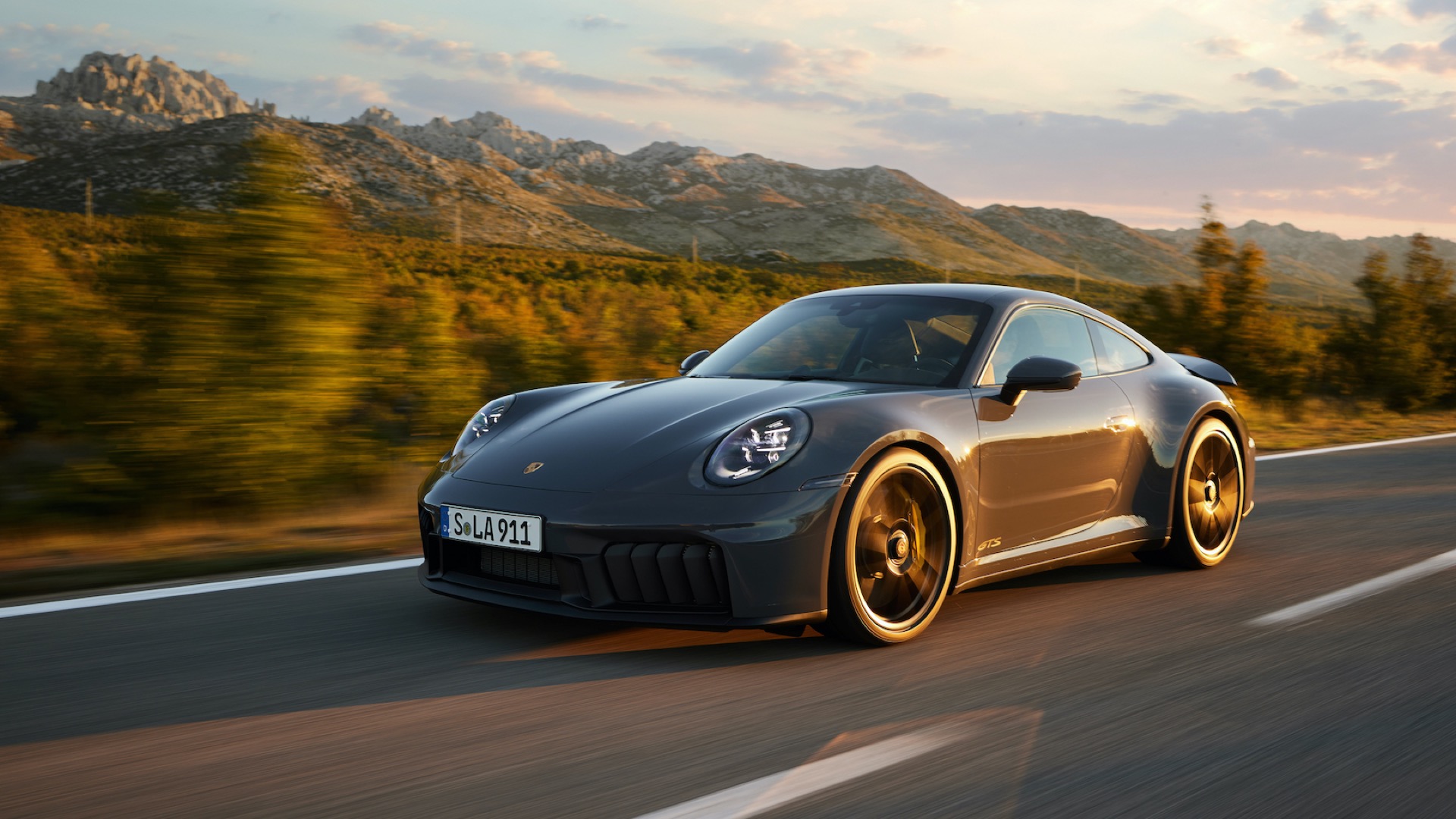
Porsche has updated its 911 Carrera range with major new features, most notably the introduction of hybrid technology for the Carrera GTS for the first time.
Porsche has renewed its 911 Carrera range, starting with the rear-wheel-drive 911 Carrera and 911 Carrera GTS versions, available with Coupé and Cabriolet bodywork, as well as the Carrera 4 with all-wheel drive, in which the Targa variant can be chosen. With this new addition, the Stuttgart brand has renewed no fewer than four of the six models that make up its range in just four months: the Panamera, the Taycan, the Macan and now the 911.
The list of new features that the new Porsche 911 brings is extensive: updated design, more efficient aerodynamics, a modernised interior with greater connectivity… But one stands out above all: the arrival of the first hybrid version in the “nine-eleven” range.
Porsche 911 Carrera GTS with T-Hybrid system
Porsche has named the hybrid propulsion system T-Hybrid, which, at least for now, is reserved for the new 911 Carrera GTS, making it the first in the “nine-eleven” saga with a hybrid-technology engine. The boxer engine in this case is newly developed, with displacement increased to 3.6 litres, capable of producing a maximum output of 485 CV (357 kW) and a maximum torque of 570 Nm. But the addition of T-Hybrid technology brings the total system output to 541 CV (398 kW), raising maximum torque to 610 Nm. That is 61 CV (45 kW) more than the previous generation, allowing the new 911 Carrera GTS to accelerate from 0 to 100 km/h in 3 seconds and reach a top speed of 312 km/h.
The T-Hybrid system adds a permanent-magnet synchronous electric motor integrated into the eight-speed PDK dual-clutch transmission, also newly developed. There is a second, much smaller electric motor, in this case integrated between the single turbocharger (positioned between the compressor and the turbine), which has two tasks: to instantly accelerate the turbine to raise boost pressure without relying on exhaust gases, and to reduce turbo lag, as well as acting as a generator driven by the exhaust gases, providing up to 11 kW of energy to recharge the 400-volt high-voltage battery, which has a capacity of 1.9 kWh.
Porsche has also optimised the 3-litre boxer engine of the 911 Carrera, although in this case no hybridisation is added. Here the twin-turbocharger setup is retained, and the intercooler from the 911 Turbo is adopted, raising output to 394 CV (290 kW) and maximum torque to 450 Nm. Enough for the 911 Carrera to stop the clock at 0-100 km/h in 4.1 seconds (two tenths less when fitted with the Sport Chrono package), and reach a top speed of 294 km/h.
Optimised suspension and aerodynamics
The vast majority of the changes made to the design of the new Porsche 911 have a clear purpose: to improve aerodynamics. There are new bumpers specific to each version, as well as active deflectors and adaptive front diffusers that redirect airflow according to power demand. The wheels, which can be from 19 to 21 inches, feature for the first time an exclusive aerodynamic design with carbon-fibre blades. On the GTS, wider rear tyres are fitted, in size 315/30 ZR21, while on the front axle they are 245/35 ZR20.
All lighting functions are integrated into the Matrix LED headlights fitted as standard, and optionally the HD Matrix LED headlights can be equipped, with interesting additional functions such as a high-beam range of over 600 metres, cornering light that adapts to the driving mode, lane lighting, roadworks light and traffic-jam light. As an option, Porsche offers an aerodynamic kit with specific front bumper and spoiler and a lighter fixed rear wing, which increase downforce. As for the chassis, a major new feature is the adoption of four-wheel steering as standard. On the 911 Carrera GTS, with sport chassis and a 10 mm lower ride height, the PDCC anti-roll stabilisation system is integrated into the high-voltage circuit of the hybrid system.
Once inside, the cabin is now configured as a two-seater, although Porsche offers the option of a 2+2 configuration at no extra cost. Some new interior features include the start button, located on the left, where the key has always been until now. The controls for selecting driving modes and assistance systems have also been redesigned, and the instrumentation becomes digital, with a 12.6-inch screen and up to seven display modes. Among the connectivity improvements, noteworthy is the new function that allows signing in to your Porsche ID via a QR code, as well as better integration of Apple CarPlay, which can now display information on the instrument screen itself. Native apps such as Spotify can also be downloaded and used without needing a connected phone.
The prices of the new Porsche 911 range for the Spanish market are as follows:
- Porsche 911 Carrera: 149,302 euros
- Porsche 911 Carrera Cabriolet: 165,360 euros
- Porsche 911 Carrera GTS: 198,102 euros
- Porsche 911 Carrera GTS Cabriolet: 214,141 euros
- Porsche 911 Carrera 4 GTS: 207,444 euros
- Porsche 911 Carrera 4 GTS Cabriolet: 223,486 euros
- Porsche 911 Targa 4 GTS: 223,486 euros
Porsche 911 – Image gallery
Technical specifications of this car
 Kia offers an electric range of 10 models, 50 versions and 400 possible combinations
 The seven finalists for the 2027 European Car of the Year (COTY) are exclusively electric
 Peugeot E-208 GTi: a battery-powered toy that revives the spirit of the 1980s sports cars
Deja un comentario