Wireless charging for electric cars: is it the future?
 Mónica Redondo @MonicaRedondoD
20 February 2020
6 min.
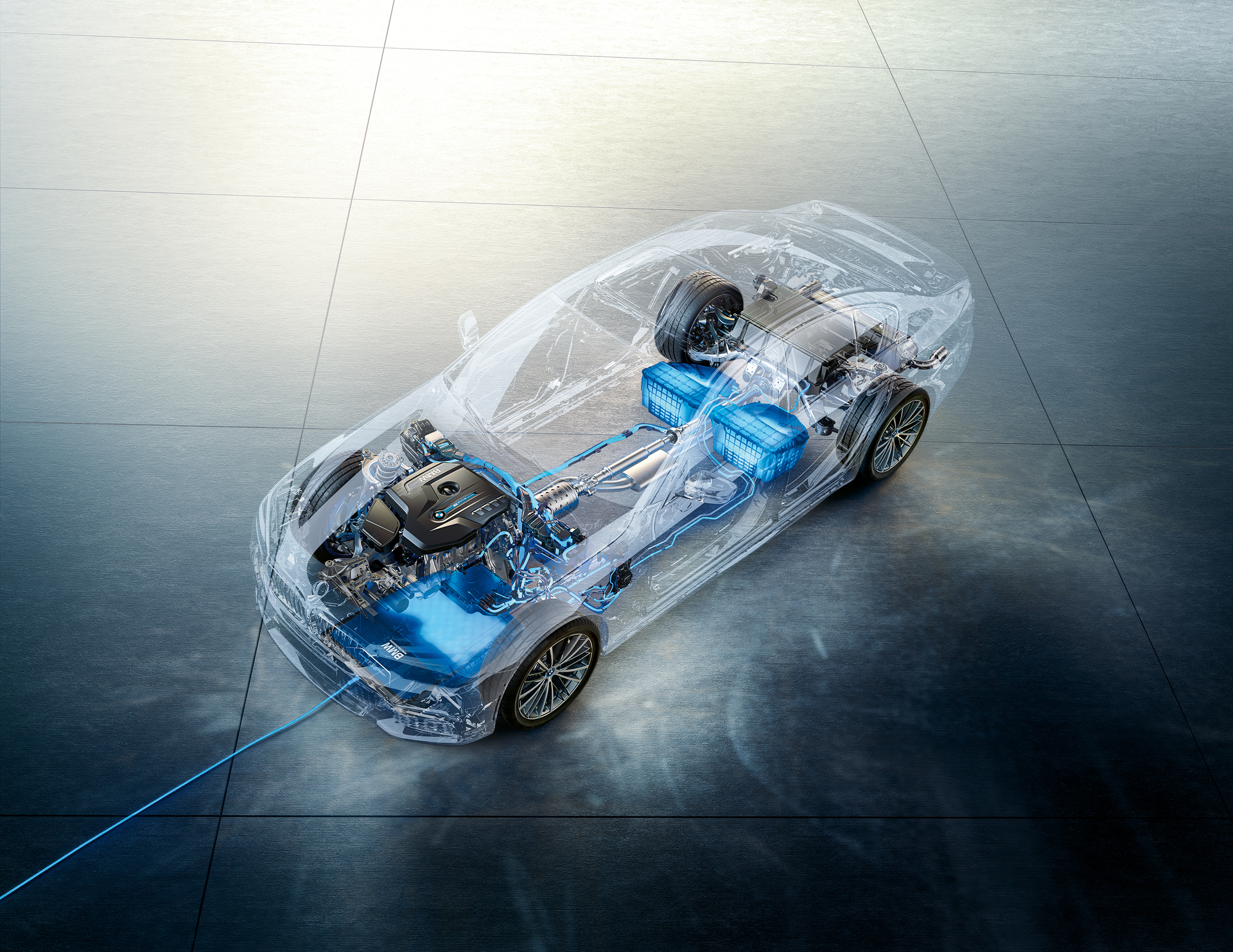
Manufacturers such as BMW, Volkswagen or Rolls-Royce already equip their electric or plug-in hybrid models with the capability to charge wirelessly.
The convenience of induction pads or wireless charging systems for electric cars could be the catalyst for a mass shift towards electric vehicles.
Anyone who charges their phone in their car via a pad rather than a cable will know that wireless EV charging is what will change the game. No plug, no cables, no interface.
The dream is to bury wireless charging systems beneath parking spots or simply to stop briefly: home, work, supermarkets, driveways and even traffic lights.
“It has the potential to make charging not an event,” said Dr Neale Kinnear, head of behavioural science at the UK’s TRL research laboratory, which has overseen a range of EV charging trials.
However, making that dream a reality is taking its time. The latest toe in the water is a government-backed trial, starting in March, which involves installing five pads outside Nottingham railway station to wirelessly charge 10 electric taxis (five LEVC TX black cabs and five Nissan e-NV200) with adapted compatibility. Taxi drivers don’t have to get out; they simply pull up and carry on charging at 11kW on the next pad.
Wireless charging system for electric cars, the future?
“If it works well and is reliable, it would obviously be a very simple way of avoiding having to plug vehicles into charging points,” said Nottingham councillor Sally Longford. “There would be less clutter on the street and it would be very convenient.”
Induction charging is fairly simple. An oscillating magnetic field in the charging pad is picked up at the same frequency in the vehicle’s receiver, and that starts the charging process. Those developing the technology, led by WiTricity, based in the United States, claim it is as safe and almost as efficient as plugging in, even when the receiver is fitted to a higher-powered SUV.
Nottingham’s taxis will be converted by Sprintpower, a UK electronics specialist, using WiTricity technology. The company is looking to forge a retrofit business, mainly aimed at electric taxis.
CEO Richie Frost predicts private cars will follow. “It’s not going to be as cheap as a cable, but if I had an electric sports car I’d pay for that convenience,” he said. He believes it could even change the design of electric cars: “This is more of an infrastructure story than anything else. When you have opportunistic charging, range anxiety will disappear and, in fact, batteries will shrink.”
In theory, it would also reduce the need for fast charging. Further into the future it will also be essential for autonomous vehicles. At present, wireless charging options are非常 limited: BMW UK had planned to offer it on the 530e plug-in hybrid in 2018, but reversed that decision and the current-generation battery does not support it. In Germany it was a €3,205 option.
But it is coming. Frost calculates that 90% of new global vehicle architectures will support wireless charging. For example, Volkswagen is understood to have designed its MEB platform to support it. Rolls-Royce has long said that playing with cables is off-brand and so it will not sell an electric car without wireless charging; this appeared on the experimental 2012 102EX Phantom Electric. Concept cars, most recently the Lexus LF-30, also often use the technology.
The problem is one of chicken and egg. Carmakers don’t want to design a system that won’t be used, while charging-platform providers are reluctant to roll out the alternative technology if cars aren’t fitted with the capability to use it. “We are not seeing much movement from vehicle manufacturers, which suggests there is not much future for passenger cars,” said a representative of BP Chargemaster.
Electric cars will have to adapt to this type of charging
British company Connected Kerb offers one solution, installing low-profile electric plug-in chargers that can be converted to wireless without much trouble if demand emerges. It also taps into or implements fast fibre networks that provide internet. The company is installing its system in a new 3,500-home development being built in south-west England. The rates are only 3-7kW for overnight charging, rather than rapid.
Connected Kerb’s dream is wireless charging for the 40% of UK homes that have no off-street parking. That request is also on councillor Longford’s mind in Nottingham. “We can use plugs on lamp posts,” she said, “but ours are mainly at the back of the pavement, which means a cable across the pavement. Pads would provide an option.”
In one version of the wireless dream, EVs are charged while driving. A European trial called FABRIC that ran between 2014 and 2017 investigated this on three test tracks and claimed partial success. Another, led by Renault and running from January this year to 2022, includes two ‘dynamic’ wireless charging experiments in France, one of them in Paris.
Whether static or dynamic, wireless charging is clearly the key to fulfilling the promise that electric vehicles offer a better consumer experience than the conventional alternative, something that is not at all convincing in today’s world of cables, plugs and a fragmented charging network.
However, there is a long way to go, warns Kinnear of TRL. “The problem will always come down to the details: who provides that infrastructure, who pays for the electricity and how do you identify the vehicle and the account holder,” he said. “At the moment, nobody knows the answer. But ultimately, the technology is moving towards a solution that is easier than having to plug in.”


 Peugeot E-208 GTi: a battery-powered toy that revives the spirit of the 1980s sports cars
 New Lexus ES: luxury grows and goes electric
 First contact with the Dacia Sandero Hybrid 155: power and efficiency from €19,890
Deja un comentario