BMW BYD EV6 HAN Hyundai i4 ID.3 IONIQ Ioniq 5 KIA Leaf Megane Model 3 Nissan Renault Serie 4 Tesla Volkswagen Electric Cars Compact Rankings
2026 ranking: the 6 most reliable electric compacts on the Spanish market according to quality indices
 Dani Montesinos
15 September 2026
7 min.
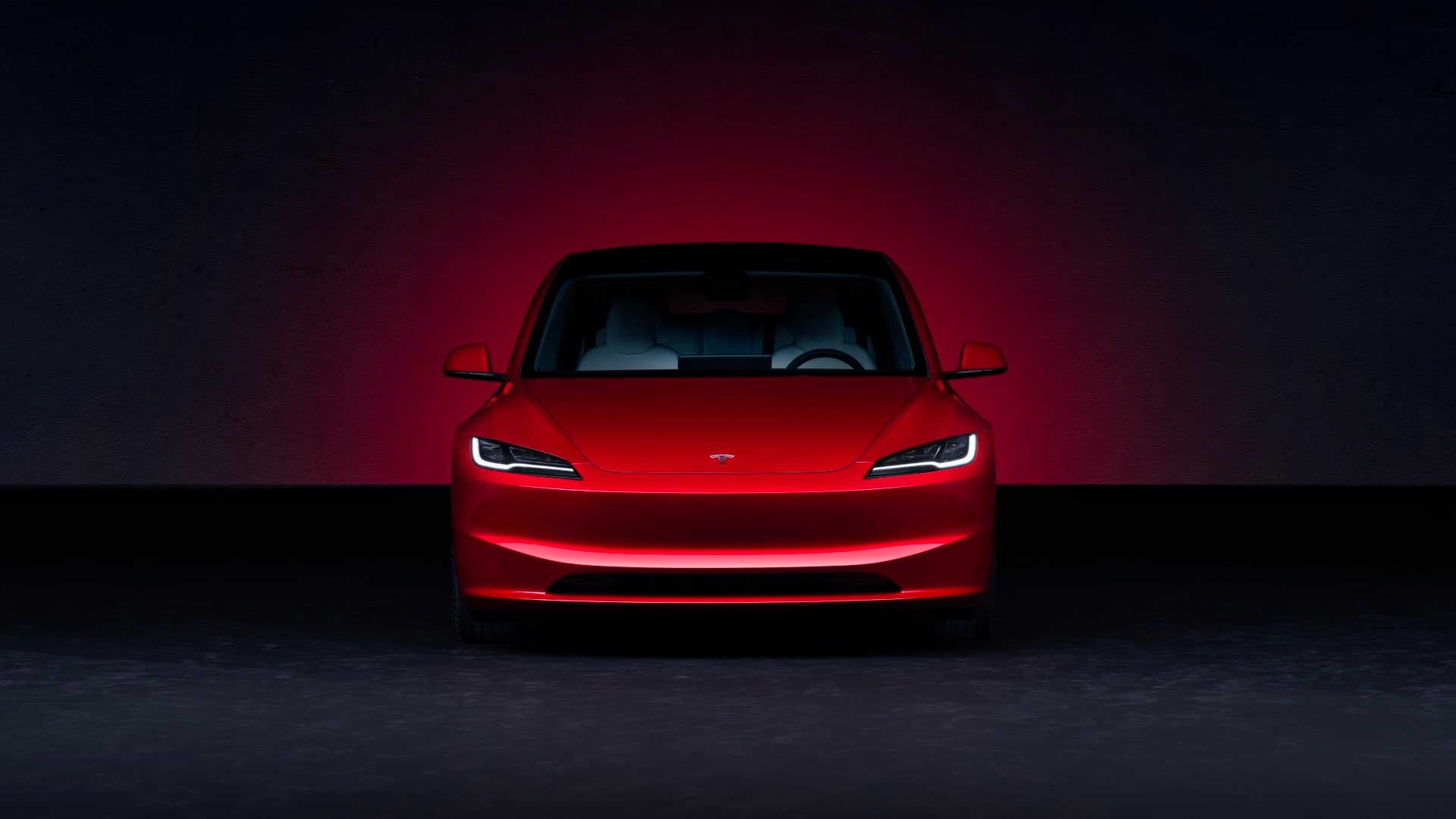
We review the six electric compacts with the best reliability records in 2026 according to J.D. Power, TÜV and ADAC, with clear editorial criteria
Reliability has stopped being an abstract issue in electric cars. With six or seven years of accumulated aftersales data, quality indices now allow us to separate the wheat from the chaff: which compacts age well, which carry chronic software faults and which begin to show premature battery degradation. In this guide we have relied on the J.D. Power Vehicle Dependability Study, the German TÜV Report and the ADAC aftersales reports to draw up a ranking of the most reliable electric compacts 2026 sold in Spain, cross-checked with our own editorial experience.
One clarification before entering the analysis: we have deliberately left out BYD because the aim of this piece is not to crown a single leader, but to cover different user profiles within the segment — the catalogue of the Chinese giant, solid on reliability, overlaps with too many of the niches already occupied by other candidates. And we have also discarded the Nissan Leaf: it pioneered the popularisation of the electric car, and nobody disputes that, but in our view it has fallen a step behind the new generation in range, charging speed, software architecture and in-car digital experience. With that clarified, let us move on to the six that do make the cut.
How we built the ranking
Three sources, one single criterion: faults per 100 vehicles at three years (J.D. Power), TÜV findings at the first German roadworthiness test and breakdowns reported to ADAC on the road. To these we add editorial observation on OTA software, battery thermal management and perceived build quality. The resulting picture is not that of the car with the most range or the fastest charging — it is that of the one that causes the fewest headaches.
1. Tesla Model 3 — from €33,365
The Model 3 has spent a long time polishing what was its great Achilles’ heel: the fit and finish defects of the first units. The current version, built in Shanghai for the European market, has improved noticeably in bodywork tolerances and acoustic insulation. In mechanical and drivetrain reliability Tesla has historically scored high — it is in the software and sensor area where J.D. Power still penalises it, although OTA updates have corrected many of the faults reported in 2022-2023.
| Power kW | Power hp | Top speed | Range | Consumption | Label | Fuel |
|---|---|---|---|---|---|---|
| 208 | 283 | 201 km/h | 572 km | 12.2 kWh/100 km | ZERO | Electric |
Hyundai IONIQ 52. Hyundai IONIQ 5 — from €48,540
The E-GMP platform has earned the respect of workshops. Robust 800 V architecture, well-resolved thermal management and a very low rate of serious faults in the ADAC reports. Hyundai has also managed to correct via OTA the early 12V and ICCU problems that did appear in early units — today these are residual incidents. It is, in my view, one of the electric cars that ages best in terms of build quality, something we already pointed out in the full IONIQ 5 review.
| Power kW | Power hp | Top speed | Range | Consumption | Label | Fuel |
|---|---|---|---|---|---|---|
| 168 | 229 | 185 km/h | 570 km | 16.8 kWh/100 km | ZERO | Electric |
KIA EV63. Kia EV6 — from €39,490
A platform sibling of the IONIQ 5, but with a sportier approach. It shares almost all of its reliability strengths — battery, motor, thermal management — and adds an assembly quality that in the latest TÜV measurements places it ahead of several German rivals. Even so, not everything is smooth sailing: the first batches had issues with the instrument cluster software, which have since been resolved.
| Power kW | Power hp | Top speed | Range | Consumption | Label | Fuel |
|---|---|---|---|---|---|---|
| 168 | 229 | 185 km/h | 528 km | 15.9 kWh/100 km | ZERO | Electric |
BMW i44. BMW i4 — from €66,200
Here the classic German school applied to the electric car comes in. The i4 shares its bodywork and production process with the combustion-engined 4 Series Gran Coupé, and that — it turns out — works in its favour: the Munich line has been fine-tuned for decades. TÜV places it among the electric cars with the fewest mechanical faults at first inspection. The battery, with an oversized liquid thermal management system, shows barely any relevant degradation in units with 100,000 km.
| Power kW | Power hp | Top speed | Range | Consumption | Label | Fuel |
|---|---|---|---|---|---|---|
| 250 | 340 | 190 km/h | 613 km | 17.1 kWh/100 km | ZERO | Electric |
Volkswagen ID.35. Volkswagen ID.3 Neo — from €36,575
The ID.3 got off to a bad start. The first batches of 2020-2021 dragged along a string of software problems that sank its reputation. But the reality in 2026 is different: after two major updates to the central ECU and the redesign of the ID.Software 4.0 system, ADAC data show a reliability that no longer sticks out in the segment. The MEB mechanics, admittedly, have never caused serious problems.
| Power kW | Power hp | Top speed | Range | Consumption | Label | Fuel |
|---|---|---|---|---|---|---|
| 140 | 190 | 160 km/h | 492 km | 13.9 kWh/100 km | ZERO | Electric |
6. Renault Megane E-Tech — from €34,574
The Megane E-Tech is the outsider that has earned its place through consistency. It shares the CMF-EV platform with Nissan, is built in Douai and takes a very sensible approach to electronics: few layers, few faults. Spanish aftersales reports place it among the electric cars with the lowest rate of warranty interventions. It is not the fastest charging nor the longest range — it is the one that makes the least noise in the workshop.
| Power kW | Power hp | Top speed | Range | Consumption | Label | Fuel |
|---|---|---|---|---|---|---|
| 160 | 220 | 160 km/h | 470 km | 15.0 kWh/100 km | ZERO | Electric |
Summary table and editorial score
| Model | Range | Power hp | Reliability | Software | Build quality | Overall score |
|---|---|---|---|---|---|---|
| Tesla Model 3 | 572 km | 283 | 8.5 | 9 | 7.5 | 8.3 |
| Hyundai IONIQ 5 | 570 km | 229 | 9 | 8 | 8.5 | 8.5 |
| Kia EV6 | 528 km | 229 | 9 | 8 | 8.5 | 8.5 |
| BMW i4 | 613 km | 340 | 9 | 8 | 9.5 | 8.8 |
| Volkswagen ID.3 | 492 km | 190 | 7.5 | 8 | 7.5 | |
| Renault Megane E-Tech | 470 km | 220 | 8.5 | 7.5 | 8 | 8 |
Anyone looking for the most balanced compromise today will hardly go wrong with the IONIQ 5 or the EV6. Anyone who wants classic reliability with a premium finish will find the i4 is still the benchmark — with the caveat of the price. And if the criterion is electronic simplicity and minimal hassle, the Megane E-Tech deserves more attention than it usually receives. All of this within the framework of the Plan Auto+ incentives, which are worth checking on the official website before signing.
Frequently asked questions
Which reliability index is most relevant for the Spanish market?
There is no exact equivalent of the German TÜV in Spain, so the most useful combination is to cross-check J.D. Power (which includes European data), ADAC and the internal aftersales reports published by associations such as GANVAM. TÜV remains the most demanding thermometer because it measures real condition at three years.
Does the battery of an electric compact degrade as much as people say?
Real-fleet data from 2020-2025 point to an average degradation of 8-12% at 160,000 km in models with liquid thermal management — well below the initial fears. Models with passive cooling do show more marked drops.
Is it worth waiting for models with LFP batteries for reliability?
LFP chemistry tolerates charging to 100% better and offers more cycles, yes. But it loses some energy density. For urban use and medium journeys it is a very solid option; for regular long trips, well-managed NMC batteries remain competitive.
Does OTA software make up for a model’s initial problems?
Partly. Updates have rescued models such as the ID.3 and polished the Model 3, but there are hardware faults — connectors, sensors, ICCU — that cannot be resolved via OTA. The reasonable rule: avoid the first six months of production of any new platform.
Technical specifications of the cars in this article
 Peugeot E-208 GTi: a battery-powered toy that revives the spirit of the 1980s sports cars
 New Lexus ES: luxury grows and goes electric
 First contact with the Dacia Sandero Hybrid 155: power and efficiency from €19,890
Deja un comentario