Captur Dacia Duster MG Renault Toyota Yaris Yaris Cross ZS Electric Cars Hybrid Cars Buying Guides SUV
How to Choose a SUV-B for Less Than €25,000 in 2026: Key Equipment, Engine and Warranty
 Dani Montesinos
15 September 2026
9 min.
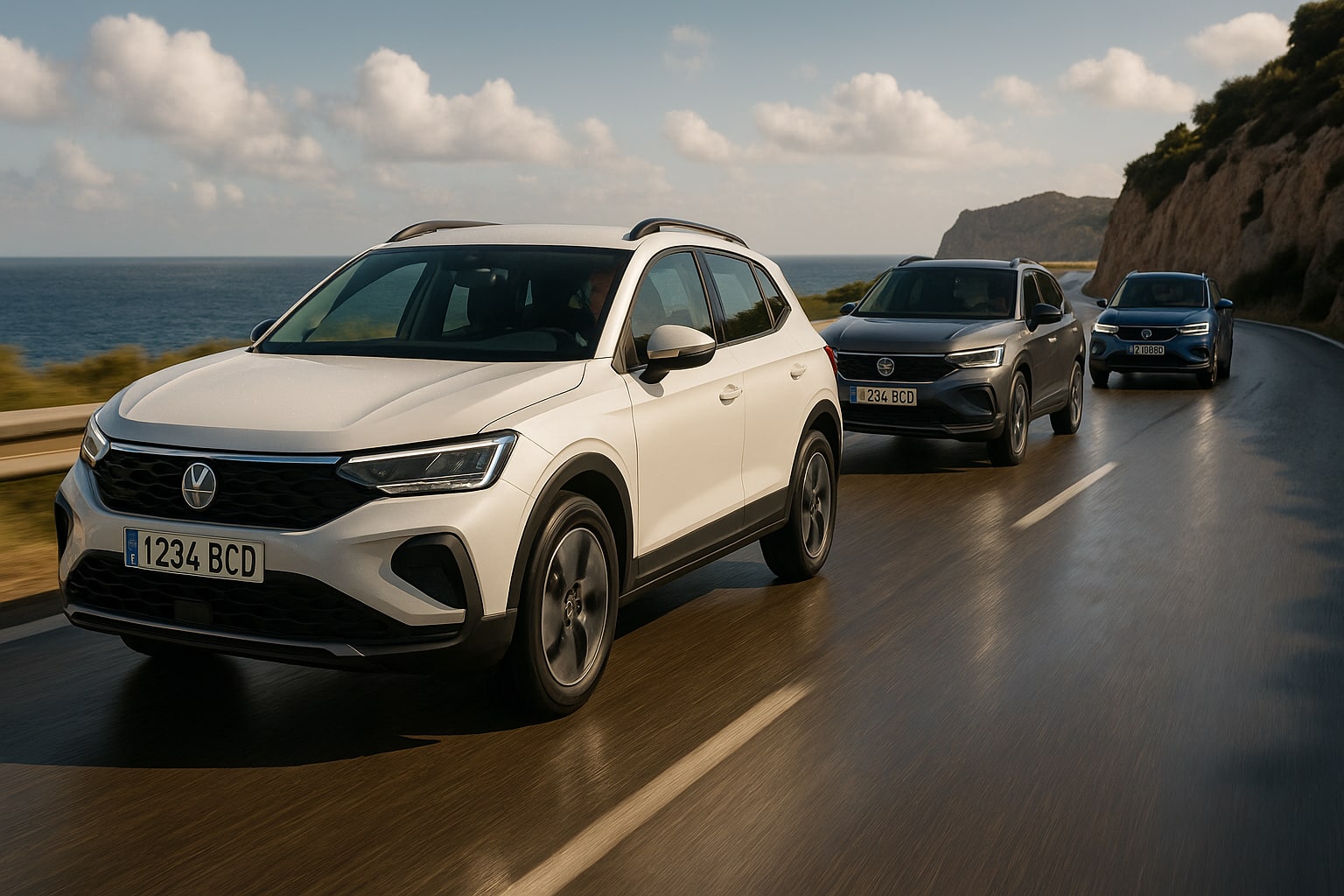
A practical guide to choosing the best SUV-B for less than €25,000 in 2026 in Spain: ADAS equipment, which engine makes sense depending on use, and warranty
Buying a new SUV-B for less than €25,000 in 2026 is still possible, but the margin has narrowed. The segment has filled up with hybrid proposals, an entry-level electric option and a flood of Asian brands that has reshuffled the board. The question is no longer “which cheap small SUV should I buy?”, but which one best withstands five years of real use with equipment that won’t fall short by 2028.
One clarification before we get into the analysis: we have deliberately left BYD out of this guide. The Chinese manufacturer was for a couple of years an obligatory reference in any comparison of affordable electric SUVs, but in our view the market has become so competitive — with European, Korean and other Asian players pushing price and equipment — that the relative advantage it had in value for money has been diluted. This is not a criticism of the product; it is that in the bracket we are dealing with there are now alternatives that deliver more per euro invested.
What defines a SUV-B today: size, use and buyer expectations
We are talking about cars between 4.10 and 4.35 metres long, with boots ranging from 380 to 480 litres and a mixed purpose: urban use on weekdays, weekend getaways and the occasional long trip per year. The typical buyer drives between 12,000 and 18,000 km a year, parks on the street and wants a comfortable car with a favourable environmental label for the ZBE low-emission zones.
That use shapes everything else. On paper, a diesel is still efficient on the open road, but in practice almost no one offers one in this segment anymore and its C label penalises you in Madrid Central or in Barcelona’s ZBE. A pure electric car below €25,000 exists, but with significant compromises.
The real budget: what you get for €25,000 and what falls outside
The €25,000 figure is a misleading ceiling. Many manufacturers advertise a “from” price that corresponds to entry trims with bare-bones equipment and basic engines. The version most of the market ends up buying sits between €22,000 and €28,000. Our guide sticks to versions that are genuinely configurable below the threshold, not showroom prices.
Inside the bracket are petrol SUV-Bs, some mild hybrids and a handful of entry-level hybrid proposals. Outside it fall almost all the segment’s plug-in hybrids and much of the electric offering, unless Plan Auto+ subsidies are applied — which you should verify on the official website before signing, as the amounts and deadlines vary.
Mandatory ADAS equipment in 2026: what cannot be missing
Since July 2024, all new passenger cars registered in the EU include the GSR2 package of assistance systems. This covers emergency braking with pedestrian and cyclist detection, drowsiness warning, intelligent speed assistance, a black box for data and a lane-keeping maintenance warning. It is the legal floor.
What makes the editorial difference is what goes above that floor: adaptive cruise control, 360° camera, a physical blind-spot sensor (not just a mirror warning), sign recognition that actually reads variable speed limits, and lane keeping that doesn’t bounce you off the lines. Beware of brands selling an “ADAS pack” as an €800 option — in this range it should come as standard.
Engines: petrol, mild hybrid, HEV or electric
Pure petrol: the cheapest to buy, C label, real consumption around 6.5–7.5 l/100 km. It makes sense if you do fewer than 10,000 km a year and don’t routinely enter ZBEs.
48V mild hybrid: the same engine with a small reinforced alternator. Modest real saving (5–8% in town), C label all the same. Worth it if the premium doesn’t exceed €800.
Full hybrid (HEV): the option with the best total cost of ownership for the urban-mixed driver. ECO label, real consumption of 4.8–5.5 l/100 km and a premium recovered in 3–4 years if you drive 15,000 km a year. It is the choice we most recommend in this price band, although the catalogue narrows.
Electric: below €25,000, almost always with aid. Real range 250–320 km. A good car as a second vehicle or for a big city with home charging; debatable as a sole car.
Warranty as a buying argument: years, kilometres and the small print
This is where the map has changed most. The two-year European warranty has become obsolete as a benchmark. The Koreans still set the seven-year standard that Kia introduced more than a decade ago, and Chinese manufacturers are entering with seven-year or 150,000 km coverage that forces the rest to move. On a car you’ll keep for six or seven years, four years of warranty is the minimum negotiable.
Read the small print: some brands require servicing at an official dealer network to keep the extended warranty, and others limit battery coverage (in hybrids and electrics) to eight years and 70% remaining capacity.
The six SUV-Bs that do make the guide
Dacia Duster — from €23,220
The third-generation Duster is probably the car that best understands why people buy a cheap SUV-B. Generous interior space for the segment, simple mechanicals, an LPG option that brings running costs down to ridiculous levels, and an exterior design that finally feels grown-up. The interior improves on the previous generation but remains a step behind pricier rivals. The Hybrid 140 version approaches the top of the price range and is the most recommendable.
| Power kW | Power CV | Top speed | Range | Consumption | Label | Fuel |
|---|---|---|---|---|---|---|
| 103 | 140 | 180 km/h | ~950 km | 5.4 l/100 km | ECO | Hybrid |
Renault Captur — from €22,260
Sophistication above what the segment demands. The eco-G Captur combines a 1.2-litre three-cylinder with two and a six-speed manual gearbox that is smooth in town. Real consumption of 4.7 l/100 km is achievable. Decent sound insulation, a well-resolved vertical screen and rear-seat modularity that is appreciated. The downside: expensive options when configuring.
| Power kW | Power CV | Top speed | Range | Consumption | Label | Fuel |
|---|---|---|---|---|---|---|
| 90 | 120 | 170 km/h | ~900 km | 5.9 l/100 km | ECO | Hybrid |
Toyota Yaris Cross — from €25,700
When we talk about a reliable hybrid, Toyota remains the reference. The Yaris Cross is not the roomiest or the most luxurious, but it delivers between 4.5 and 5 l/100 km in real driving, starts first time every morning for 15 years and has a dense after-sales network across Spain. The Toyota Relax warranty, which can be extended to 10 years if you service at an official dealer, is a compelling argument. You can find a deeper analysis in the comparison between the Hyundai Kona and Toyota C-HR in its upper segment.
| Power kW | Power CV | Top speed | Range | Consumption | Label | Fuel |
|---|---|---|---|---|---|---|
| 95 | 130 | 170 km/h | ~950 km | 4.7 l/100 km | ECO | Hybrid |
Hyundai Bayon — from €25,120
The Bayon plays the classic Korean card: seven years of warranty, generous equipment in mid-range trims and a very well-worked price-to-product ratio. 1.0 T-GDi engine with 48V mild hybridisation, correct in town and somewhat tight on the motorway when loaded. Sober interior, with a 10.25-inch touchscreen in the upper versions.
| Power kW | Power CV | Top speed | Range | Consumption | Label | Fuel |
|---|---|---|---|---|---|---|
| 66 | 90 | 174 km/h | ~800 km | 5.7 l/100 km | ECO | Petrol mild hybrid |
MG ZS — from €22,340
The ZS hybrid is today one of the most aggressively priced cars in the segment. For under €23,000 you get a hybrid SUV-B with seven years of warranty, reasonable equipment and real consumption of 5.0–5.5 l/100 km. The interior feels a step below a Captur in perceived quality, and the chassis tuning is softer than we would like, but the cost-to-product equation is hard to refute. We have already compared it in detail with its direct rival in the duel between the Omoda 5 and the MG ZS.
| Power kW | Power CV | Top speed | Range | Consumption | Label | Fuel |
|---|---|---|---|---|---|---|
| 145 | 197 | 185 km/h | ~850 km | 5.1 l/100 km | ECO | Hybrid |
Omoda 5 — from €22,969
The arrival of the Omoda has been one of the surprises of the Spanish market. Bold design, a 24.6-inch panoramic screen, materials that feel above the Asian average and a seven-year or 150,000 km warranty. In the 1.6 turbo petrol version it fits within budget in the mid-range trim. We will have to see the five-year residual value — it is a young brand in Spain — but the initial value proposition is competitive.
| Power kW | Power CV | Top speed | Range | Consumption | Label | Fuel |
|---|---|---|---|---|---|---|
| 108 | 145 | 180 km/h | ~700 km | 7.0 l/100 km | C | Petrol |
Comparison table and editorial score
Score from 1 to 10 assessing equipment, engine, real consumption, warranty and price-to-product ratio.
| Model | Price from | Engine | Label | Warranty | Real consumption | Score |
|---|---|---|---|---|---|---|
| Dacia Duster | €23,220 | Hybrid 140 | ECO | 3 years | 4.8 l | 8.5 |
| Renault Captur | €22,260 | eco-G LPG | ECO | 3 years | 4.7 l | 8.3 |
| Toyota Yaris Cross | €25,700 | Hybrid 116 | ECO | Up to 10 years* | 4.7 l | 9.0 |
| Hyundai Bayon | €25,120 | 1.0 T-GDi MHEV | ECO | 7 years | 5.7 l | 7.8 |
| MG ZS Hybrid+ | €22,340 | Hybrid 197 | ECO | 7 years | 5.1 l | 8.4 |
| §7BYDh381§ | €22,969 | 1.6 T petrol | C | 7 years/150,000 km | 7.0 l | 7.5 |
*Toyota Relax warranty subject to servicing at an official dealer network.
Our recommendation by profile
For urban-mixed use and maximum peace of mind: Toyota Yaris Cross. For maximum space per euro: Dacia Duster Hybrid. For the best purchase cost: MG ZS Hybrid+. For anyone who wants a car that looks more expensive than it is: Renault Captur or §7BYDh408§.
Frequently asked questions
What is the best SUV-B for around €25,000 in 2026?
In our view, the hybrid Toyota Yaris Cross is the most complete option, given its proven reliability, low real consumption and a warranty extendable to ten years at an official dealer. If the deciding criterion is purchase price, the MG ZS Hybrid+ offers an equation that is hard to match.
What ADAS equipment is mandatory on a new SUV-B in 2026?
All passenger cars registered in the EU since July 2024 include the GSR2 package: autonomous emergency braking with pedestrian and cyclist detection, intelligent speed assistance, drowsiness and distraction warning, lane keeping and a data black box. This is the legal minimum; adaptive cruise control and blind-spot sensors remain, in many cases, optional.
Is a hybrid SUV-B worth it compared with a petrol one below €25,000?
If you drive more than 12,000 km a year and a good part of it in town, yes.
Technical specifications of the cars in this article


 Peugeot E-208 GTi: a battery-powered toy that revives the spirit of the 1980s sports cars
 New Lexus ES: luxury grows and goes electric
 First contact with the Dacia Sandero Hybrid 155: power and efficiency from €19,890
Deja un comentario