BMW 5 Series: seven generations of excellence in the premium segment
 Jaime Avilés
1 August 2023
4 min.
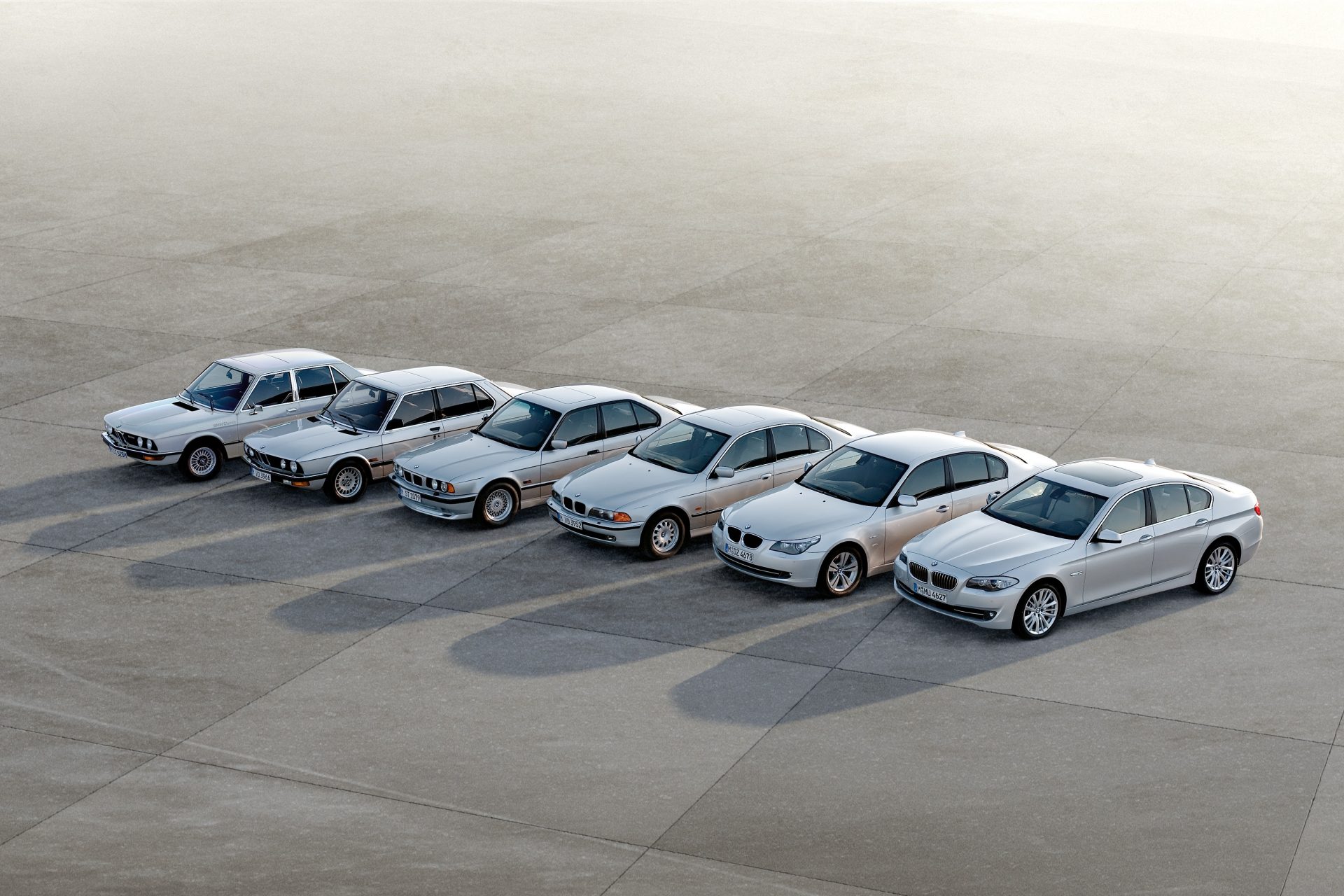
With the arrival of the eighth generation of the BMW 5 Series, it is the perfect time to look back at the seven generations of this iconic saloon, which has made its mark since its launch in 1972.
After more than 50 years on the road, the BMW 5 Series has established itself as one of the most iconic premium saloons of all time, always standing out for its dynamism, ride comfort, technology, safety and excellence, all while retaining the DNA that every model from the Bavarian marque must carry.
With the new 5 Series and its 100% electric variant, the BMW i5, getting ever closer to arriving on our roads, what better moment to briefly review each of the generations of this German model, of which over 10 million units have been sold since its launch in 1972.
First Generation (E12) – 1972-1981: The BMW 5 Series made its debut in 1972 as the successor to the legendary BMW 2000. Designed by Paul Bracq, this first generation captivated with its balance between sportiness and elegance. With power outputs ranging from 90 CV to 218 CV, the first 5 Series stood out for its pioneering technology in safety and efficiency, including fuel injection engines and computerised safety tests. Almost 700,000 units were sold during this initial period.
Second Generation (E28) – 1981-1987: The second generation featured a timeless design and clean lines, including round headlights and a kidney grille split into two parts. Inside, the driver-oriented cockpit stood out. This generation was the first to introduce all-wheel drive and a diesel variant, as well as digital technology such as the on-board computer. With more than 722,000 units sold, it further consolidated the success of the 5 Series.
Third Generation (E34) – 1987-1995: Inspired by the design of the BMW 7 Series, this generation arrived with a larger and more spacious body. It was also the first to offer V8 engines and a distinctive tailgate for the BMW 5 Series Touring. It introduced cracked-con-rod technology, improving smoothness and durability. With more than 1.3 million units sold, it continued the trend of making the 5 Series a benchmark in the executive saloon segment.
Fourth Generation (E39) – 1995-2003: This generation was a milestone in engineering, as it featured a lightweight aluminium-alloy chassis and aluminium engines that reduced weight and improved performance. It also stood out for its greater interior space and comfort. With more than 1.47 million units sold, the fourth generation continued writing the history of a model so coveted by so many.
Fifth Generation (E60) – 2003-2009: Chris Bangle’s progressive design and innovative technology, such as the iDrive system, set new standards in the segment. It introduced important advances in safety and driver assistance, and its engine range offered outputs from 143 CV up to 507 CV in the BMW M5. With more than 1.4 million units sold, this generation was the best-selling car in its segment for four consecutive years.
Sixth Generation (F10) – 2010-2017: Market leader in its class worldwide since its launch, this generation offered a more rigid body and a wide range of chassis and driver assistance technologies. The BMW 5 Series Gran Turismo was introduced with a tailgate. With more than 2 million units sold, it became the most successful generation to date.
Seventh Generation (G30) – 2017-2023: This generation stood out for its advanced dynamic performance, high connectivity and driver assistance systems. With Active Cruise Control and steering assistance functions, a major step was taken towards automated driving. Lightweight construction reduced weight and improved the balance between performance and comfort. The engine range spanned from 184 CV up to 625 CV in the BMW M5 Competition. Early in 2023, more than two million units of this seventh generation had already been delivered worldwide.
Now, the eighth generation of the BMW 5 Series arrives with a major evolution for the premium segment. Its main novelty is the inclusion of the electric BMW i5 variant, taking efficiency and performance to new heights. With a cutting-edge design and state-of-the-art connectivity and driver assistance technology, the new 5 Series promises to continue the model’s success story. Its arrival at dealerships is scheduled for October 2023.
Technical specifications of this car


 Peugeot E-208 GTi: a battery-powered toy that revives the spirit of the 1980s sports cars
 New Lexus ES: luxury grows and goes electric
 First contact with the Dacia Sandero Hybrid 155: power and efficiency from €19,890
Deja un comentario