Fulvia Coupe Lancia Coches clásicos Coupés Curiosities Sports Cars
Classic Cars with History: Lancia Fulvia Coupe
 Fernando Alvarez
18 November 2012
4 min.
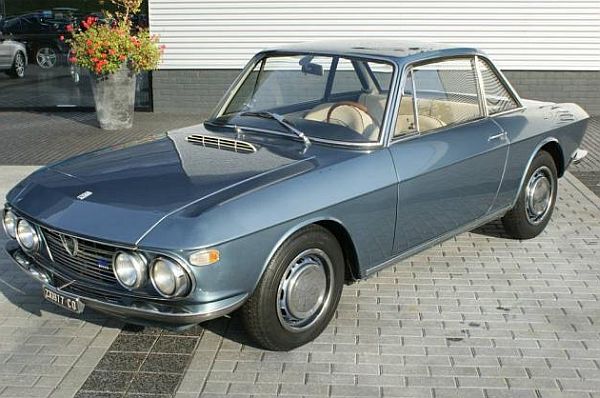
The Lancia Fulvia is another of the icons of the 1960s, which we did not want to let pass in our space dedicated to classics, Classic Cars with History. And better still, when we talk about the Fulvia coupé, one of those classics that would not look out of place next to the most modern cars, both for its engine power and its excellent visibility.
The Coupe Fulvia was officially presented in March 1965 at the Geneva Motor Show. Derived from the Fulvia saloon and the creation of Castagnero Piero, the Fulvia Coupe had front-wheel drive and shared the same longitudinal front four-cylinder engine as the saloon.
The engine displacement was 1,216 cc, with a maximum output of 80 CV at 6,000 rpm (a derivative of the narrow-angle V4 engine designed by Zaccone Mina), while maximum torque was 106 Nm at 4,000 rpm. The engine was coupled to a four-speed manual gearbox. According to period data, the Fulvia Coupé reached a top speed of 160 km/h, accelerating from 0 to 100 km/h in 14 seconds. Consumption was approximately 9 litres per 100 kilometres.
In January 1966 the HF Coupe was presented, lighter than the Coupe. The engine was not modified, but its output increased to 88 CV at 6,000 rpm, while maximum torque rose to 110 Nm at 5,000 rpm. The bodywork was lighter thanks to the use of aluminium doors, bonnet and boot lid with Perspex windows. The bumpers were also removed, and the bonnet is crossed by a yellow and blue adhesive stripe. The HF’s top speed is 161 km/h, but the higher speed also came at a cost in consumption, which reached 9.2 litres per 100 km.
In March 1967, at the Geneva Motor Show, the evolution of the Coupé arrived. The Rallye 1.3 and Rallye 1.3 HF replaced the HF 1.2, alongside the Coupé 1.2 range. Both new versions had a 1,298 cc engine with a new cylinder head. The Rallye 1.3 had a maximum output of 87 CV at 6,000 rpm and maximum torque of 115 Nm at 4,500 rpm, reaching a top speed of 168 km/h. The 1.3 HF reached 174 km/h and featured a five-speed gearbox from Lancia and ZF, with first gear engaged to the left and down.
The Fulvia did not stop there. In 1968 the Rallie 1.6 HF arrived, created to replace the HF 1.3 in competition. The engine now displaced 1,584 cc, with a maximum output of 115 CV, a limited-slip differential and larger headlamps, which gave rise to the nickname Fanalone. This model reached 180 km/h, and its competition version exceeded 200 km/h.
In November 1970, at the Turin Motor Show, the second series of the Fulvia Coupé debuted, with the presentation of the 1.3s S2, replacing the 1.3s, and the renewal of the HF 1.6. The 1.3s S2 is visually distinguished from the previous version by its new plastic grille and headlamps integrated into the bumper, with new side indicators, a collapsible steering column and seats with adjustable and reclining backrests. Mechanically, the 1.3s S2 marked a turning point in the history of the Fulvia Coupé, as it adopted the five-speed gearbox (the same as in the HF 1.6) and servo brakes. Its top speed was slightly lower than that of the 1.3s, at around 170 km/h.
Thanks to its competition achievements, such as the Monte Carlo Rally and the European Rally Championship, with the great Italian driver Sandro Munari, Lancia also sold special models decorated in the livery of the Monte Carlo Rally, such as the second version of the 1.3s S2.
In 1973 production of the Series 2 ceased, and the following month Lancia officially presented the third generation of the Fulvia, despite the debut of the Lancia Beta. The Coupe 3 represented the evolution of the S2 1.3s, with clear signs of modernity for the era; in addition to changes to the interior, the Fulvia Coupe incorporated electronic ignition in the third generation.
The 1974 Fulvia Coupe Safari was the last of the special versions, while in 1976 Lancia decided to discontinue the model, which had already spent two years coexisting on the market with the Lancia Beta, while the Stratos was poised to take up the baton in competition. A car that enjoyed eleven years of full relevance and was one of the most respected sports cars of the 1960s and part of the 1970s, when Lancias were still Lancias.
Source | Lancia Fulvia, Lancisti, Viva Lancia


 Peugeot E-208 GTi: a battery-powered toy that revives the spirit of the 1980s sports cars
 New Lexus ES: luxury grows and goes electric
 First contact with the Dacia Sandero Hybrid 155: power and efficiency from €19,890
un comentario
Deja un comentario
Cuando los Lancias sí eran Lancias… Qué tiempos aquellos!!! Os cuento mi caso yo he sido concejal de urbanismo durante la última década y he acumulado una fortuna gracias a mis chanchullos y por la Gracia de Dios y el cachondeo de mis votantes. Y he decidido comprame un gran coche, un MAYBACH, pero me he enterado que la marca desaparece en 2013!!… ¡Un éxito más de la administración Mercedes! Dijo mi compañero, el concejal de Deportes y comisiones. Después dije… Me compro un peazo de ROLLS ROYCE, y voy y me entero que ahora lleva motor BMW y ¿la ROLLS ROYCE histórica, tan fiable y vanguardista, ande etá?, igual me pasó con BENTLEY. Así que dije me compro una máquina e´pañola o casi, un HISPANO SUIZA un tractor Barreiros… y voy y me entero que ya no existen. ¡Qué desilusión! Bueno, dije, me compro un AUDI que es lo que se compran casi todos en este país
cuando se coge algo de dinero… y voy y me entero que AUDI ahora es de Volkswagen y que sus motores los fabrican en Hungría y la mitad de los componente en China. Me ca´… dije yo. Y entonces recordando que en mis años mozos tuve un Lancia Fulvia, de los coches históricos de Lancia el
menos llamativo, me compré un LANCIA THEMA, me encanta su aspecto de malote y mafioso, que me ha costado la mitad que un Audi, y por lo menos lleva un motor italiano.