E-Transit Ford Transit Electric Cars Comparisons Furgonetas
Ford E-Transit vs. Mercedes-Benz eSprinter: electric large van showdown for long-shift professional delivery
 Iván Navarro
15 November 2026
5 min.
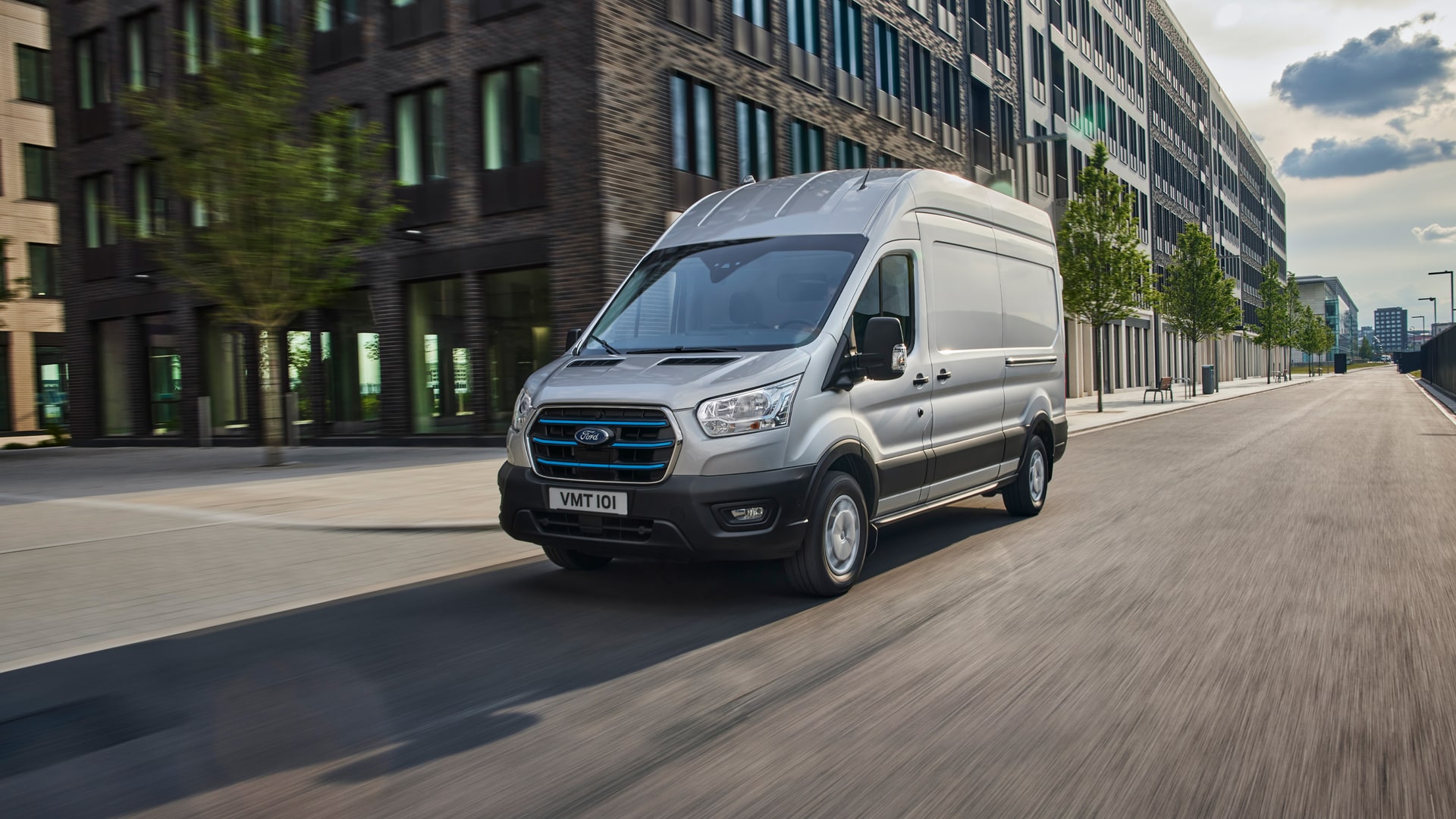
Choosing a large electric van for professional delivery is no longer a question of faith in the energy transition. It is a question of kilometers, charging stops, and how much time the vehicle spends parked instead of driving. And that is where Ford and Mercedes-Benz offer two almost opposite answers with practically identical power figures.
Ford E-Transit Kombi 340 L1, from ≈57,900 €: long range for intercity routes
The Ford E-Transit Kombi 340 L1 BEV 136 68kWh Trend comes with a 68 kWh battery that gives it a homologated range of around 330 km. For a large delivery van, that figure changes the approach to the working day: it allows multiple deliveries across several towns without worrying about charging until late in the afternoon. It is the option designed for intercity work, for the self-employed driver who leaves the industrial estate in the morning and does not return until they have covered half the province.
The indicative recommended retail price starts at around 57,900 €, excluding dealer discounts, occasional campaigns, and incentives such as the Plan Auto+, whose current amount should be checked on the official website.
| Model | Power | Range | Battery | Fuel |
|---|---|---|---|---|
| Ford E-Transit Kombi 340 L1 | 100 kW / 136 CV | ≈330 km | 68 kWh | Electric |
Mercedes-Benz eSprinter Furgón 314, from ≈58,100 €: the urban last-mile option
The Mercedes-Benz eSprinter Furgón 314 136 56kWh Base plays a different game. With a 56 kWh battery and a homologated range of ≈220 km, it is not designed to devour long motorway journeys. It is designed for the last mile: parcel delivery in urban centers, short operating radii, and returning to base to recharge overnight. Its top speed is limited to 120 km/h, a figure that already reveals its vocation for the city and its outskirts rather than open roads.
The starting price is around 58,100 € recommended retail price, also indicative and without promotions applied. It is curious that, despite offering about a third less range than its rival, the eSprinter is not cheaper. The explanation lies in the brand’s engineering and modularity for a specific professional use, not in the raw capacity of the battery.
| Model | Power | Top speed | Range | Battery | Fuel |
|---|---|---|---|---|---|
| Mercedes-Benz eSprinter Furgón 314 | 100 kW / 136 CV | 120 km/h max | ≈220 km | 56 kWh | Electric |
Range and battery: 330 km versus 220 km, two delivery philosophies
The range difference between the two is not a minor detail; it is the decision that shapes everything else. The 330 km of the Ford E-Transit exceed the ≈220 km of the Mercedes-Benz eSprinter by more than a hundred kilometers, which turns the choice into something closer to selecting a work tool than comparing trim levels. If the daily route goes well beyond the metropolitan area with heavy loads and fast roads, the eSprinter may force a recharge mid-shift; if the work is concentrated in a short radius with return to base, its more compact battery means less weight and less time for a full charge every night.
Power and performance under load: 136 CV in both cases
Here they are tied. Both vans deliver 100 kW, that is, 136 CV, enough to move with ease when loaded and without the feeling of hauling the weight of the cargo. The equal power means the final decision does not depend on how each one pulls, but on how long the battery lasts during the working day.
Price and purchase conditions: indicative RRP, without discounts or Plan Auto+
Both sit in the same price bracket, with only about 200 euros of difference in recommended retail price between the ≈57,900 € of the Ford and the ≈58,100 € of the Mercedes-Benz. It is worth stressing: these are indicative figures, without dealer discounts, occasional campaigns, or public purchase incentives such as the Plan Auto+, whose exact amount must be verified on the official website before closing any fleet deal.
Which one to choose based on delivery profile?
For a self-employed driver or a fleet with intercity routes, the Ford E-Transit is the option with the least daily friction. For a company focused on urban last-mile delivery, with a fixed base and guaranteed overnight charging, the Mercedes-Benz eSprinter meets the need without excess battery capacity that would unnecessarily penalize payload. There is no absolute winner here; there are two different tools that should not be confused, something also worth considering when choosing a small van for a self-employed driver with mixed use.
Comparative summary table
| Model | Power | |||||
|---|---|---|---|---|---|---|
| Ford E-Transit Kombi 340 L1 | 136 CV | ≈330 km | 68 kWh | ≈57,900 € | 9 | 6 |
| Mercedes-Benz eSprinter Furgón 314 | 136 CV | ≈220 km | 56 kWh | ≈58,100 € | 4 | 8.5 |
Frequently asked questions
Which electric van has more range, the Ford E-Transit or the Mercedes-Benz eSprinter?
The Ford E-Transit Kombi 340 L1, with a homologated ≈330 km compared with the ≈220 km of the Mercedes-Benz eSprinter Furgón 314, thanks to its larger 68 kWh battery.
How much does the Ford E-Transit cost in Spain?
The indicative recommended retail price starts at around 57,900 €, without discounts or public incentives applied.
How much does the electric Mercedes-Benz eSprinter cost?
Its starting price is around 58,100 € recommended retail price, also an indicative figure subject to dealer campaigns.
Which is better for urban last-mile delivery?
The Mercedes-Benz eSprinter, with its more compact battery and lower weight, is better suited to short urban routes with return to base for charging each night.
Technical specifications of the cars in this article


 Kia offers an electric range of 10 models, 50 versions and 400 possible combinations
 The seven finalists for the 2027 European Car of the Year (COTY) are exclusively electric
 Peugeot E-208 GTi: a battery-powered toy that revives the spirit of the 1980s sports cars
Deja un comentario