Renault Industry Mecánica Technology
How did they do it? The success story of the Renault plant in Valladolid
 Óscar Sanz
17 July 2024
5 min.
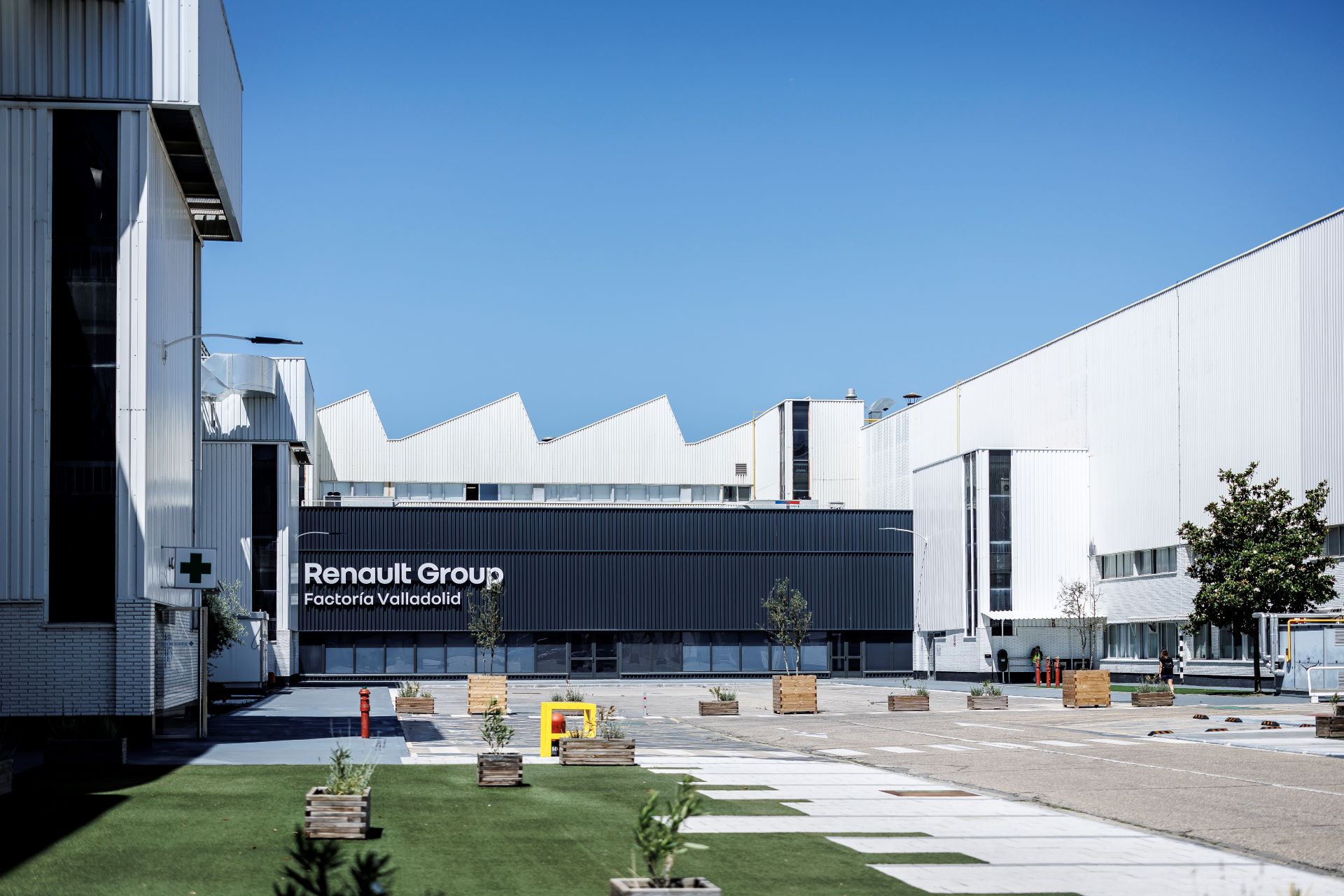
The Renault factory in Valladolid, inaugurated in 1972, has come a long way in evolution and improvement. With more than 8 million vehicles manufactured and multiple awards for quality, the environment and occupational risk prevention, this plant has established itself as a benchmark in the automotive industry. Today, it employs 2,259 workers, 27% of whom are women, and maintains a production rate involving 900 employees per day across two shifts.
One of the most notable aspects of the Valladolid plant is its focus on guaranteeing maximum quality in all its manufacturing processes. The arrival of new models has intensified quality controls, ensuring that every vehicle leaving the assembly line meets the highest standards. This commitment to excellence has allowed 90% of production to be exported to other countries, a proof of the global recognition of the quality of Renault.
Currently, the plant builds from scratch the Captur in its petrol, HEV and LPG versions, the Symbioz in its HEV version, and the Mitsubishi ASX also in petrol, HEV and LPG versions. This is a significant milestone, as it is the first time the Valladolid plant produces a segment C vehicle, similar to what happens at the Palencia plant with the Rafale, its first segment D. Production has increased by 18%, underlining and highlighting the plant’s capacity to adapt and grow to incredible levels.
Renault has bet on innovation and digitalisation, turning its Valladolid plant into a pilot factory at the forefront of the industry, achieving maximum energy efficiency as well as profitability. The integration of robots and advanced technology has enabled almost complete automation, especially in the bodywork process, where 99% of the robots have been automated. This section, which employs 350 workers, specialises in manufacturing plastic components and is the largest of Renault in the world.
The French brand has implemented a comprehensive decarbonisation approach, from the supply chain through to production and recycling. In Seville, for example, used vehicles are given a second life, while in Valladolid a 42% reduction in energy consumption and 39% in water consumption has been achieved. This commitment to sustainability has been recognised with sustainability awards and has positioned Renault as an industry leader thanks to constant research across all its manufacturing processes:
1. Bodywork process
2. Battery production
The Valladolid plant also stands out for its battery workshop, where three distinct types of hybrid and plug-in batteries are assembled. The annual production is 300,000 batteries, with a capacity of 60 batteries per hour and 40% automation of the process. For the PHEV batteries, the annual production is 30,000 units, with a capacity of 10 batteries per hour and 15% automation.
For the PHEV version of the Rafale, Renault will feature batteries of BYD, offering an range of 80 km and a capacity of 22 kWh. These batteries undergo rigorous tests using artificial intelligence to guarantee maximum quality and efficiency.
3. Painting process
The plant’s paint department has 92 robots that have made it possible to automate critical processes, such as eliminating ovens, reducing their number from four to one. Thanks to the 4wet technique, a 40% saving in gas consumption and 10% in electricity consumption has been achieved. This process is not only efficient but also ensures a high level of quality, offering seven body colours and three two-tone options.
4. Assembly and quality control
The assembly line is the largest in the plant, with 1,121 workers spread across two daily teams, allowing a vehicle to be assembled in less than a minute. Here, petrol, LPG, mild hybrid and full hybrid engines are produced (HEV). Each vehicle undergoes a series of rigorous tests to guarantee its quality, including speed, brake, suspension, light tests and even ADAS systems.
Renault does not stop here. The next engine option for the Rafale will feature an e-tech full hybrid 4×4 version of 300 CV, with an electric range of 100 km and reduced consumption of 0.7 litres per 100 km. In addition, the plant has generated 500 new jobs, and it is expected to fulfil its promise of growth and sustainability in the coming years.

 Peugeot E-208 GTi: a battery-powered toy that revives the spirit of the 1980s sports cars
 New Lexus ES: luxury grows and goes electric
 First contact with the Dacia Sandero Hybrid 155: power and efficiency from €19,890
Deja un comentario