Mitsubishi Outlander Hybrid Cars
Mitsubishi Outlander PHEV: an SUV to say goodbye to diesel
 Antonio Roncero @roncero_antonio
10 October 2018
8 min.
We test the new version of the Mitsubishi Outlander PHEV, which adds plenty of arguments for remaining the best-selling plug-in hybrid in our market.
Since its market launch in 2013, the Mitsubishi Outlander PHEV has become the best-selling plug-in hybrid SUV in the world, and the best-selling plug-in hybrid vehicle in our market.
One of the reasons for this success is that there are no cars comparable to the Outlander PHEV, if we consider its SUV bodywork, its size and its power. If we widen the scope to any plug-in hybrid, there is also none that offers everything the Outlander PHEV does. And even more so now, in this new version.
The best alternative to diesel
In a car of a certain size like an SUV in the Outlander’s category, if you care about consumption or, put another way, the fuel cost per kilometre, diesel remains the best purchase alternative compared with petrol engines… unless we are talking about a plug-in hybrid. And the Outlander PHEV has everything it takes to be the perfect choice.
Thanks to an agreement with Endesa, Outlander PHEV users can have free electricity to cover around 5,000 km per year
It is not just a matter of consumption. The plug-in hybrid propulsion system of the Mitsubishi Outlander PHEV makes it possible to achieve very low averages, of diesel… or even less, as we will now see. But given how things are going with restrictions in big cities, such as the new mobility plan in Madrid, it is increasingly worthwhile to have the advantages provided by the DGT blue label.
And the Mitsubishi Outlander PHEV has this “zero emissions” label, which is granted to electric cars or plug-in hybrids with an electric range of more than 40 km. You know: savings on tolls, free access to the Bus/VAO lane, free parking in green/blue zones, the possibility of entering city areas restricted to other vehicles…
But that’s not where it ends. Mitsubishi has signed an agreement with Endesa that allows Outlander users to benefit from a tariff under which, each month, the first 100 kWh of charging can be obtained at zero cost. This amounts to 450 km per month that can be driven in electric mode completely free of charge.
Low consumption, zero-emissions label, the possibility of free electricity to cover more than 5,000 km per year… You’re probably wondering where the catch is, and whether having these advantages has any consequence for the user. The answer is no.
The Mitsubishi Outlander is a car that works as a family SUV thanks to its space, offers comfort and ease of use, performance that won’t make you miss more power… and now there is no need for a large financial outlay either, as it is offered in two trim variants. Let’s look at it in more detail in this video test:
https://www.youtube.com/watch?time_continue=4&v=3vSy-gx2Ei8&feature=emb_logo
What changes in the 2019 Mitsubishi Outlander PHEV
There are some cosmetic changes that modernise the Outlander’s look. New elements include the grille, the bi-LED headlights and the moulding on the fog lights. Inside, there is much more complete instrumentation, seats with a new design with more lumbar support, new materials and upholstery, and some controls have been reorganised. Now, for example, there are two buttons behind the gear lever, on the centre console, to select a “Sport” mode, or a “Snow” mode for driving on low-grip surfaces.
The second important novelty is under the bonnet. The hybrid system of the Mitsubishi continues to use two electric motors, one coupled to the combustion engine and another on the rear axle. But now the 2.0 petrol engine is replaced by a more powerful and smoother-running 2.4 (135 CV instead of 120), the rear motor offers 13 CV more than before, and the batteries are 10 per cent more powerful.
The first final consequence is that the new Outlander PHEV announces a maximum system power of 230 CV compared with the 203 CV of the previous version. But there’s more. The 54 km electric-only range is retained, although previously it was on the NEDC cycle and now it is on the WLTP cycle. And the maximum speed using electricity alone is now 135 km/h, compared with 125 km/h before. The homologated average consumption is just 1.8 l/100 km.
As for charging times, between 5 and 6 hours from a domestic socket, and around half an hour using a fast-charging point. The new management system debuting on the Outlander PHEV enables new functions, including the option to programme pre-conditioning of the vehicle using mains power rather than the battery.
More technical changes that Outlander PHEV users will appreciate. New welding processes are applied to some parts of the chassis to increase rigidity, and both the steering and the suspension receive new settings to improve precision and comfort. The brakes also receive larger-diameter discs.
Behind the wheel of the new 2019 Outlander PHEV
We have tested the new Outlander PHEV on an urban route and a short trip out of the city, enough to confirm that the changes can be felt. Without giving up the climate control and driving normally, the Outlander PHEV allowed us to complete an urban route of just over 30 km using electricity alone.
At the end of the route, including almost another 30 km already on the motorway, without using sport mode and without driving especially carefully, we recorded an average fuel consumption of around 2 l/100 km, to which the electrical energy consumed during the journey, around 12 kW, must be added.
It should be noted here that not all the electrical energy consumed is “paid for”, since during use, in addition to what is stored in the batteries during charging, the car also recovers energy under braking.
A more in-depth test will allow us to determine real consumption on longer routes and road trips. As long as there is enough charge in the battery, it is clear that in day-to-day use and for short or city journeys, it is possible to run on electricity alone, or to move with consumption around 2–3 l/100 km. Once “on the road”, and when the battery begins to run down, the expected outcome on long journeys is driving at “diesel-like” consumption, between 6 and 8 l/100 km, which is not bad at all.
Otherwise, the Outlander PHEV feels comfortable and fast enough even in “ECO” mode (and has plenty of power in Sport mode), and sound insulation in the cabin has also improved. A car that is easy to drive day to day thanks to its general smoothness of operation. And also suitable for long-distance travel, given its consumption, range, performance and interior space.
The paddles on the steering wheel remain, which allow more energy to be recovered if we anticipate the driving situation well in advance, to choose between the different levels of regenerative braking, which in many situations even saves us having to use the brake pedal. It is also possible to activate a SAVE mode to conserve electrical energy, or to force charging on the move (not very efficient) using the combustion engine.
Range and prices of the Mitsubishi Outlander PHEV
An important novelty in the Mitsubishi Outlander PHEV range is that it is once again available in two trim variants, Motion and Kaiteki. This way, there is no longer a need to take on all the equipment of the top version, which means starting from a higher price.
Now, the Mitsubishi Outlander PHEV starts from €33,295, with all possible discounts included (the list price starts from €44,995). At this price you get a car with 18-inch alloy wheels, climate control, rear camera and everything you could consider essential.
For its part, the Kaiteki version costs €38,120, also with any possible discounts applied (the list price is €50,495). In addition to the Outlander Motion’s equipment, it adds, among other things, leather upholstery, 1,500 W power sockets, heated seats and steering wheel, active cruise control, electric tailgate, and driver assistance systems such as lane departure warning, automatic high beams, the peripheral vision camera and the parking assist system.
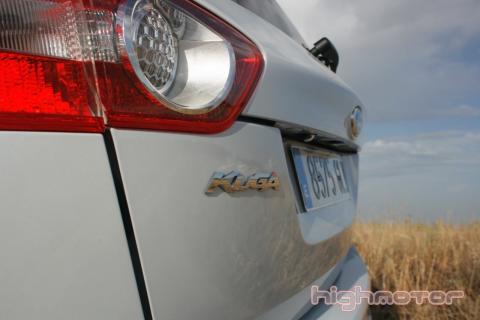
Outlander PHEV Mitsubishi image gallery


Technical specifications of this car


 Peugeot E-208 GTi: a battery-powered toy that revives the spirit of the 1980s sports cars
 New Lexus ES: luxury grows and goes electric
 First contact with the Dacia Sandero Hybrid 155: power and efficiency from €19,890
Comentarios cerrados