Ariya Audi BMW EQE EQE SUV ES GLC iX3 Lexus Mercedes Nissan NX Q5 Volvo X3 XC60 Hybrid Cars Buying Guides Rankings SUV
Ranking 2026: the 5 premium plug-in hybrid SUVs with the best real-world combined-cycle consumption
 Dani Montesinos
1 September 2026
7 min.
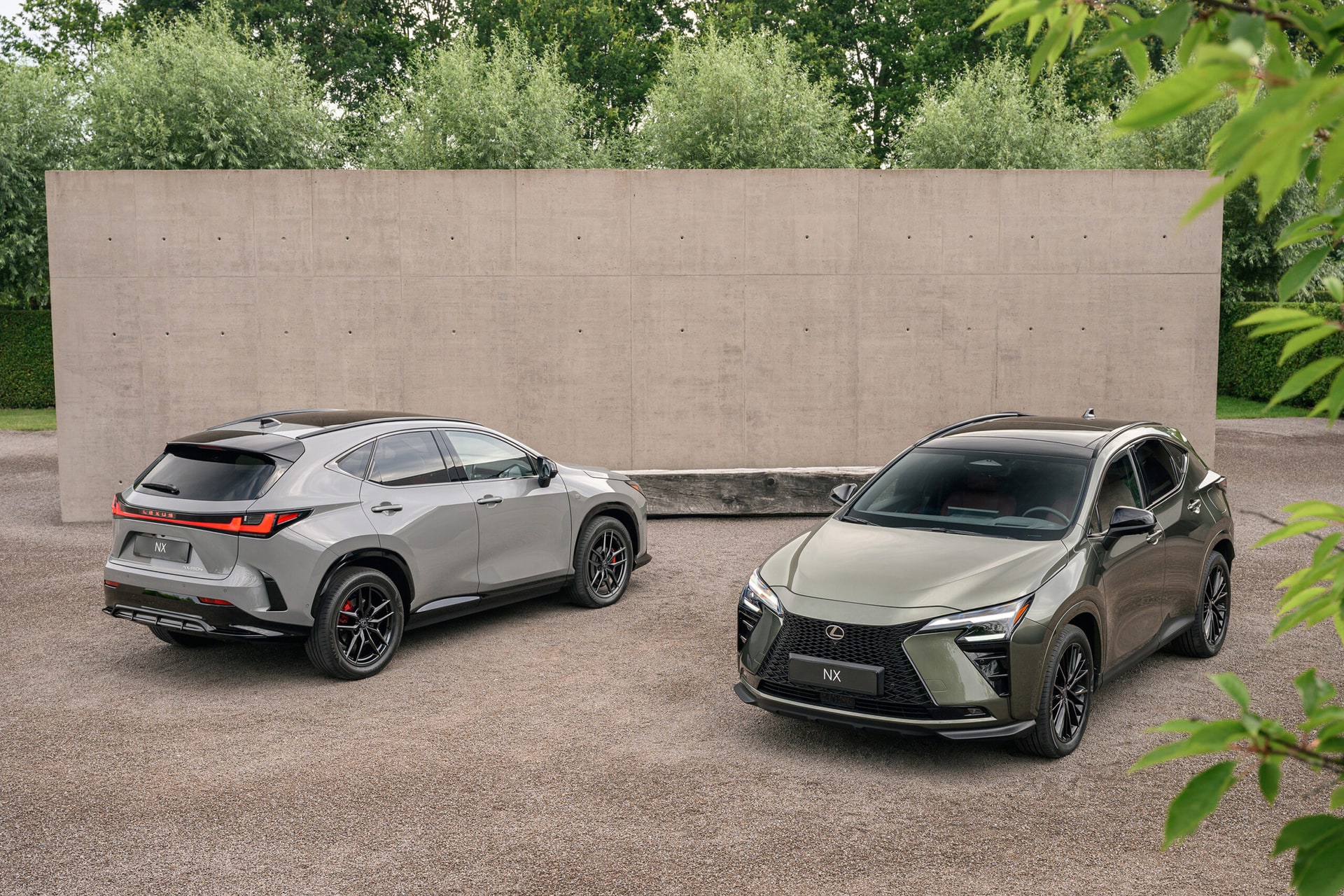
The five premium PHEV SUVs that perform best on the combined cycle with the battery depleted, with verifiable real consumption figures and WLTP electric range.
This ranking deliberately leaves out the BYD and the premium SUVs from Nissan. As far as the Chinese brand is concerned, in our view the arrival of new alternatives in 2026 offers more rounded propositions today in on-board technology and perceived cabin quality, although its electrified range remains an industry benchmark. As for the Nissan Ariya and company, we believe that, beyond range or power figures, the overall package—sound insulation, ergonomics, software and finish refinement—sits one step below what this premium comparison demands. That said, let’s move on to the five PHEV SUVs that do make the cut.
Why real combined-cycle consumption separates good PHEVs from excellent ones
WLTP homologation flatters. A plug-in SUV with a declared 80 km of electric range may show 1.4 l/100 km on paper and, as soon as the battery runs out, start drinking like a conventional petrol car. That is the real filter: what the combustion powertrain consumes when the pack is empty and the car has to move almost two and a half tonnes. It is the scenario faced by anyone driving 300 km on the motorway without being able to plug in.
In this ranking we prioritise precisely that figure—litres per 100 km with the battery depleted, combined cycle—combined with WLTP EV range. The intrinsic efficiency of the hybrid system weighs more than the combined power figure. And there, spoiler alert, there is a clear winner.
Methodology: real consumption (depleted battery) and WLTP EV range as reference criteria
We have cross-referenced three variables: combined consumption with the battery depleted (measured in reference tests and sustained WLTP data), homologated WLTP EV range, and consistency between declared power and running weight. The CERO label is taken for granted in all of them. Price is included as context, not as a direct scoring criterion.
1. Lexus NX 450h+ — from €57,700 — the benchmark for real efficiency
The NX 450h+ tops this ranking for a specific technical reason: its series-parallel architecture inherits two decades of hybrid system refinement Toyota, and that shows when the battery reaches zero. It delivers around 5.5–6.0 l/100 km on the combined cycle with the pack depleted, a figure no German rival manages to match consistently. Its WLTP EV range sits at roughly 69–76 km, enough to cover the average daily commute in Spain without firing up the 2.5 naturally aspirated engine.
It is not the fastest—nor does it aim to be. It is the most efficient. And in a PHEV, in my view, that is the metric that matters.
| Power kW | Power CV | Top speed | EV range | Consumption | Label | Fuel |
|---|---|---|---|---|---|---|
| 227 kW | 309 CV | 200 km/h | 69–76 km (WLTP) | 5.5–6.0 l/100 km (depleted battery) | CERO | PHEV |
BMW X32. BMW X3 30e xDrive — from €68,100 — the Bavarian dynamic balance
The new X3 30e keeps the BMW philosophy: a PHEV that does not give up its dynamic character. With the battery depleted it moves at around 6.8–7.4 l/100 km, a very respectable figure considering it is all-wheel drive and weighs close to 2,100 kg. WLTP EV range scales up to 90 km in the best conditions, significantly extending what the previous generation offered.
That said, to get the most out of that range you have to drive it with your left hand—Sport mode devours the battery without blinking. A similar analysis to the one we made of the BMW iX3 in its duel with the EQE SUV: Munich continues to bet on driving feel as its differentiating argument.
| Power kW | Power CV | Top speed | EV range | Consumption | Label | Fuel |
|---|---|---|---|---|---|---|
| 220 kW | 299 CV | 215 km/h | 88 km (WLTP) | 6.8–7.4 l/100 km (depleted battery) | CERO | PHEV |
3. Mercedes-Benz GLC 300e 4MATIC — from €68,990 — record EV range
The GLC 300e is Stuttgart’s answer to range anxiety. With a usable battery close to 24 kWh—a lot for a PHEV—it homologates around 130 km of WLTP EV range. In practice, many people can use it as an electric car for weeks at a time.
The catch? When the 2.0 turbo has to step in, real consumption hovers around 7.0–7.8 l/100 km. It is not bad, but the extra weight of the pack is paid for. It remains an exceptionally coherent PHEV for anyone who plugs in daily and only uses petrol for longer trips.
| Power kW | Power CV | Top speed | EV range | Consumption | Label | Fuel |
|---|---|---|---|---|---|---|
| 230 kW | 313 CV | 218 km/h | 127 km (WLTP) | 7.0–7.8 l/100 km (depleted battery) | CERO | PHEV |
4. Volvo XC60 T6 — from €66,450 — the Swede that ages well
The XC60 T6 has been a premium bestseller in Spain for years, and there are reasons for that. Its real consumption with the battery depleted sits at 7.2–7.9 l/100 km, with WLTP EV range of around 79 km. It does not shine in any metric to an extreme, but nor does it falter in any—and that consistency, together with a cabin that remains one of the most pleasant in the segment, keeps it on the conversational podium.
The 2.0 turbo works less smoothly than the Lexus system when pushed hard. Even so, for real mixed use, it is a purchase that is hard to fault.
| Power kW | Power CV | Top speed | EV range | Consumption | Label | Fuel |
|---|---|---|---|---|---|---|
| 246 kW | 335 CV | 180 km/h | 79 km (WLTP) | 7.2–7.9 l/100 km (depleted battery) | CERO | PHEV |
5. Audi Q5 55 TFSI e quattro — from €84,170 — the most petrol-reliant of the five
The Q5 55 TFSI e quattro closes the ranking. It is the fastest of the group and the one that best integrates the combined output of its two power sources, but also the one that records the worst figure with the battery depleted: 7.5–8.2 l/100 km on the real combined cycle. Its WLTP EV range is around 95 km, which is adequate for the segment.
The problem is not the car—it is a Q5, with everything that implies in perceived quality—but the efficiency/weight equation compared with the previous four. It remains to be seen whether the update planned for 2026 tightens those numbers.
| Power kW | Power CV | Top speed | EV range | Consumption | Label | Fuel |
|---|---|---|---|---|---|---|
| 270 kW | 367 CV | 239 km/h | 95 km (WLTP) | 7.5–8.2 l/100 km (depleted battery) | CERO | PHEV |
Comparison table: editorial score from 1 to 10
| Model | Real consumption | WLTP EV range | Performance | Perceived quality | Price-value | Overall score |
|---|---|---|---|---|---|---|
| Lexus NX 450h+ | 9.5 | 7.5 | 7.5 | 8.5 | 8.5 | 8.3 |
| BMW X3 30e xDrive | 8.0 | 8.5 | 8.5 | 9.0 | 7.5 | 8.3 |
| Mercedes-Benz GLC 300e | 7.5 | 10.0 | 8.5 | 9.0 | 7.0 | 8.4 |
| Volvo XC60 T6 Recharge | 7.5 | 8.0 | 8.5 | 8.5 | 8.0 | 8.1 |
| Audi Q5 55 TFSI e | 7.0 | 8.0 | 9.0 | 9.0 | 7.0 | 8.0 |
Subsidies and purchase context
All of these models are eligible for the Plan Auto+ thanks to their PHEV status with the CERO label. Current amounts should be checked on the official website, as they vary by call. It is also worth reviewing our approach to how to choose a PHEV SUV with the best value for money before signing.
FAQ
Why does the Lexus NX 450h+ consume less than its German rivals with the battery depleted?
Because its series-parallel hybrid system, inherited from two decades of development Toyota, allows the combustion engine to work almost permanently at its optimal efficiency point. German rivals use parallel architectures more oriented towards performance, which are less efficient under sustained operation.
What real EV range can I expect compared with the WLTP homologated figure?
As a general rule, between 70% and 85% of the WLTP figure under real mixed conditions. A GLC 300e rated at 130 km WLTP will in practice manage between 95 and 110 real km depending on temperature and driving style.
Is a premium PHEV worth it if I can’t plug in at home?
In our view, no. Without regular charging, the weight penalty of the pack hurts real consumption and you do not take advantage of the tax or operational benefits. For that profile, a conventional HEV is more coherent.
Which of the five is most recommendable for a user who drives a lot on motorways?
The Lexus NX 450h+, without question. It is the only one that keeps consumption below 6.5 l/100 km under sustained operation with the battery depleted, the typical long-journey scenario.
Technical specifications of the cars in this article

 Peugeot E-208 GTi: a battery-powered toy that revives the spirit of the 1980s sports cars
 New Lexus ES: luxury grows and goes electric
 First contact with the Dacia Sandero Hybrid 155: power and efficiency from €19,890
Deja un comentario