Renault Clio 0.9 TCe 90 CV, road test (Engine and performance)
 Diego G. Moreira
19 January 2013
6 min.
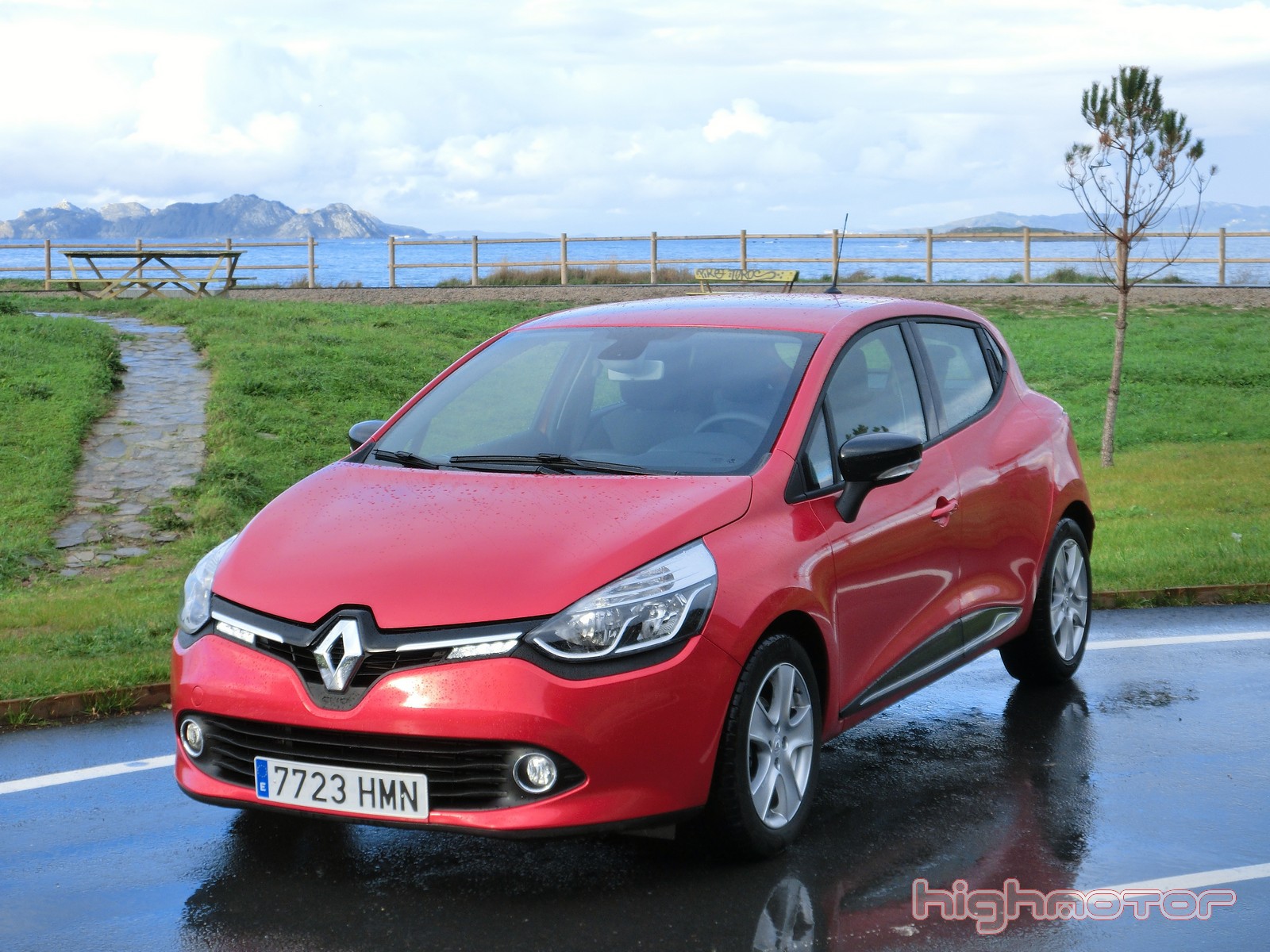
The Highmotor Test Team gets behind the wheel of the new Renault Clio with the 0.9 TCe 90 CV engine. It is a turbocharged three-cylinder petrol unit. In this part of the test we talk about the engine, performance, consumption and behaviour.
Only a few months ago the new Renault Clio was unveiled, a very important model within the range of the French manufacturer (with due respect to the Megane, which generates so many sales joys), and which is now completely renewed to offer a different design, new engines and new equipment.
Our test team has already got behind the wheel of the new Clio and we are going to tell you everything about this city car that has been so present on our roads for years. The new Clio stands out first of all for its exterior design, it is different, more sporty, but I very much doubt it will leave anyone indifferent. That said, on the mechanical side it jumps on the downsizing bandwagon and now debuts a turbocharged three-cylinder engine capable of delivering 90 CV. How does it go? Is it dynamic? How much does it consume? Keep following the test and we will answer these and other questions.
Engine and performance
The French are betting on the three, that is, on three-cylinder engines. When Peugeot launched the 208 it already bet on a three-cylinder engine for the French model, and now Renault repeats the operation for the renewed Clio. It is curious because Renault also has a three-cylinder engine in its own house that works really well (originally from Nissan, the 1.2 DIG-S of 98 CV), but even so they have opted for their own development.
Under the name 0.9 TCe hides an engine of just 898 cc with a turbo that is capable of reaching 90 CV of power. The most notable thing about the unit is the power delivery, more progressive than typical petrol engines. From 2,000 rpm the car already starts to push hard, something that continues past 3,000 revs and up to just over 4,500-5,000 rpm where it fades.
I say it is progressive, but that expression must be put in quotation marks, since we notice how the turbo blows when reaching 3,000 revs, its normal operating range. That said, compared with the entry-level petrol engine (the 1.2 of 75 CV) this three-cylinder responds more energetically to the accelerator and it is an engine that still allows enjoyment on the road or a correct overtaking manoeuvre (it is not spectacular, but it is a Clio, not a Clio Sport).
The engine is paired with a five-speed manual gearbox, a gearbox that raises consumption on motorways as it has no sixth gear and sits around 3,000 revs when cruising near 120 km/h. As for the gearbox, the feel is correct; it is not among the most precise, but I have tested French city cars with worse gearbox feel.
Our unit, in the Dynamique trim, features the ECO button, which has nothing to do with the Start&Stop it also comes with. ECO mode directly affects the engine settings (electronics) to reduce engine torque, reduce air-conditioning output, and ultimately improve driving for greater efficiency; according to the brand, you can save 10% in consumption.
In practice you notice it when it is activated (it can be switched off) because it barely lets the engine rev up, and when overtaking the difference is very noticeable compared with driving normally, though for relaxed journeys it represents an interesting saving.
Is this three-cylinder engine enough to move the new Renault Clio? To answer this we must mention that there are only two engines available across the whole Clio range, the basic 1.2 of 75 CV and this turbocharged 0.9 TCe of 90 CV. An interesting turbocharged 1.2 TCe of 120 CV is expected, but until it arrives, the small three-cylinder is a good engine and can even provide some fun if we keep it high in the rev range.
That said, reliability is something we will have to talk about in a few years; it is the question I was asked most during the time I tested the Clio. What I can say is that it is a turbocharged engine, so we must be careful not to rev it too hard when cold, and after long journeys not to switch the car off abruptly; in other words, those recommendations that are always good to follow and that few people practise, and that can prevent many breakdowns.
Behaviour
The first thing that comes to mind in this section is stability, both on the road and if we decide to take the little French car onto the motorway. That stability is helped by suspension tuned firmer than is usual in this segment, which gives it a certain dynamism on corners.
The counterpoint to this is the firmness of the suspension when we drive over a poorly surfaced road or with the typical manhole covers badly levelled or with potholes caused by age. In these cases comfort is reduced and the suspension can become somewhat harsh.
In this section we have one thing to improve and one thing we liked. The part to improve is the steering; it is not direct and is also too assisted, a steering that does not convey what is happening at the wheels, typical of city cars but improvable on a car that enjoys good stability and dynamism.
The part we liked is the brakes, with rear drum brakes (an improvable element) but even so the Clio stops with great ease and its brakes perform in any situation.
When driving on the motorway, the interior insulation is more refined than the previous generation, but even so, it could be improved a little more in this area.
Is it dynamic? How does it behave? To summarise briefly, it is more stable than the previous generation, gains dynamism and benefits from a braking system that works well. On the downside we have reduced comfort when driving over poor asphalt.
Consumption
This section is not very favourable to the TCe engine, but it performs correctly. That said, we must distance ourselves from the homologated consumption figures of the Clio. In our test the average consumption was around 6.5 litres per 100 km.
On the road consumption ranged from 5.5 litres to 6.5 litres, depending heavily on our driving style, the ECO mode and the route followed. In general, if we are careful with the accelerator and the route is not a mountain pass, we can achieve consumption below 6 litres.
On the motorway the figure stood at 5.6 litres, on a route different from the usual one, but a motorway stretch of around 150 km. There, since there is no sixth gear, consumption is penalised much more, and it could be lower if the engine were revved less. Meanwhile in the city , if we are careless we can easily exceed 9 litres per 100 km.
Photos | Diego G. Moreira and Test Team
Technical specifications of this car


 Peugeot E-208 GTi: a battery-powered toy that revives the spirit of the 1980s sports cars
 New Lexus ES: luxury grows and goes electric
 First contact with the Dacia Sandero Hybrid 155: power and efficiency from €19,890
un comentario
Deja un comentario
Tengo este coche desde hace dos meses, y estoy contentó. Estoy de acuerdo en todo lo q se dice. El consumo dado por la marca es bastante optimista. Para conseguir dicho consumo hay q ir bastante tranquilo, sin forzar y en modo eco. A mi lo q más me gusta es su línea, dirección, cambio y puesto de conducción. Lo q menos el consumo. Y tener claro q es un clio, y que es para lo que es. Pero bien, estoy contento.