Review of the Omoda 9 SHS: why the Chinese plug-in hybrid SUV raises the premium bar in 2026
 Dani Montesinos
31 August 2026
7 min.
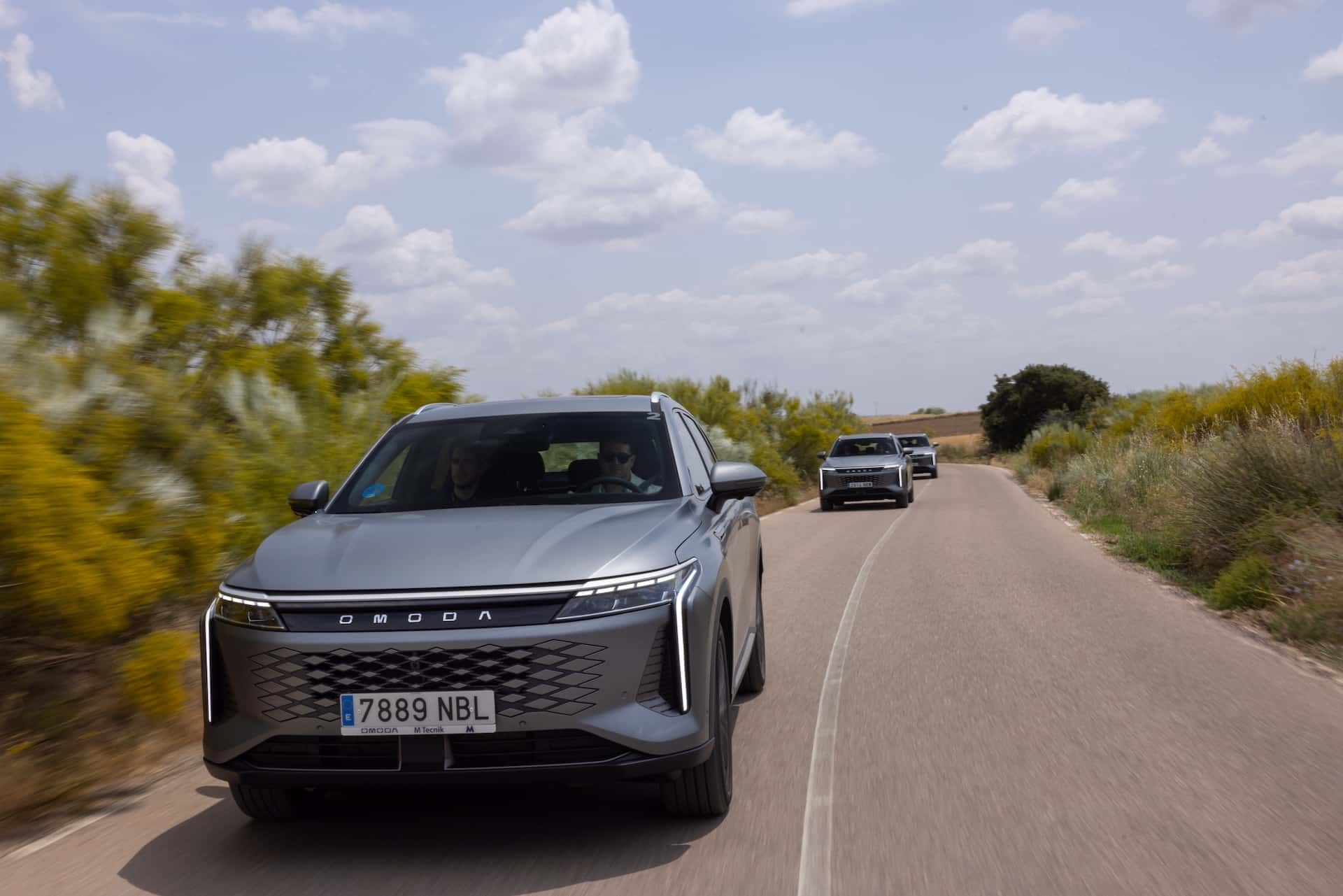
We analyze the Omoda 9 SHS, the 537 hp plug-in hybrid with 145 km of electric range that takes on German premium SUVs for less than €45,000
The mid-size premium plug-in hybrid SUV segment is dominated by established German brands and a Swedish player with a long pedigree. The arrival of the Omoda 9 SHS forces a rethink of the benchmarks: 537 hp combined, 145 km of homologated electric range and a recommended starting price from €40,000. From the list of Chinese rivals we have excluded the BYD Seal U DM-i from this analysis: in our view, the segment has evolved quickly and the overall approach of the Omoda — power, battery, equipment and brand perception — is more balanced when it comes to challenging the Germans on their own ground. With that clarified, let’s get into the details.
Omoda 9 SHS: the plug-in hybrid proposition arriving in Spain in 2026
The brand from the Chery group lands with a 4.77-metre mid-size SUV that doesn’t seek to compete on price with compact Chinese models, but rather to sit at the table with European premium brands. The SHS suffix (Super Hybrid System) sums up the philosophy: a complex powertrain with a 1.5 TGDI engine, three electric motors and a battery that comfortably exceeds the segment average for PHEVs.
Exterior design: mid-size SUV presence with its own identity
The silhouette departs from the Omoda 5 aesthetic and adopts a bolder language, with a long bonnet, pronounced shoulders and a horizontal light signature that visually stretches the front end. 20-inch alloy wheels as standard, flush door handles and a clean rear with a LED light bar. Is it a groundbreaking design? No, and that’s probably a smart decision. It favours Central European sobriety over excess.
Interior and space: the best-calibrated surprise of the year
This is where the Omoda 9 SHS best defends the premium label. A 24.6-inch curved double screen, Nappa leather upholstery, front seats with eight-program massage, a fixed panoramic roof, four-zone climate control and a 14-speaker Sony sound system. Soft-touch plastics extend to the second row. In a range that hovers around €43,000, the perceived quality is notable.
Space: 4.77 metres in length and a 2.80-metre wheelbase translate into generous rear legroom and a 660-litre boot. Five seats, with no seven-seat option.
SHS powertrain: 540 hp combined and intelligent all-wheel drive
The heart is a 143 hp 1.5 TGDI combined with three electric motors — one at the front and two at the rear — which together deliver a combined output close to 537 hp and 650 Nm. The transmission is a three-speed DHT, more sophisticated than the e-CVTs common in the segment. The result: 0–100 km/h in around 5 seconds and all-wheel drive managed by electronics that distribute torque axle by axle.
On paper, sports-car performance. In practice, the weight (around 2,270 kg) defines its character: tremendous straight-line thrust, but don’t expect dynamic finesse on the level of an X5 M60i. It doesn’t pretend to.
Real electric range: 145 homologated km that change the rules
The 34.5 kWh battery is the most compelling argument. Most German rivals operate between 25 and 30 kWh usable. In practical terms: 145 km WLTP of electric range and a homologated combined consumption of 1.5 l/100 km. For urban and peri-urban use, many drivers could go weeks without starting the combustion engine. DC fast charging up to 70 kW, which is unusual for a PHEV.
| Power kW | Power hp | Top speed | Electric range | Consumption | Label | Fuel |
|---|---|---|---|---|---|---|
| 395 kW | 537 hp | 180 km/h | 145 km (WLTP) | 1.7 l/100 km | ZERO | PHEV |
On the road: premium comfort with nuances
Multi-link rear suspension, adaptive dampers and progressive steering. The tuning prioritises long-distance comfort over sportiness, and rightly so: the Omoda 9 SHS is more enjoyable on a relaxed journey than on a twisty mountain road. Even so, the sound insulation is surprising: 100 km/h arrives without intrusive road noise, something that a couple of years ago could not be expected from a Chinese product in this category.
That said, the regenerative braking still has a feel that doesn’t entirely convince me during transitions. It’s a nuance, not a serious flaw.
Equipment and technology: high-end European-level specification
Standard features include a HUD, Level 2+ semi-autonomous driving, a 540° camera, keyless entry with facial recognition, ventilated wireless charging and OTA updates. The operating system, based on the Snapdragon 8155, responds smoothly. Wireless Android Auto and Apple CarPlay, of course.
Price and positioning against premium rivals
The recommended retail price starts at around €42,517. As an editorial reference and without going into the fine print, that figure is the manufacturer’s recommended price, without dealer discounts, occasional campaigns or the current Plan Auto+ aid (check the updated amount on the official website). Compared with a BMW X5 xDrive50e or a Mercedes-Benz GLC 300 e, the Omoda 9 SHS offers more power, more electric range and equivalent equipment for, in some cases, half the price. The question that remains is the usual one: residual values, service network, brand perception?
Direct rivals: who should be looking down their noses
The large premium mid-size plug-in hybrid SUVs sit in a different price league. But a pure technical comparison yields uncomfortable data for Munich, Gothenburg and Stuttgart. In that European premium league also enters the best-designed interior in the PHEV segment, where the Omoda 9 holds its own with confidence.
BMW X5 xDrive50e from €95,100
| Power kW | Power hp | Top speed | Electric range | Consumption | Label | Fuel |
|---|---|---|---|---|---|---|
| 360 kW | 489 hp | 250 km/h | 100 km | 1.2 l/100 km | ZERO | PHEV |
Volvo XC60 T6 from €66,450
| Power kW | Power hp | Top speed | Electric range | Consumption | Label | Fuel |
|---|---|---|---|---|---|---|
| 246 kW | 335 hp | 180 km/h | 77 km | 2.8 l/100 km | ZERO | PHEV |
Mercedes-Benz GLC 300 e from €68,990
| Power kW | Power hp | Top speed | Electric range | Consumption | Label | Fuel |
|---|---|---|---|---|---|---|
| 230 kW | 313 hp | 218 km/h | 127 km | 2.1 l/100 km | ZERO | PHEV |
Summary table and editorial score
| Model | hp | Electric range | Price from | Score |
|---|---|---|---|---|
| Omoda 9 SHS | 537 | 145 km | €42,517 | 8.7 |
| BMW X5 xDrive50e | 489 | 100 km | €95,100 | 8.5 |
| Volvo XC60 T6 | 335 | 77 km | €66,450 | 7.9 |
| Mercedes-Benz GLC 300 e | 313 | 127 km | €68,990 | 8.2 |
Verdict: the first Chinese PHEV to take a seat at the premium table
The Omoda 9 SHS is not perfect — the sales network is young and residual values are yet to be consolidated — but for the first time a Chinese plug-in hybrid SUV offers technical arguments that the Germans will take a while to match in their next generation. If your decision weighs more on the spec sheet than on the badge, there’s room for discussion. For those seeking other alternatives in the same format, the ranking of plug-in hybrid SUVs with the best value for money under €45,000 complements this review with more modest options.
FAQ
How much real electric range does the Omoda 9 SHS have?
The homologated WLTP figure is approximately 145 km, thanks to a usable battery of around 34.5 kWh. In real mixed use (urban and road driving with climate control), a reasonable range is between 110 and 130 km, well above the premium PHEV segment average.
How much does the Omoda 9 SHS cost in Spain?
The recommended retail price starts from approximately €42,000. This is the manufacturer’s recommended figure, excluding dealer discounts, occasional campaigns and the current Plan Auto+ aid.
Is it really an alternative to a BMW X5 PHEV or a Volvo XC60 Recharge?
On paper, yes: it offers more power (537 hp), more electric range and equivalent equipment at a price that may be around half. How it performs in residual value and long-term brand perception remains to be seen.
What environmental label does the Omoda 9 SHS have?
DGT ZERO label, as it comfortably exceeds the 40 km of electric range required for plug-in hybrids. Free access to ZBE zones and associated tax benefits.
Technical specifications of this car

 Kia offers an electric range of 10 models, 50 versions and 400 possible combinations
 The seven finalists for the 2027 European Car of the Year (COTY) are exclusively electric
 Peugeot E-208 GTi: a battery-powered toy that revives the spirit of the 1980s sports cars
Deja un comentario