R1S R1T Rivian Electric Cars Pick-up SUV
Rivian is completely renewing its R1T and R1S models with substantial improvements
 Javier Cantagalli
8 June 2024
4 min.
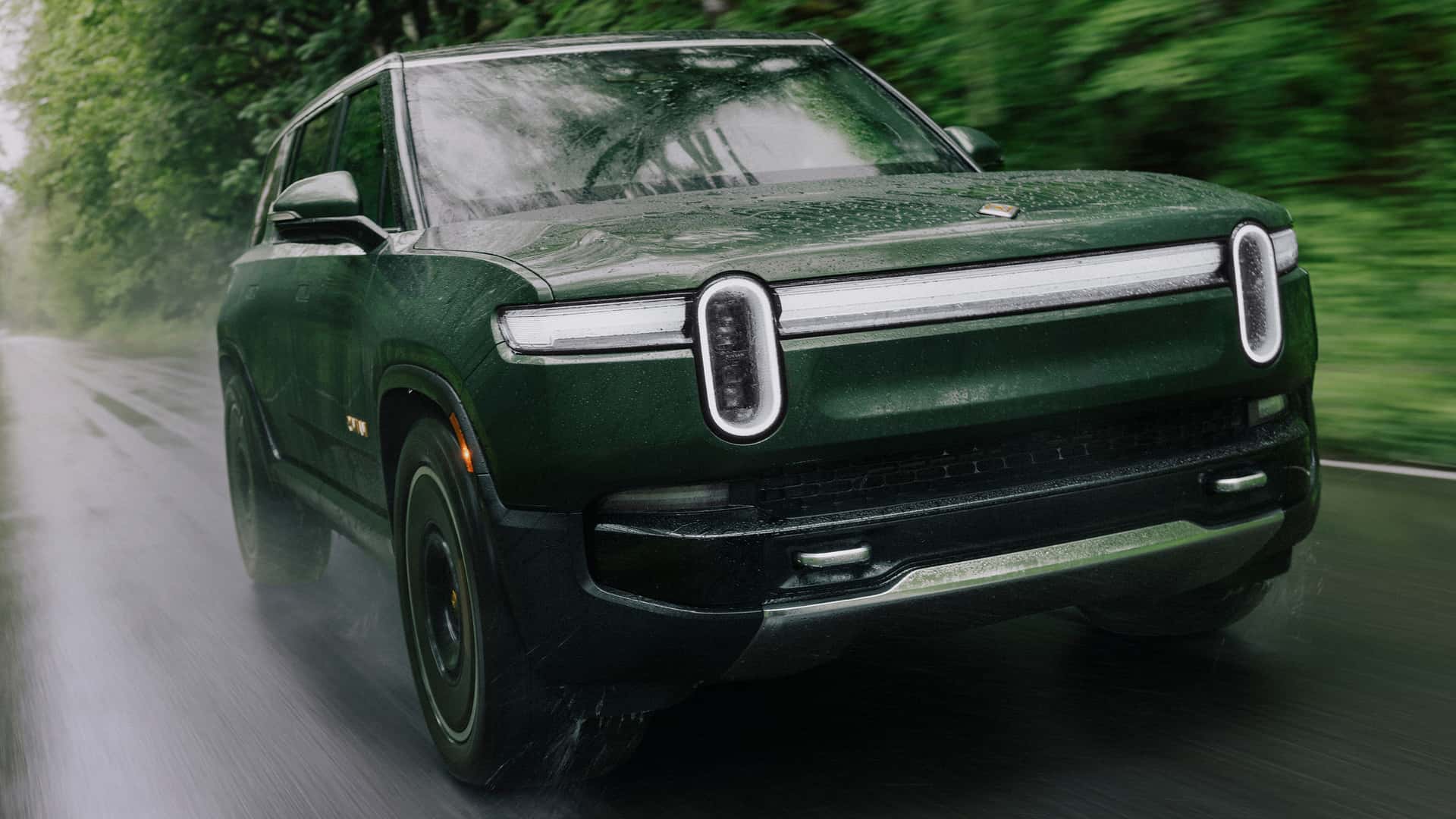
Although they may look identical at first glance, the new R1T and R1S come with important improvements that can only be appreciated once you get behind the wheel of one of them.
With a couple of years or more still to go before we see the new, more affordable models already presented by the North American manufacturer, Rivian has decided to carry out an in-depth update of its current models: the R1T electric pickup and the R1S electric SUV.
The second generation of Rivian’s R1 models keeps the same design but introduces significant internal changes. A new electrical and software architecture has been implemented, along with a new LFP battery pack for the entry-level version. These changes will be very positive for the brand’s customers, but they also aim to simplify production and reduce the financial losses per vehicle for the company.
The entry-level versions of the R1T and R1S will keep the two-motor configuration of the previous generation, but Rivian now adds a completely new version with three electric motors. Two of them are located on the rear axle and the other on the front, with a combined output of 634 kW, which allows the R1T to reach 100 km/h from a standstill in about 3 seconds (0 to 60 mph in 2.9 seconds).
Relax, you won’t be left stranded
The new R1T with triple electric motors stands out not only for its performance on and off the road, but also for its range. With the largest battery pack offered by Rivian, at 149 kWh, the manufacturer claims that it is possible to travel more than 600 km on a single charge. Not bad for a vehicle in its segment. But that’s not all, because thanks to the Conserve mode, which reduces the vehicle’s energy consumption, Rivian promises that more than 650 km non-stop is achievable.
The North American manufacturer also keeps the top versions with four electric motors, improving their performance in this case. Power rises from 623 kW and 1,231 Nm of torque to 765 kW and 1,625 Nm of torque. This allows the R1T to accelerate from 0 to 60 mph in 2.5 seconds in Launch mode, one tenth of a second faster than the top-of-the-range triple-motor Cybertruck from Tesla.
As for the battery packs, the entry-level versions now debut a lithium iron phosphate (LFP) pack, which keeps the same range of 434 km per charge. Although Rivian has not revealed the exact capacity of this battery pack, some leaked documents suggest it may have dropped from 105.9 kWh to 92.5 kWh. Additionally, the higher-capacity battery packs, Large and Max, still use the same 2170 cylindrical cells, but the casings that contain them are produced using a new method that simplifies manufacturing and also reduces weight. The North American manufacturer claims that with the Large battery pack it is possible to travel up to 531 km, while with the Max this figure rises to 675 km.
Rivian updates the hardware of its vehicles
Finally, we cannot end without highlighting the numerous technological improvements Rivian has implemented in these new models. The North American manufacturer has improved the quality of the cameras surrounding the vehicle, which are now 4K HDR, with the ability to see what is happening ahead on the road from a much greater distance. The new R1T and R1S debut dual Nvidia Drive Orin processors, with ten times the computing capacity, which are also optimized for the use of artificial intelligence models designed to identify all the objects in the vehicle’s surroundings.
But the improvements don’t stop there, because Rivian has also completely redesigned its infotainment system. The company has also promised new driver assistance capabilities that will arrive with future software updates, taking advantage of all these hardware improvements.
Price and Availability
The price of the updated R1S starts in the United States at $75,900, and that of the R1T at $69,900. The triple-motor versions will logically cost a little more: $105,900 for the R1S and $99,900 for the R1T. Deliveries of the R1S entry-level versions will begin shortly, and those of the R1T shortly after. Customers interested in the triple-motor versions will have to wait a little longer, until late summer. The four-motor versions will arrive later still.


 Peugeot E-208 GTi: a battery-powered toy that revives the spirit of the 1980s sports cars
 New Lexus ES: luxury grows and goes electric
 First contact with the Dacia Sandero Hybrid 155: power and efficiency from €19,890
Deja un comentario