Mercedes Coches clásicos Opinión
Should you prioritise performance over reliability, or the reliability of a classic car over its performance?
 Fernando Alvarez
14 July 2011
3 min.
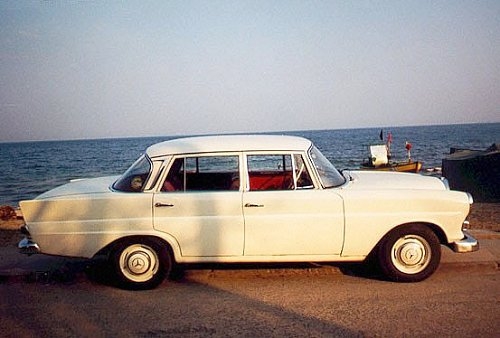
It had been several months since I last stopped by a site I really like and to which I dedicate quite a bit of time whenever I remember to pay it a visit. The site is Piel de Toro, one of the must-visit places on the web if you’re going to read anything about classic cars.
The thing is, a message from a user caught my attention. He spoke of his Mercedes-Benz 200D W110 from 1965 and said he preferred reliability over performance and the old over the new. In other words, it’s a debate that many of you have probably got caught up in at some point. Were cars from the past generally better, or are today’s better? What this P de T user wrote is the following:
When I got my driving licence, I didn’t want a modern car that puts performance ahead of reliability; I wanted a classic that put reliability ahead of performance, one that could reach a million kilometres instead of giving up the ghost before two hundred thousand; one that wasn’t designed to fall apart after a while with seventy-six thousand parts on average; one that would let me DRIVE instead of treating me as if I were useless; and one that was safe because it was made of metal, rather than relatively safe because it was made of plastic and fibre. So I bought a Colas diesel. Since then, it has been my only car, reliable, safe, spacious, full of personality and flavour, unlike the bland insipidity and lack of soul of today’s cars. It doesn’t matter whether you start it every day or after months; it always starts first time. When you have a car like this, you understand just how much marketing is taking us for fools, in an era when even the headlights are made of very cheap plastic. For this and many other reasons, I despise new cars, which I will never drive. Now they pretend to be economical when mine consumes 8.1 litres of diesel per 100, and then they end up spending more on breakdowns of mass airflow sensors, probes and EGR valves than they save in fuel. From here, my encouragement to restore classics: every euro you invest in them will be returned threefold in satisfaction and in moments that are hard to forget.
I have highlighted in bold what I believe is important for all of us who like classics. I know that the 200D of those years is a beast of a car and still a dream for many. But I’m not sure it’s really that special, considering it’s fine for a Sunday drive, but don’t even think about accelerating hard, asking much of the brakes, or trying to take a corner a bit too fast.
Of course, those were different cars, which were not built to go to Le Mans. And those were different times. And perhaps some brands today are indeed not taking us for fools with certain models, under certain circumstances, but that is because as consumers we have allowed it for years (although that is another story).
I like classics very much, but I wouldn’t drive one every day. I think that sums up what I felt on reading the piece published in P de T.
Do you think the proud owner of the Mercedes is right? Can a 46-year-old car serve for daily commuting and make us forget that better cars now exist than before?


 The seven finalists for the 2027 European Car of the Year (COTY) are exclusively electric
 Peugeot E-208 GTi: a battery-powered toy that revives the spirit of the 1980s sports cars
 New Lexus ES: luxury grows and goes electric
un comentario
Deja un comentario
No podemos afirmar que ahora nos están vendiendo la milonga y que los coches de antes eran mejores. En temas de seguridad no hay nada que reprocharle al progreso,las vidas humanas es lo más importante. Es cierto que debido a estas medidas de seguridad los coches ahora son más pesados y menos divertidos,porque no nos dejan correr ciertos riesgos que antes podrían ser divertidos pero mal utilizados extremadamente peligrosos (véase ESP).
En cuanto a espacio no estoy para nada de acuerdo,ahora vamos mas espaciosos y con mayor comodidad.
Si que creo que se tiran el pisto muchas veces con denominaciones técnicas,pero en general creo que no nos están dando gato por liebre.
En cuanto a fiabilidad y debido al bum que se vino produciendo hasta hace unos años deja muchos que desear,en este aspecto sería discutible si la evolución ha sido positiva o negativa.