SP Automotive presents Chaos, the world's first ultracar
 Victor Alós Yus @sepelaci
2 November 2021
4 min.
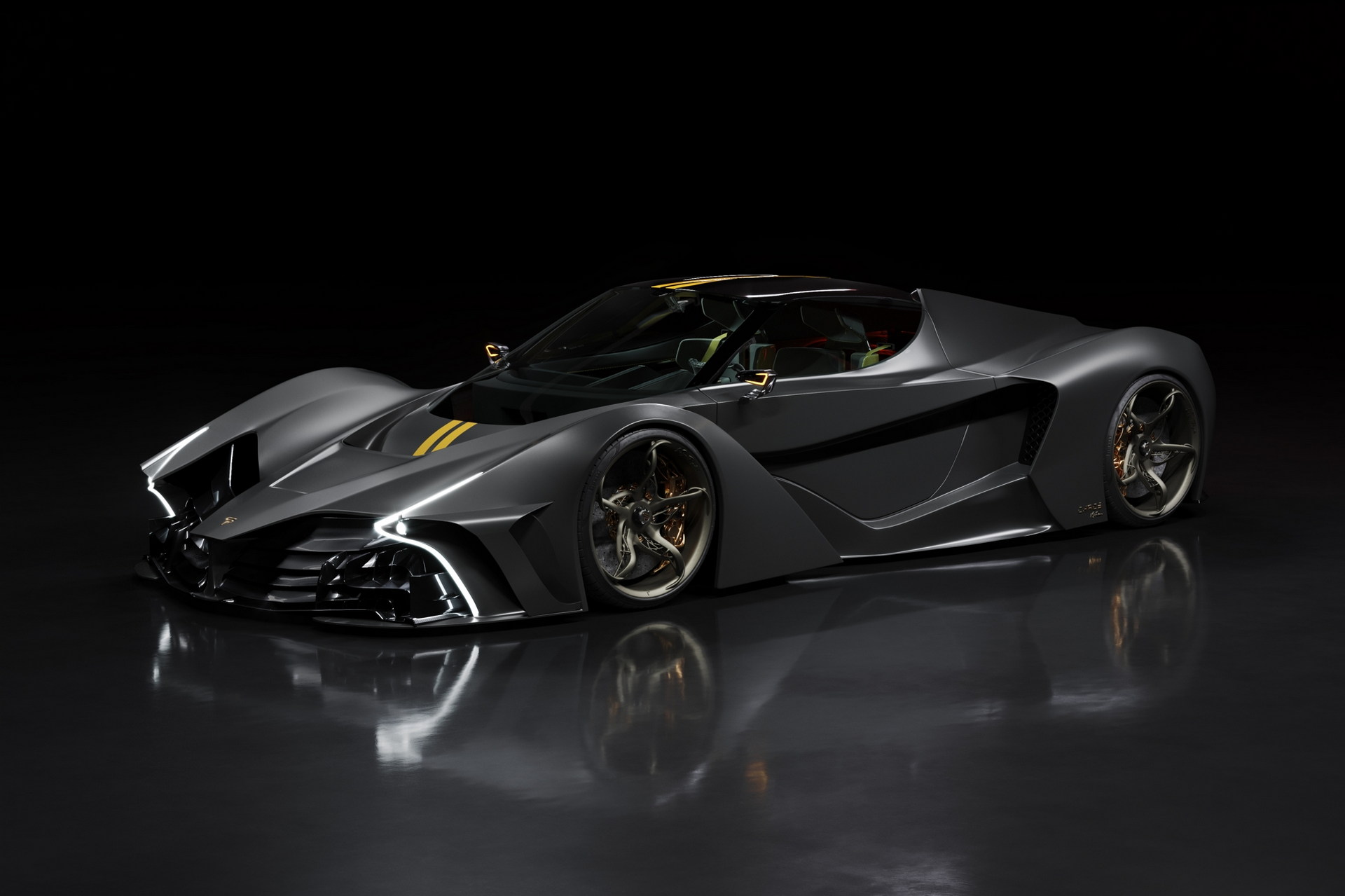
The Athens-based company has unveiled a model that aims to be the first ultracar manufactured in Europe, with some very special features.
The hypercar market continues to boom, and there are more and more models that meet the parameters of this type of vehicle. These are usually companies created specifically for this purpose, so we find products made with great care, since it is their only product. The company Spyros Panopoulos Automotive, based in Athens, is one of them, and it has just presented Chaos, its hypercar model.
Although according to the company’s statements it goes further, because for them this model is the first ultracar ever built. And if we go by the specifications they have announced, it could well be true. The goal of this vehicle is to break several records: the fastest lap at the Nürburgring, the highest top speed and the fastest quarter-mile run.
One engine, two power outputs
The Chaos features a 4.0-litre twin-turbo V10 engine. This engine is tuned to two power levels, both with outstanding output and very attractive performance. Both versions have four-wheel drive, with a seven- or eight-speed dual-clutch transmission.
This engine was designed and developed by the company itself and uses materials such as aluminium, components printed with a 3D printer in magnesium, as well as pistons and other key parts that use this manufacturing method. The turbochargers are made of carbon fibre, titanium, magnesium and ceramic composites.
Galería de fotos -
SP Chaos
Chaos Earth Version
This is the entry-level version of the model. Its engine delivers 2,077 CV of power, with a peak torque of 1,389 Nm, reached between 10,000 and 11,000 rpm. With this engine it reaches 100 km/h from a standstill in just 1.9 seconds. Acceleration from 0 to 300 km/h takes only 7.9 seconds. According to the manufacturer, the quarter-mile run takes 8.1 seconds.
Chaos Zero Gravity
The top version of the Chaos offers 3,107 CV of power. It accelerates from 0 to 100 km/h in just 1.55 seconds, faster than the other variant. 200 km/h is reached in 7.1 seconds and 300 km/h in 7.1 seconds as well, which some take to reach 100 km/h.
According to the company, the quarter-mile run is completed in 7.5 seconds. If this is true, it would beat the Rimac Nevera, the electric supercar that holds the record with 8.58 seconds. Its top speed reaches 500 km/h. This places it above the SSC Tuatara, which offers 455 km/h, and the Bugatti Chiron Super Sport 300+, which claims 490 km/h.
A very aggressive look
The SP Chaos has a look that matches its performance. Some of its features can be seen on other similar cars, but there are elements that stand out, such as 20- and 21-inch wheels and quad exhausts printed in 3D. The design borrows many elements from Formula 1 single-seaters, so this is one of the cars with the best aerodynamics. At least, that is what SP claims.
The Chaos Earth Version weighs 1,388 kg, while the Zero Gravity weighs slightly less, 1,272 kg, thanks to the use of lighter materials. The brakes that control the power of both versions are identical: they have ventilated and cross-drilled carbon-ceramic discs measuring 482 mm at the front and 442 mm at the rear.
Simple interior
The interior features a very minimalist design, though luxurious and high-tech. It has a yoke-style steering wheel and an integrated display. In front of the passenger, another multimedia screen unfolds, and there are several physical controls for managing various elements of the car. The technology is represented by a virtual and augmented reality system, 5G connectivity, and facial recognition to detect the driver’s expressions and adapt the driving experience at every moment.
Price of the SP Chaos
The Greek company says that only 20 units will be built for each continent. The starting price will be set at 5.5 million euros for the entry-level version and 12.5 million euros for the Zero Gravity. It will be sold through Sotheby’s, and they say one has already been sold, which will be delivered in 2022. Attempts to break the records will take place between 2022 and 2023.


 Peugeot E-208 GTi: a battery-powered toy that revives the spirit of the 1980s sports cars
 New Lexus ES: luxury grows and goes electric
 First contact with the Dacia Sandero Hybrid 155: power and efficiency from €19,890
Deja un comentario