Steering U-turn by Honda leads it to cancel three future electric models
 Javier Cantagalli
12 March 2026
3 min.
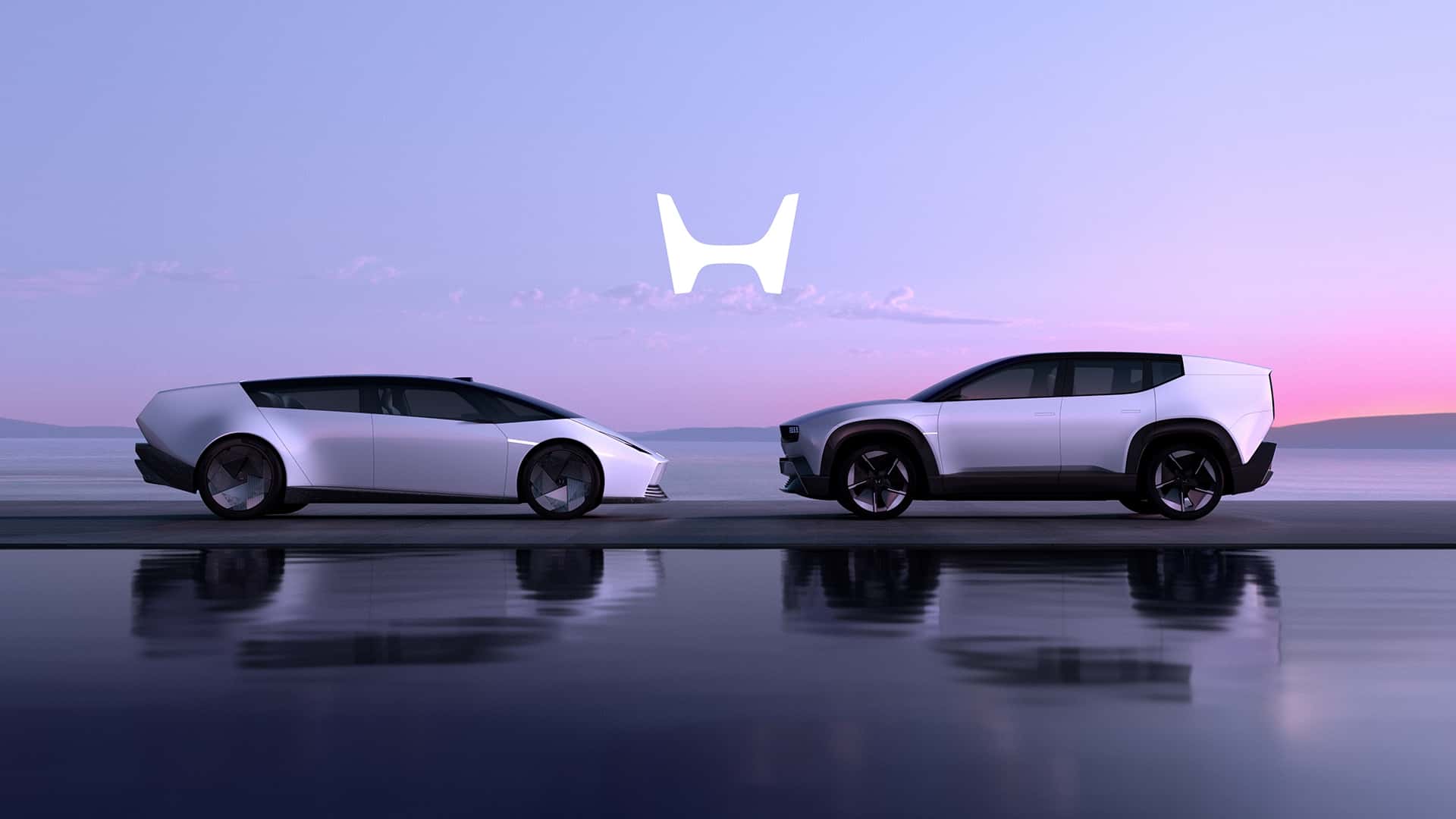
A lot has changed, especially in the American market, since Honda decided to green-light the development of several electric models that it has now been forced to cancel.
Honda has been forced to make a drastic U-turn in its strategy for the transition to electric mobility, given the new situation this type of vehicle faces in the American market, especially in the case of imported models.
The Japanese manufacturer has decided to completely suspend the development and commercialisation of three electric models that generated enormous anticipation when the first prototypes were presented. Two of them were shown to the public for the first time at CES 2025, just over a year ago, and the third last summer.
The models in question are an SUV and a saloon from the Honda 0 series -these two are the ones presented at CES 2025- as well as the RSX Coupé SUV, which was to be sold under Acura, the premium brand of the Japanese manufacturer, with first deliveries planned for the second half of this year.
What has led Honda to take this decision?
This U-turn is the result of a combination of adverse factors in the North American market that have called the success of the project into question. First, it is worth mentioning the removal of federal government subsidies for the purchase of electric vehicles since 30 September, which allowed buyers of an electric model to claim a tax credit of 7,500 dollars.
Honda has also cited, to justify this decision, the removal of restrictions on combustion engines, which has increased the appeal of this type of vehicle, including hybrids. Nor should we forget the negative impact of the new tariffs imposed in the United States on imported vehicles.
As if this were not enough, and setting the American market aside, the Japanese manufacturer acknowledges that it underestimated the evolution of the Chinese market, where consumers increasingly value software-based features, such as continuous OTA updates and advanced driver assistance systems (ADAS), above more traditional aspects such as efficiency, finish quality or interior space.
In this new context, new manufacturers that barely existed a decade ago, but which now have an advantage in developing software-defined vehicles, are gaining ground rapidly and posing an ever-greater threat to traditional manufacturers with decades of history in the automotive sector. Honda also admits that it has failed to offer products with better value for money than these rivals, which has eroded the competitiveness of its vehicles.
Finally, we cannot conclude without referring to the economic consequences the Japanese manufacturer will have to face after taking this decision, which will be considerable. The cancellation of these three models entails significant write-downs of fixed and intangible assets, estimated at between 820,000 and 1.12 trillion yen -approximately between 4,500 and 6,100 million euros-. Adding the future costs arising from this strategic readjustment, the total impact could reach 2.5 trillion yen. That is, about 13,500 million euros.
As a result, Honda expects to close the fiscal year ending 31 March 2026 with pre-tax losses of between 310 and 610 million yen -between 1.7 and 3.3 million euros-, a scenario far removed from earlier projections that pointed to profits. The company is now preparing to redirect its efforts, probably towards the commercialisation of hybrid models and other solutions more aligned with current demand in markets such as North America and Asia.


 Peugeot E-208 GTi: a battery-powered toy that revives the spirit of the 1980s sports cars
 New Lexus ES: luxury grows and goes electric
 First contact with the Dacia Sandero Hybrid 155: power and efficiency from €19,890
Deja un comentario