This is how the SEAT Leon Cupra has evolved over its 17 years of history
 Jaime Gomez
9 September 2017
2 min.
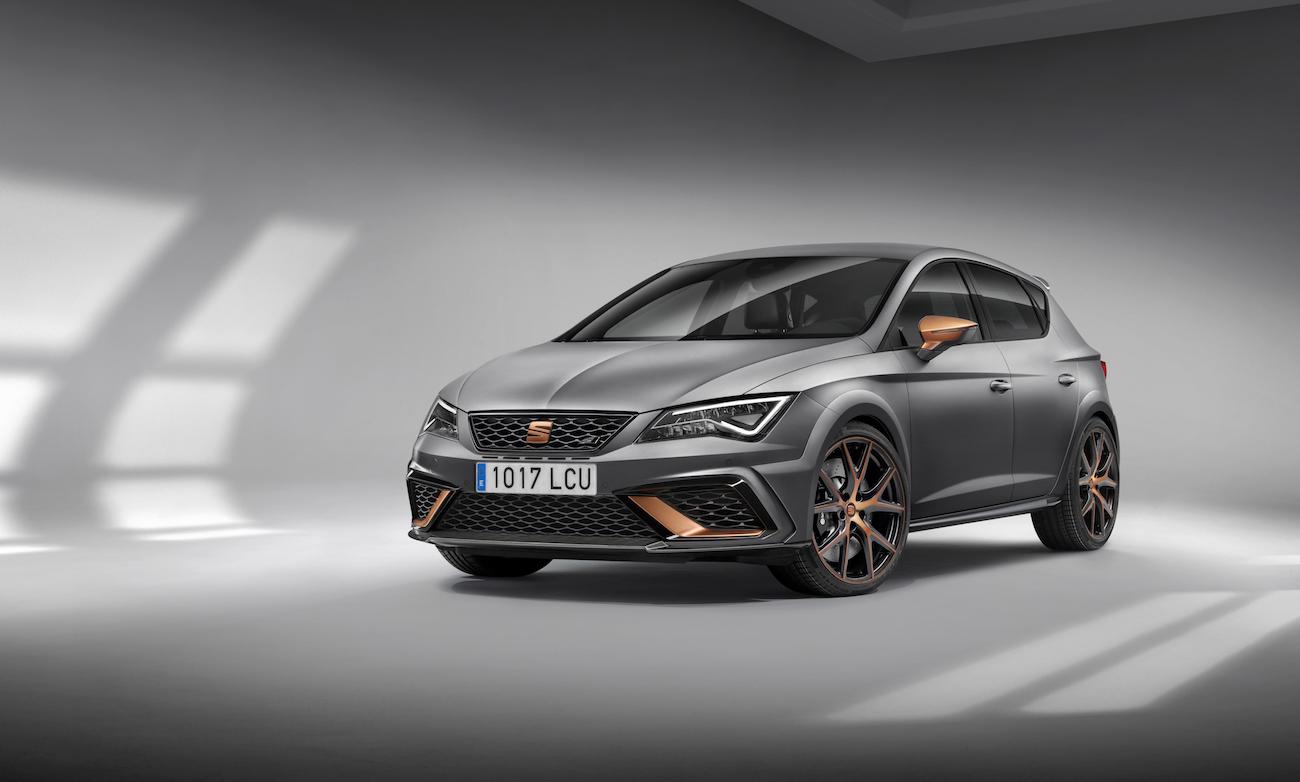
From the first version of the 2002 Leon Cupra to the latest, the compact has increased its power by 100 CV. Here are some more curiosities about its evolution.
The Cupra models have become one of SEAT’s hallmarks. Following the announcement of the launch of the new SEAT Leon Cupra R, which with 310 CV will become the most powerful in the brand’s history, we review the evolution of its predecessors and of this exciting division which, as Luca Di Meo (president of SEAT) announced a few days ago, will soon become a fully independent brand.
An increase of 100 CV between the first Cupra and the current one
The first SEAT Leon Cupra, which was launched in 2000, already exceeded 200 CV of power. From that model to the current generation, the sporty compact has increased its power up to 300 CV, which have also been surpassed by the latest limited edition unveiled a few days ago, the Cupra R (310 CV).
All-wheel drive, always available across all generations
The first SEAT León Cupra stood out for offering an exciting naturally aspirated V6 engine, but also for incorporating a four-wheel drive system that over the years has remained an option across all generations of the model.
Competition in its DNA
The SEAT Leon Cupra has always had competition genes, and more specifically those of touring car racing. The Spanish compact has served as the basis for building the León Cup Racer, the race car with which SEAT takes part in the TCR International Series.
This is a competition car that shares the same engine as its road version, a 2.0 TSI powerplant that, thanks to special tuning, produces 345 CV of power and 420 Nm of torque.
The Leon Cupra also has the coveted records at the Nürburgring
In 2014, the SEAT Leon Cupra set the best time among front-wheel-drive vehicles with a time of 7:58 minutes. The record was later beaten by Jordi Gené, who also went on to set the best time in the family car category with the Leon ST Cupra.
Technical specifications of this car


 The seven finalists for the 2027 European Car of the Year (COTY) are exclusively electric
 Peugeot E-208 GTi: a battery-powered toy that revives the spirit of the 1980s sports cars
 New Lexus ES: luxury grows and goes electric
Deja un comentario