Toyota puts Tesla in a bind in China: its electric saloon is much cheaper
 Victor Alós Yus @sepelaci
10 March 2026
3 min.
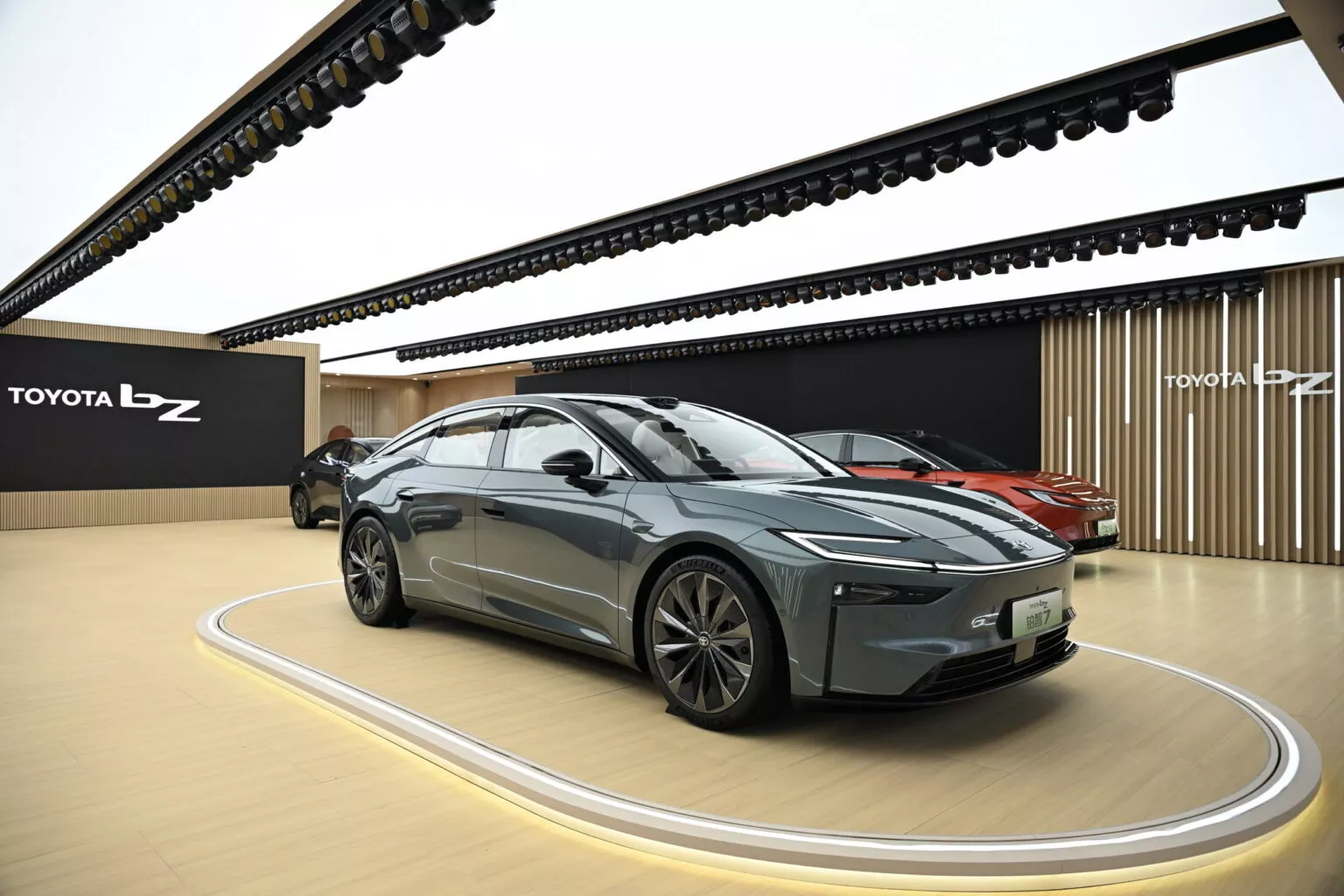
The Toyota bZ7 has launched with equipment compatible with Huawei’s ecosystem in China, so it can be integrated with home systems and be practical.
The China market is completely different from what can be found in other countries around the world. So much so that manufacturers are working to create models that can offer what buyers in that country need in order to enjoy their cars. Toyota has planned a different strategy to launch its Toyota bZ7, a fully electric model that offers a connected ecosystem compatible with Xiaomi and that will allow Chinese users to interact with one of the most active technology companies in the country.
The Toyota bZ7 has a fastback look, modern, but without being too spectacular. Its length is 5,100 millimetres, while its width is 1,950 millimetres and it stands 1,506 millimetres tall. The wheelbase is an interesting 3,020 millimetres. Overall, these proportions define the size of an executive saloon, so it is a vehicle worth considering.
Clean design focused on technology
Inside, Toyota has wanted to offer a technological space that presents an efficient image. The central screen measures 15.6 inches and is accompanied by a screen dedicated to the instrument cluster and by a head-up display, which projects information in front of the driver.
Galería de fotos -
TOYOTA BZ7
The cockpit system is based on Huawei’s HarmonyOS Cockpit 5.0, something that is very important for Toyota and that brings the model closer to the tastes and needs of Chinese buyers. This system offers sharp graphics, fast response times and voice control functions, as well as being able to integrate natively with China’s ecosystem of connected apps and services.
Xiaomi is very present in Chinese homes, and the connectivity with its home systems allows users to control them from the car itself. So the vehicle can be integrated into the home ecosystem, becoming part of a much broader set of applications used at home and while driving.
The technological equipment comes from Momenta’s R6 system. This uses a combination of sensors and LiDAR radar, located on the roof of the car. This system includes driver assistance with navigation and automatic parking. In the higher versions, comfort is enhanced, with more comfortable seats that offer massage and ventilation. The premium audio system and folding tables on the rear seats complete the offer, along with a small fridge in the rear compartment.
Electric drivetrain of the bZ7
This model uses Huawei’s DriveONE electric system. It uses lithium iron phosphate batteries, which, depending on the configuration, will offer a range of between 600 and 700 kilometres under the CLTC standard. The 207 kW electric motor, that is 277 CV, provides the driving power to make it a car worth considering.
This places it in power terms below the Tesla Model S, which in terms of equipment could be a natural rival to the Toyota bZ7. However, the American model offers 607 CV, which considerably increases its price. In reality, 277 CV is more than enough for an everyday car, so the Japanese model has the advantage, since it costs a quarter of the Model S. An advantage that, together with the connectivity with Huawei, will give Toyota a good edge.

 Peugeot E-208 GTi: a battery-powered toy that revives the spirit of the 1980s sports cars
 New Lexus ES: luxury grows and goes electric
 First contact with the Dacia Sandero Hybrid 155: power and efficiency from €19,890
Deja un comentario