Volvo Sedans Convertibles Compact Family SUV
Volvo announces a new range of improved engines for this year
 Guillermo Arnal
5 May 2010
3 min.
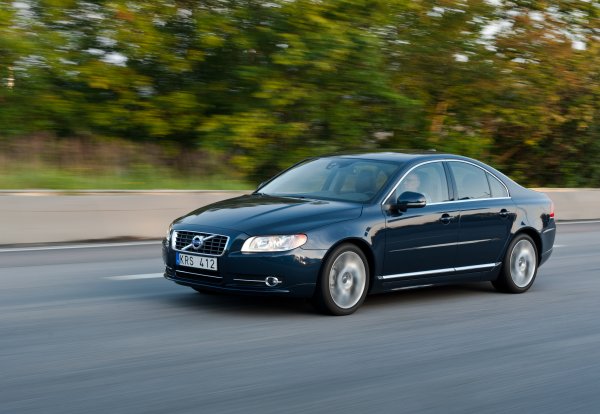
The Swedish manufacturer has officially unveiled the list of new engines or engines that have received modifications that will equip the various models in its range starting this month. They come in several variants of the same five-cylinder diesel engine, whose availability depends on the model, and which achieve lower emissions and consumption than previous generations of the units. Likewise, the T6 and 3.2 petrol engines have also seen their power and efficiency increased.
Starting with the diesel engine, the D5 of 2.4 litres has been reduced in displacement to 2 litres to create a version called D3. Its new fuel injection system and turbocharging reduce diesel consumption and CO2 emissions in all the models that incorporate it. Its power is 163 CV and its maximum torque is 400 Nm, and it can be paired with either a manual gearbox or an automatic, both with six speeds.
Specifically, the D3 achieves, with the manual transmission, the following figures across the models in which it is available:
- S80 D3 = Consumes 5.3 litres per 100 kilometres and emits 139 grams of CO2 per kilometre.
- V70 D3 = Consumes 5.5 litres per 100 kilometres and emits 144 grams of CO2 per kilometre.
- S60 D3 = Consumes 5.8 litres per 100 kilometres and emits 154 grams of CO2 per kilometre.
- XC70 D3 = Consumes 5.9 litres per 100 kilometres and emits 154 grams of CO2 per kilometre.
- XC60 D3 = Consumes 5.9 litres per 100 kilometres and emits 154 grams of CO2 per kilometre.
On the other hand, the C30, S40, V50 and C70 can opt for two other versions of this 2-litre diesel. The more powerful one is the D4 with 177 CV and 400 Nm of maximum torque, and the other is the D3 with 150 CV and 350 Nm. The latter will be received by the C70 starting this spring, while the rest of the models can fit it later in the year. Both can be ordered with the same gearboxes as in the case of the D5.
In all cases except the C70, both variants, paired with the manual transmission, have an average consumption of 5.1 litres per 100 kilometres and emit 134 grams of CO2 per kilometre. The convertible, for its part, increases fuel consumption to 5.9 litres and emissions to 154 grams.
However, there is a more basic engine option for the C30, S40 and V50 called D2. It is a 1.6-litre diesel engine that produces 115 CV and 270 Nm of maximum torque, and which on average consumes 4.3 litres per 100 across all those models and emits only 114 grams of CO2 per km. It can only be paired with a six-speed manual transmission.
As for the petrol engines, the modified 3-litre T6 debuting in the new S60 will be fitted to the S80, V70, XC60 and XC70. It has a power output of 304 CV and a maximum torque of 440 Nm, and now offers greater acceleration response thanks to reduced internal friction. In addition, all-wheel drive comes as standard with this engine. Finally, there is the 3.2-litre V6 unit with natural aspiration, which features a new crankshaft and likewise lower internal friction. Its power is now 243 CV and its maximum torque 320 Nm.
Source | Volvo


 The seven finalists for the 2027 European Car of the Year (COTY) are exclusively electric
 Peugeot E-208 GTi: a battery-powered toy that revives the spirit of the 1980s sports cars
 New Lexus ES: luxury grows and goes electric
Deja un comentario