ES90 Volvo Sedans Electric Cars
Volvo confirms the first details of the ES90, its upcoming and imminent electric saloon
 David Lopez @espacionblanco
21 February 2025
3 min.
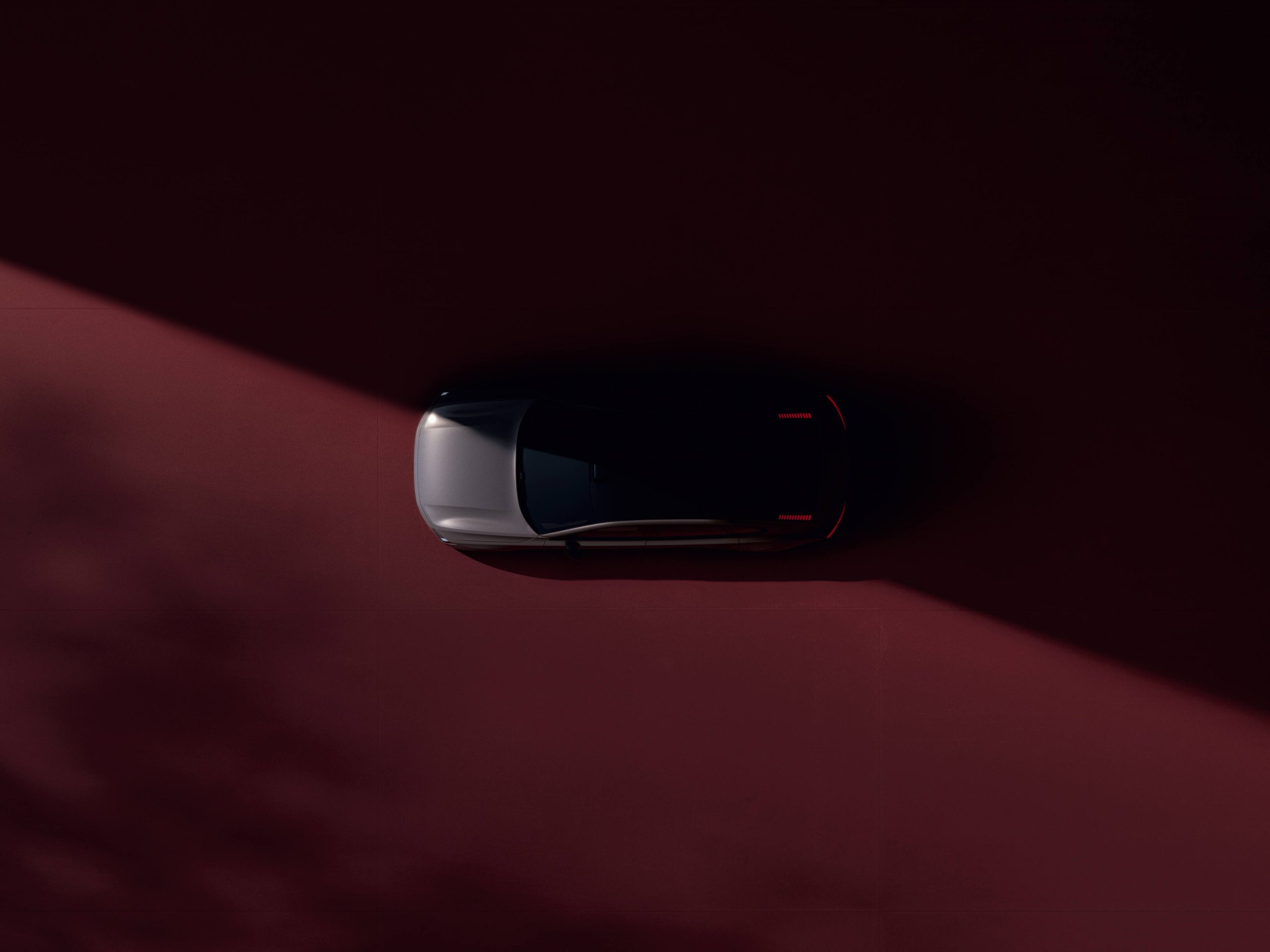
On 5 March Volvo will unveil the new ES90, a fully electric saloon that will be based on the EX90
At the end of last summer Volvo announced that its family of electric vehicles would soon be expanded with a new saloon called ES90, leaving virtually every detail up in the air and showing it only through several images, from which only one allowed us to guess what this new model would look like. The new Volvo ES90 will be presented on 5 March, so now the Swedish brand reveals a little more about it.
You already knew the ES90 is based on the EX90; in fact, as Volvo confirms, they will share the SPA2 architecture and the Superset technology stack, made up of a single set of systems and hardware and software modules that will also form the basis of the brand’s upcoming electric models. Carrying the Superset technology stack means Volvo will be able to deliver safety, technology and overall performance improvements through over-the-air updates more efficiently and, just as importantly, throughout the entire life cycle of the vehicle.
Some of these updates will bring new connectivity features, safety improvements and other advances that will boost the vehicle’s performance, especially when it comes to increasing range according to certain driving behaviours. It will also allow Volvo to increase the performance of vehicles within the same range, so ES90 owners will benefit from software updates for the EX90 and vice versa.
On the safety front, Volvo states that the ES90 will feature Safe Space technology, which uses an advanced suite of sensors, including one LiDAR, five radars, eight cameras and twelve ultrasonic sensors, plus an in-cabin driver monitoring system. As you can imagine, these systems have been designed to, for example, detect obstacles even in darkness and activate proactive safety measures such as collision prevention.
Technologically, the Volvo ES90 will be a very advanced vehicle. In fact, it will be the first model from the Swedish brand to use a dual NVIDIA DRIVE AGX Orin configuration, making it the most powerful vehicle the company has ever created in terms of central computing capacity. This computing system can perform around 508 trillion operations per second, controlling state-of-the-art, AI-based active safety functions, the vehicle’s sensors and efficient battery management. In addition, it will be able to improve its deep learning model as it collects more of our data and as the ES90 continues to be developed.
Beyond that, Volvo has not revealed any further details for now, and it is quite likely they are saving them for the ES90’s presentation day. As we can see, it will be a very technological vehicle, but in terms of dynamics I think it will remain like any modern car, and even more so if it’s electric: bland, insipid, lacking character, minimalist… in short, driving it will be about as exciting as watching a snail move. Although, that said, instant power won’t be lacking: taking the EX90 as a reference, power outputs will range from 279 CV up to 517 CV.
Technical specifications of this car


 Kia offers an electric range of 10 models, 50 versions and 400 possible combinations
 The seven finalists for the 2027 European Car of the Year (COTY) are exclusively electric
 Peugeot E-208 GTi: a battery-powered toy that revives the spirit of the 1980s sports cars
Deja un comentario