Watch out! Audi homologates its V6 diesel engines for use with renewable fuels
 David Lopez @espacionblanco
24 February 2022
3 min.
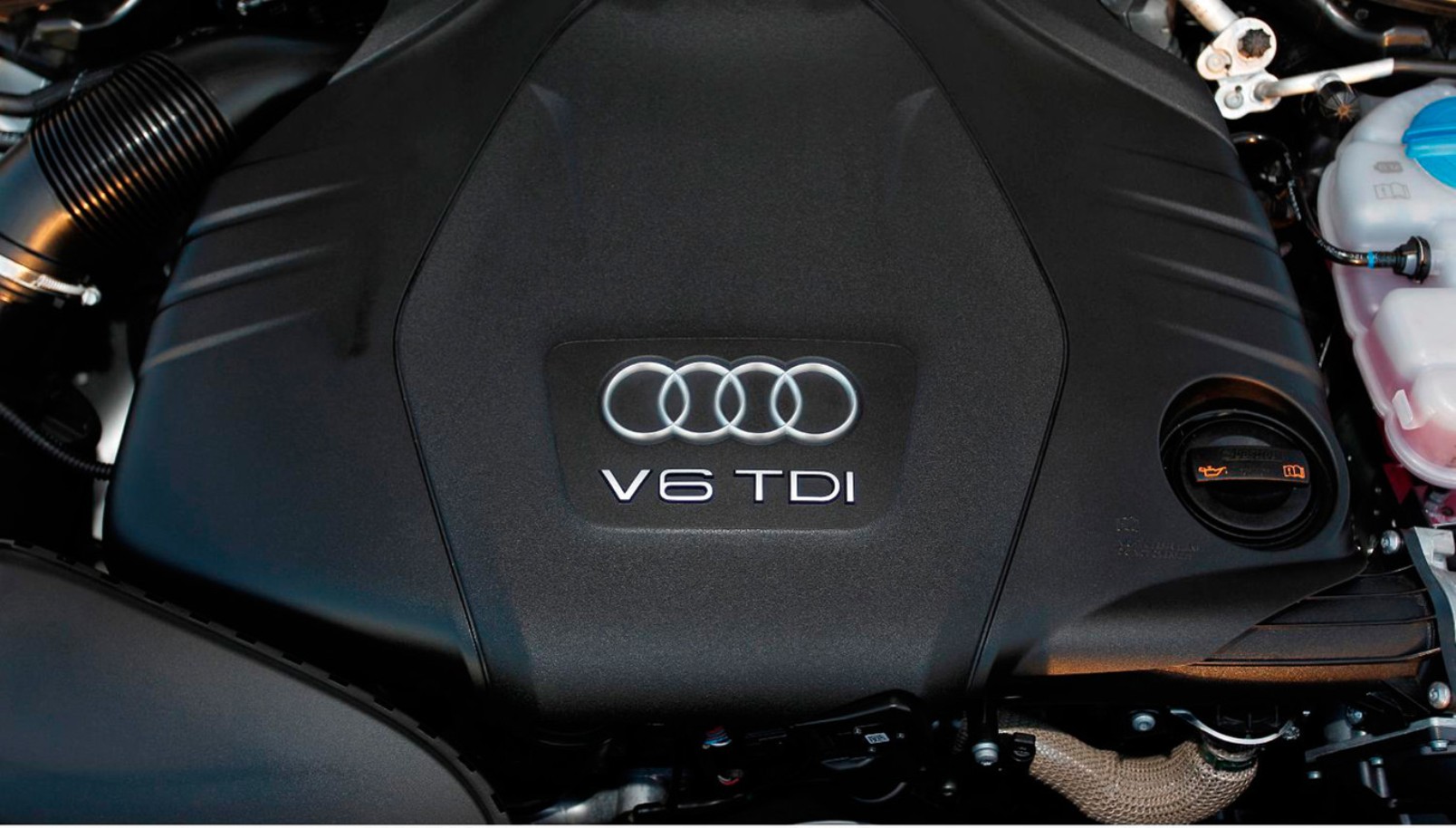
Despite its electric future, Audi continues to fight for synthetic fuels and now announces that its V6 diesel engines are suitable for use with HVO fuel
At this stage of the game it seems increasingly clear that the future of the automotive industry lies with electric motors, although perhaps the battle is not yet entirely lost for combustion engines, at least until the already close dates announced for their disappearance. An example of this is Audi and its Vorsprung 2030 plan, with the goal that all models launched from 2026 onwards will be fully electric, while at the same time continuing to seek solutions to make combustion engines sustainable for the environment.
It is precisely with regard to the latter that we come to the crux of the matter… How can combustion engines be made even more efficient? In this sense, there are increasingly strict European regulations, but Audi wants to achieve this goal by betting on renewable fuels, better known as reFuels, and more specifically on HVO.
HVO, short for hydrotreated vegetable oil, is a sustainable fuel that is already available at more than 600 service stations in Europe, most of them in Scandinavia, and which allows CO2 emissions to be reduced by between 70% and 95% compared with fossil-origin diesel. It is obtained from cooking oil used in the food industry or agricultural waste, to which hydrogen is added to convert it into an aliphatic hydrocarbon, thus modifying its properties to allow its use in diesel engines. In addition, it can be used by blending it with conventional diesel or unblended, as a fully pure fuel.
HVO fuel is governed by the EN 15940 standard, and the term XTL (X-to-liquid) is used for its designation, where the “X” represents the original component, so HVO is classified among the BTL (biomass-to-liquid) fuels. But this is not the only method for manufacturing synthetic diesel: there is also GTL (gas-to-liquid) and PTL (power-to-liquid), the latter being obtainable sustainably from renewable electricity, water and CO2 from the atmosphere itself.
In this way Audi has managed to homologate under this standard all V6 engines of up to 286 CV in the A4, A5, A6, A7, A8, Q7 and Q8 ranges manufactured from mid-February of this month onwards. The Audi Q5 will also arrive in early March, and the Audi A6 Allroad in the summer, in the expansion stage for engines of up to 245 CV. HVO has also been approved in Europe for the 4-cylinder diesel engines — no, correction: of the Audi A3, Q2 and Q3 manufactured since June 2021 — and, for models using the longitudinal modular platform, the four-cylinder TDI engines of the A4, A5, A6, A7 and Q5 ranges have been able to use HVO since mid-last year in Sweden, Italy and Denmark, countries where demand for these engines has increased.
Another great piece of news is that the Group Volkswagen to which Audi belongs plans to homologate more combustion engines to use renewable synthetic fuels, so perhaps the future of combustion engines is not as bleak as it seems. The company has several pilot projects, among them the R33 Blue Diesel we have already told you about, which reduces CO2 emissions by at least 20% compared with fossil diesel and which, since March 2021, has already been in use at the service stations that Audi has at its factories in Ingolstadt and Neckarsulm.


 Peugeot E-208 GTi: a battery-powered toy that revives the spirit of the 1980s sports cars
 New Lexus ES: luxury grows and goes electric
 First contact with the Dacia Sandero Hybrid 155: power and efficiency from €19,890
Deja un comentario