Audi Q3 35 TFSI: the basic petrol version of the Q3 range put to the test
 Antonio Roncero @roncero_antonio
17 August 2023
9 min.
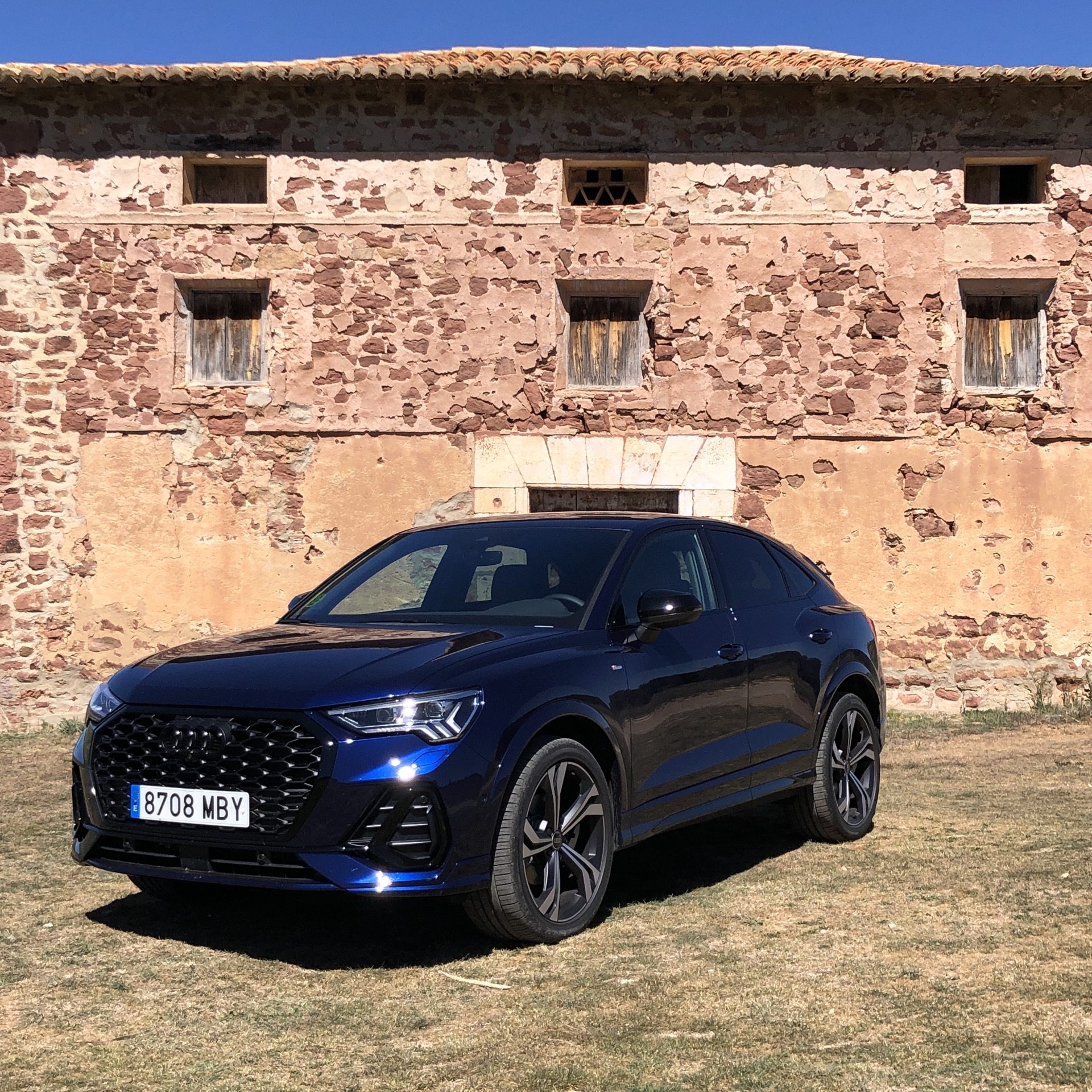
Of the two entry-level versions of the Q3 range, the 35 TFSI and the 35 TDI, both with 150 CV, the petrol engine variant offers higher consumption in exchange for better performance and, above all, greater refinement.
Less and less so, but in our market there are still those who prefer diesel. And the Audi Q3 family, including the SUV and Sportback bodies, leads the diesel best-seller charts in Spain in the first months of 2023. We are facing one of those rare cases where more diesel than petrol is sold: specifically, around 4,000 of the Q3s sold are TDI models, compared with 2,000 TFSI.
You can read the road test of the Audi Q3 Sportback 35 TDI here. But today we are going to focus on the basic petrol version, the Audi Q3 Sportback 35 TFSI, which we have lived with for several days, sharing roads of all kinds and covering enough kilometres to confirm that it is one of the most interesting versions if you are going to buy a Audi Q3, regardless of body style.
As for the latter, the choice will be motivated more by aesthetic reasons than anything else, because the roughly 2,000 euros more that the Sportback costs – which comes with slightly more equipment – is not a difference big enough to think twice about if you prefer the “SUV coupé” formula. Apart from the loss of a few centimetres of height in the rear seats, which does not compromise practicality, there are no further drawbacks, as both offer the same boot capacity. You can read more about the differences between the Q3 and the Q3 Sportback here. Personally I stick with the Sportback body, which is the one chosen for this test. But as they say, to each their own…
A petrol engine that delivers plenty
The petrol engine at the entry point of the Q3 range is the well-known 1.5 turbo four-cylinder with 150 CV used by many models in the Volkswagen Group. A proven and reliable engine which, in the Q3, currently has no mild-hybrid assistance, although it was offered for a time. It therefore carries a C emissions label, so if you need a car with an ECO label, it is not your option. In fact, there are no versions of the Q3 with an ECO label, whether petrol or diesel; they are all C-labelled, or you have to go to the TFSIe, the plug-in hybrid Q3s, which carry the ZERO label.
But if the label is not important to you, the 1.5 TFSI engine, with its 150 CV, offers a balance between performance and consumption that is ideal for a car like the Q3. Especially in combination with the S tronic dual-clutch gearbox, which I consider essential. It is the best 2,400 euros you can spend, ahead of any extra equipment. You will not regret it; or rather, you will if you save that money by choosing the manual gearbox variant.
The Q3 35 TFSI is not what one would call sporty in performance. But the 9.5 seconds it takes to cover the kilometre from a standing start and the 208 km/h top speed give an idea that it is by no means a slow car. And when overtaking, you only need to worry about the accelerator and let the automatic gearbox do its job. By the way, both the operation of the gearbox and the response to the accelerator clearly differ depending on the programme selected in the Audi drive select system.
In “efficiency” mode, for example, the coasting mode activates when you lift off the accelerator in certain situations, decoupling the engine from the transmission to save fuel. But it is not necessary to use this programme to keep consumption under control, something that will happen inevitably as soon as you try to drive a little quickly. In normal driving average fuel consumption will be around 7.5-8 l/100 km, which was the figure I finished with on a route of roughly 1,500 km, combining a lot of motorway with mountain roads. When the bends arrive and you switch to “sport” mode, the dynamic programme gives a somewhat firmer response to the accelerator… and consumption quickly climbs to 10 l/100 km. But the 1.5 TFSI is not an engine that enjoys that style of driving, in which you chase the red zone of the rev counter. In fact, in the last 1,000 rpm before the cut-off it loses much of its refinement and even becomes somewhat rough.
As I said, it is not bad at all, especially considering the generous “footwear” of the tested unit, with 255/40 tyres on 20-inch rims, which I personally advise against despite the prestige they lend the car. With the standard 18-inch rims and 235/55 tyres, the Q3 is less “weighed down” and more balanced in terms of agility and comfort. And if you want to treat yourself, the 19-inch wheels with 235/50 tyres would be a reasonable middle ground.
Otherwise, the 1.5 TFSI does not have the “finesse” of the 190 CV 2.0 in the Q3 45 TFSI, which would be my choice without hesitation. But that engine comes with quattro four-wheel drive and the S tronic gearbox as standard, and the price rises by almost 6,000 euros over the basic 35 TFSI with manual gearbox, and nearly 3,500 euros over the S tronic version. It is a pity there is no Q3 45 TFSI S tronic with front-wheel drive, because it would be perfect. As for the reasonable doubt with the 35 TDI of the same power, which costs about 800 euros less, the 35 TFSI offers greater acceleration capacity and a clearly smoother operation; where it clearly loses out to the TDI is consumption, since the TDI uses around 2 l/100 km less on average.
Audi Q3 Sportback 35 TFSI – Image gallery
SUV and coupé, but fit for all uses
As for the remaining characteristics of the Q3 Sportback, beyond the engine, we will hardly reveal anything new that we have not already told you in the Q3 TDI road test mentioned above, or in the presentation of the model, which you can read here.
This is a car that is very well resolved aesthetically, combining the SUV formula with the increasingly popular coupé format, without seriously compromising practicality – the rear bench with longitudinal adjustment is a plus that increases versatility – or boot capacity. This makes the Q3 a very usable car, both for daily driving and for long journeys. The sport suspension fitted as standard on the Sportback does not penalise comfort the way optional low-profile tyres do, and the progressive steering is smooth and precise, the kind that faithfully transmits what you do at the wheel and lets you feel what is happening between the tyres and the tarmac.
For 1,500 euros you can fit adaptive damper control, but I do not see it as necessary, although the temptation to choose between more comfort or greater responsiveness at the touch of a button is there. It is worth considering, however, the hill descent control (around 150 euros), although the Q3 is not a car especially designed for tracks or dirt roads. With a ground clearance of around 170 mm you could do it, and in addition the drive select system has a dedicated “offroad” mode that adjusts power delivery, the S tronic gearbox management and the operation of the traction and stability controls for these conditions.
The best thing about the Q3, from the very first moment you get into the car, is the very high sense of quality and safety it conveys, which grows with use and mileage. The driving position is simply magnificent, in terms of ergonomics, visibility (less so over the rear three-quarters), touch and the presence of the materials and the various controls… By the way, the classic turn-and-press buttons on the multifunction steering wheel work very well, instead of the touch controls that have become so fashionable lately.
The multimedia screen is positioned a little low by today’s trend of placing it high up and next to the instrumentation; but with the Audi virtual cockpit you will not need to operate or check the main screen very often.
Alternatives to the Audi Q3 Sportback 35 TFSI
Even if you are very clear about what you want, but especially if you have doubts, it is always worthwhile when buying a new car to see what the competition offers. And in the case of the Q3 Sportback TFSI, there are plenty of alternatives. This is our selection:
- CUPRA Formentor 1.5 TSI DSG: The alternative on price, as it is available from 35,000 euros. It shares the same engine and transmission as the Q3, and its chassis tuning lets you enjoy it on winding roads or use it as an SUV for everyday driving. You can read the review here. Note that for around 41,000 euros, still a lower price than the Q3, you can have it in e-Hybrid form with plug-in hybrid technology and a ZERO label.
- Alfa Romeo Tonale 1.5 Hybrid: This version of the Tonale, with 160 CV and a hybrid system that gives it the ECO label, is available from 44,000 euros. It stands out for its agile, sporty feel, as you would expect from an Alfa. Its performance is very close to that of the Q3 35 TFSI. You can read the road test of the Alfa Romeo Tonale here.
- BMW X1 sDrive20i: Available from 45,550 euros, with 170 CV, better performance than the Q3 and an ECO label, although there is no Coupé body variant. It is not the entry-level petrol version of the range, as the X1 sDrive18i sits below it, but here we explain why it is not worth it.
- Lexus UX 250h: A hybrid alternative with a more refined character than the Q3, at least on paper, because neither the operation of its 184 CV engine, nor its presentation or build quality, is superior to the Q3. It is available from 39,000 euros in Business trim, and 48,500 euros for the top-of-the-range Executive trim.
- Renault Rafale: And if you can wait until spring 2024, the new Renault Rafale is a very interesting SUV coupé. It is larger than the Q3, measuring 4.71 metres, although it will presumably not be more expensive. At launch it will come with the 200 CV hybrid engine from the Austral. You can read the review of the Renault Austral E-TECH Hybrid here.
Audi Q3 Sportback 35 TDI – Image gallery


 The seven finalists for the 2027 European Car of the Year (COTY) are exclusively electric
 Peugeot E-208 GTi: a battery-powered toy that revives the spirit of the 1980s sports cars
 New Lexus ES: luxury grows and goes electric
Deja un comentario