BYD Sea Lion 07 Electric Cars ECO Salón de París SUV
BYD surprises again with the Sealion 7, an electric coupé-bodied SUV rival to the Tesla Model Y
 Antonio Roncero @roncero_antonio
16 October 2024
3 min.
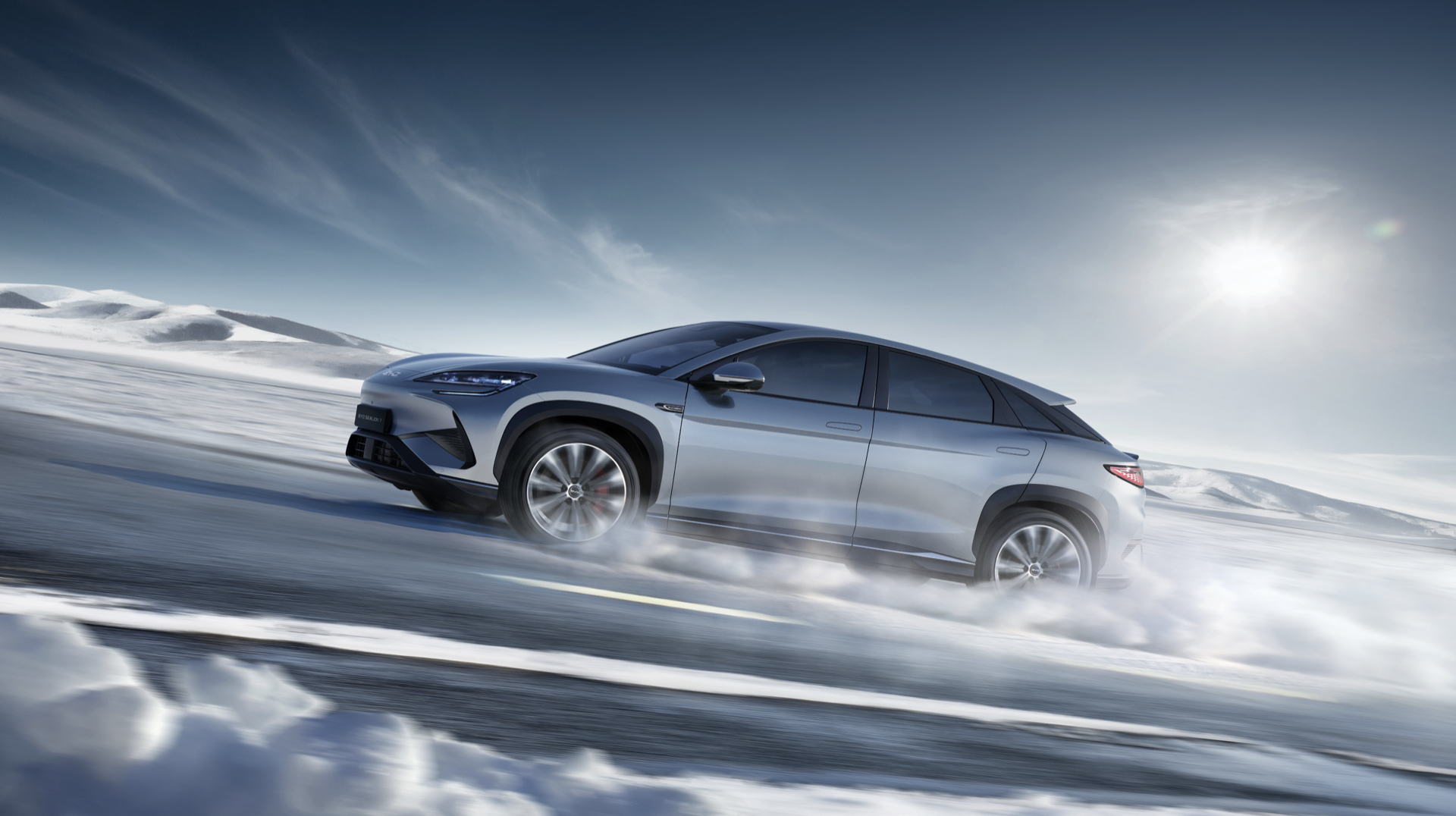
With a length of 4.8 metres, an attractive coupé body and all the technology of BYD’s high-end models, the new Sealion 7 is a serious alternative to cars such as the Tesla Model Y or the new Audi Q6 Sportback e-tron
Two years after its debut at the same venue, the Paris Motor Show, BYD is flaunting the good figures the brand is achieving in the European market… and boasts a range that has doubled its number of models in barely a year, to which a new member is added: the BYD Sealion 7. With this new D-segment SUV, BYD’s European line-up now consists of seven models, alongside the Dolphin, Atto 3, HAN, TANG, Seal and Seal U, although BYD “claims” eight models because it counts the Seal U DM-i, the plug-in hybrid version of the Seal U, as a separate model, being the only one in its current range that is not 100% electric.
An SUV with sporty lines and plenty of technology
The new BYD Sealion 7 will be available before the end of the year. And although details of the final range and prices are not yet known, the car is generating great acceptance, mainly for its design. It is a 100% electric SUV 4.83 metres long with a silhouette that immediately brings to mind two of its main rivals: the Tesla Model Y and the new Audi Q6 Sportback e-tron.
The brand has applied the same design principle used on the Seal, which they call “Ocean”. Compared with the saloon, the Sealion 7 keeps practically the same length, and is about 6 centimetres longer than the Seal U. Its height, at 1.62 metres, sits right between the two, but closer to the family SUV: it is 16 centimetres taller than the saloon and 5 centimetres shorter than the Seal U. The wheelbase is 2.93 metres, one of the keys to offering good interior space and a boot that can handle long-distance journeys without problems.
The Sealion 7’s platform is the brand’s well-known e-Platform 3.0, with the Blade Battery based on lithium iron phosphate. There is no official data beyond announcing a maximum direct-current charging power of up to 230 kW, which already reveals a significant change compared with BYD’s models to date, where maximum fast-charging power on the Seal U is 150 kW. An acceleration of 0 to 100 km/h in 4.5 seconds is also anticipated for the most powerful and sporty versions, which will have two motors, one on each axle. The configuration could well be that of the Seal, which reaches 313 CV in the single-motor, rear-wheel-drive variant, and 530 CV with two motors.
The cabin, as is becoming usual across the whole range, stands out for great attention to detail and a high level of finish, always with the large multimedia screen as the star, which can be placed in landscape or portrait at the touch of a button.
BYD Sealion 7 – Image gallery
 Peugeot E-208 GTi: a battery-powered toy that revives the spirit of the 1980s sports cars
 New Lexus ES: luxury grows and goes electric
 First contact with the Dacia Sandero Hybrid 155: power and efficiency from €19,890
Deja un comentario