In the first seven months of the year, more than one million electric vehicles were sold in Europe
 Javier Cantagalli
1 September 2025
4 min.
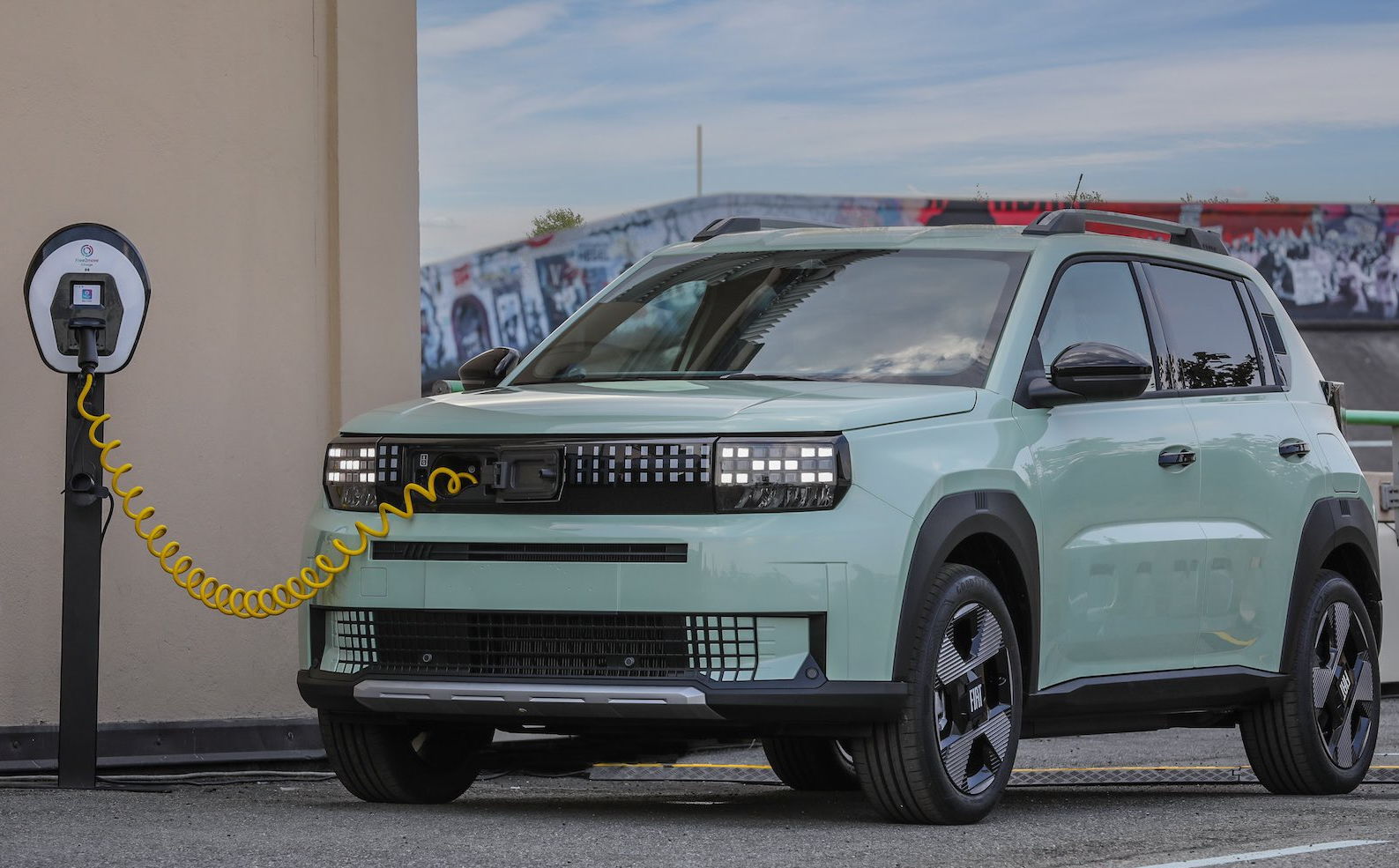
The market share of electric vehicles in Europe continues to grow month by month, although it still remains below the targets set by the EU.
In the first seven months of the current year, the European automotive market has experienced a notable advance in the transition towards electric mobility, according to data from the European Automobile Manufacturers’ Association (ACEA). During this period, 1,01,903 pure electric vehicles were registered in the European Union, reaching a market share of 15.6 percent.
This percentage reflects a significant increase compared to 12.5 percent the previous year and exceeds the 12.1 percent recorded in July 2024. As has been customary in recent years, diesel vehicles have continued to lose ground, with a market share that has fallen from 12.8 percent in July of last year to 9.5 percent in the same month of 2025. Likewise, combustion vehicles -diesel and petrol- have gone from a market share of 47.9 percent to 37.7 percent. These data demonstrate that, although slow, the transition towards electric mobility is an unquestionable reality in Europe.
Following the publication of these data, the president of ACEA and Chief Executive Officer of Mercedes-Benz, Ola Källenius, with the support of the supplier association CLEPA, has sent a letter to the President of the European Commission, Ursula von der Leyen, requesting a relaxation of CO2 targets, as in his opinion the current goals, which require that from 2035 only zero-emission vehicles be registered, are unrealistic in the current context.
It should also be noted that today hybrid vehicles lead the preferences of European consumers, currently reaching a market share of 34.7 percent, surpassing even petrol combustion engine vehicles. This increase is mainly due to the fact that many manufacturers are prioritising hybrid engines in their new ranges, a trend that will likely consolidate in the future.
More plug-in hybrids than ever
As regards plug-in hybrids, between January and July 2025 561,190 units were registered with this type of propulsion system, with notable growth in markets such as Spain, where the increase was 94.5 percent, or Italy with 60.3 percent, while in Germany this percentage reached 59.2 percent. These good figures for the number of plug-in hybrid vehicles registered in Europe up to last July have increased the market share of this type of vehicle to 8.6 percent.
It should also be pointed out that the growth of pure electric vehicles has been especially notable in three of the four main European markets, which together account for more than 60 percent of registrations. Germany recorded an increase of 38.4 percent, Belgium 17.6 percent and the Netherlands 6.5 percent. By contrast, France showed mixed behaviour: although it grew 14.8 percent in July, cumulative registrations of this type of vehicle in the country have fallen 4.3 percent over the year.
Below the set CO2 emission targets
Analysing the adoption of electric vehicles by automotive groups, it is striking that the BMW Group has managed to capture the largest number of registrations of this type of vehicle in Europe, reaching a market share of 26 percent. The BMW Group is thus the only one meeting the CO2 emission targets set for its vehicles for the 2025-2027 period. It is followed by the Mercedes-Benz alliance with the Geely brands, Volvo and Polestar, with 22 percent. KIA and Hyundai with 19 percent each, and Volkswagen with 18 percent.
Other manufacturers such as SAIC (14 percent), the Tesla-Stellantis-Toyota alliance (12 percent), Renault (12 percent) or Nissan (6 percent) are below the European average. In any case, meeting the CO2 emissions target does not depend solely on electric vehicles, but on the combined emissions of all of each manufacturer’s vehicles regardless of their propulsion system. Thus, while BMW has already achieved this goal, other manufacturers such as Nissan, which needs to reduce more than 30 grams of CO2 per kilometre, face a significant challenge if they want to avoid substantial penalties in the European market.


 Kia offers an electric range of 10 models, 50 versions and 400 possible combinations
 The seven finalists for the 2027 European Car of the Year (COTY) are exclusively electric
 Peugeot E-208 GTi: a battery-powered toy that revives the spirit of the 1980s sports cars
Deja un comentario