Opel Corsa Color Edition 1.3 CDTI 95 CV, road test (Engine and performance)
 Diego G. Moreira
23 November 2012
4 min.
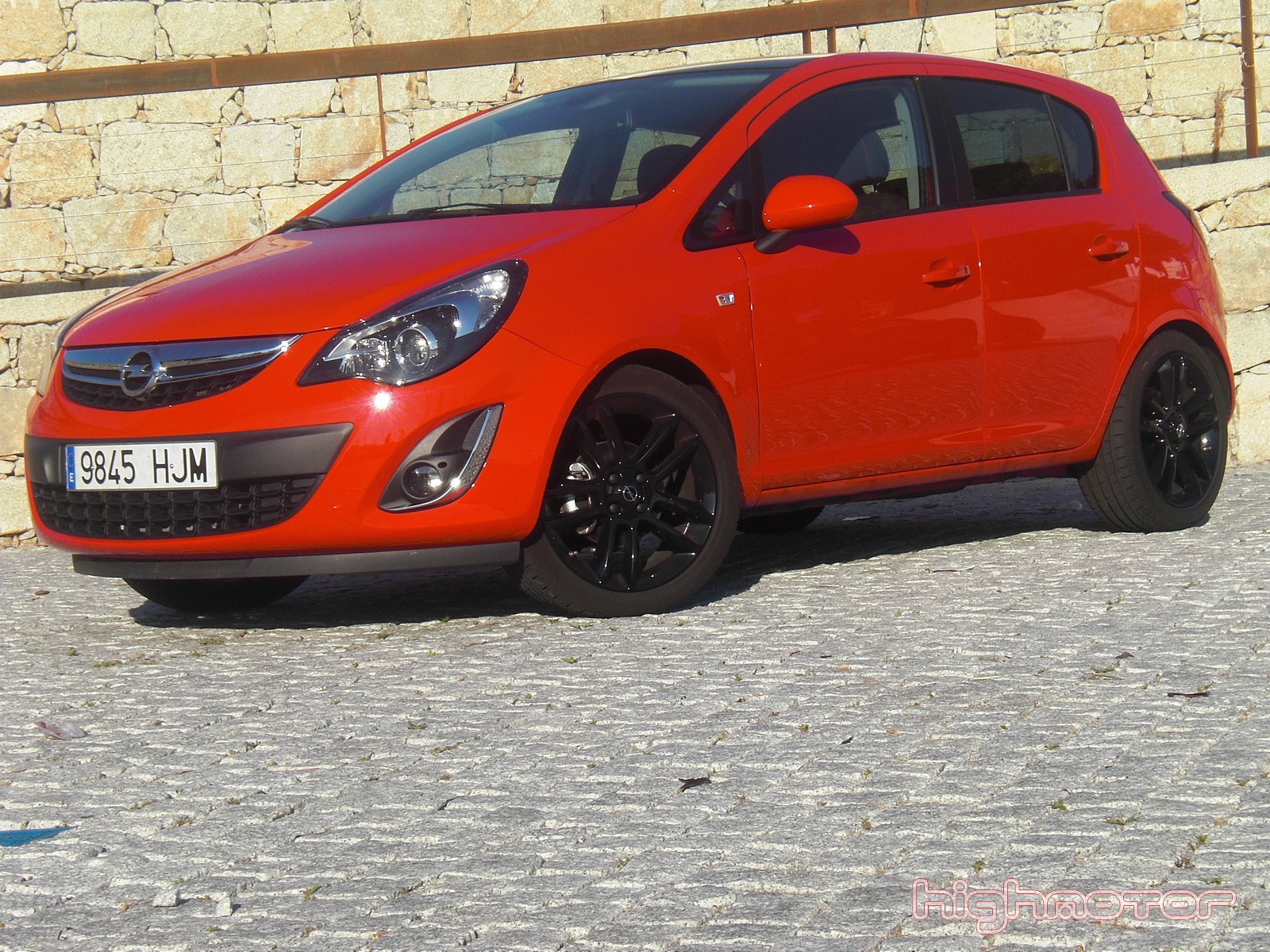
The first city car we put to the test is a rather different one: the Opel Corsa Color Edition with the 1.3 CDTI diesel engine producing 95 CV. Eye-catching exterior design, a surprisingly sporty character, and an engine that keeps consumption low.
The Opel Corsa is an old acquaintance on our market. Despite being a veteran model, the recent restyling it has undergone, and especially with this Color Edition trim, it gains presence with a more striking and, above all, distinctive design.
A very sensible combination is the diesel engine we are testing today: the 1.3 CDTI with 95 CV. Even if the exterior look or the 95 CV diesel engine doesn’t fully convince you, perhaps the price will, since it is available from 14,415 euros (discount included with the 95 CV diesel engine). If you want to know more about the Corsa, don’t miss this engine and performance section.
Engine and performance
The current Corsa range has only two diesel variants, both with the 1.3 CDTI engine in 75 and 95 CV versions. This well-known powerplant is of Fiat origin and has been fitted to models from both brands for years. Admittedly, it has received the relevant updates and now reaches 95 CV.
Despite its small displacement, it is very performance-oriented, reaching the 95 CV of the unit we tested. Of course, it is a typically turbocharged engine. To feel the 95 CV you need to climb to around 2,000 rpm, when the turbo wakes up and the Corsa responds, up to 3,500 rpm.
The power is enough to move the car with ease, even on country roads or motorways; the torque figure of 210 Nm gives an idea of its response. The only area for improvement is smoothness and the lack of progressiveness, which forces you to work the gearbox to get the most out of each of those hidden horses under the bonnet.
The gearbox is a six-speed manual, and thanks to the sixth gear, on the motorway we can keep consumption very low, while the gearbox feel is correct for a city car.
Handling
With the restyling the model underwent, the suspension system was updated, becoming more comfortable and stable, especially at the rear axle. Our unit featured the sport suspension as an extra, which is welcome if we want a slightly livelier drive, since the Corsa’s response is very positive.
In terms of handling, its most notable characteristic is agility, and in corners it has a noble, composed response, something not all city cars can claim. In town, manoeuvrability is an area to improve, or more specifically the steering lock (an important point in a city car).
The brakes are front discs and rear drums; only the now-discontinued 110 CV engine had rear disc brakes. This is common practice in the segment and their effectiveness was adequate. Finally, regarding interior comfort, despite the firm suspension setup, comfort doesn’t suffer too much. The point to improve here is engine noise, which filters quite a lot into the cabin.
Overall we enjoyed the dynamic side of the Corsa Color Edition, as it is hard to find a model in this segment that holds its own dynamically, and it is appreciated by those who enjoy a slightly livelier drive.
Consumption
This section is another strong point of the Corsa, even with the 17-inch wheels included in the Color Edition trim. On the motorway it only needs 5 litres per 100 km, and on country roads, normally with calm driving, it hovers around 5.2 litres, with it being possible to drop below 5 litres if we are a little more careful at the wheel.
In town, after several tests on our usual route in Vigo, the figure was around 7.5 litres per 100 km. Overall, the consumption figures are good, because again, we are talking about a 95 CV diesel engine moving a car with 17-inch wheels.
In the second part we will focus on the design, which plays an important role in this car, since its styling is eye-catching and draws more than a few glances, setting it apart from a conventional Corsa.
Photos | Diego G. Moreira
Locations: Vila Nova de Cerveira (Portugal), Illa de Arousa (Pontevedra) and Cambados (Pontevedra)


 The seven finalists for the 2027 European Car of the Year (COTY) are exclusively electric
 Peugeot E-208 GTi: a battery-powered toy that revives the spirit of the 1980s sports cars
 New Lexus ES: luxury grows and goes electric
4 comentarios
Deja un comentario
Mi hija tiene un LANCIA ypsilon con este motor y es muy difícil que consuma 7,5 litros aunque sea en ciudad, a no ser que vayas durante los 100 kms todo el tiempo en 1a o 2a velocidad, normalmente el consumo anda por los 5 litros. Cuando lo compramos me informé bien de este motor 1.3 de FIAT y además de ser el más avanzado, recibió el premio de motor del año. También ha recibido muchos premios por su fiabilidad, no es casualidad que muchas empresas estén llenas de flotas de FIATs Doblós que lo montan. Comparado con la competencia también salía ganando, muchos motores de otras marcas eran de 3 cilindros, el FIAT no. Volkswagen, por ejemplo, cogió el 1.9 bomba inyector le quitó un cilindro y ya está el “nuevo 1.4TDI”. El motor de FIAT lleva cadena, el Volkswagen no, lleva correa de distribución. El motor FIAT es 16 válvulas, el Volkswagen no. El motor FIAT es common rail, el volkswagen no, etc.
Hola,
No pongo en duda la fiabilidad del motor, pero los datos son los que son. La prueba en ciudad, y normalmente lo dejo claro, es en una ciudad con cuestas y siempre hago el mismo recorrido. Seguro que en una ciudad como Valladolid o Madrid (más llanas) el consumo sería otro, pero para poder establecer un patrón de comparación entre todas las pruebas que hacemos, uso el mismo recorrido para todos los coches. Dicho de otra manera, el dato que nos sale, debería de ser el más adverso dentro de los consumos del coche. Lo de la cadena, si que es un dato relevante, porque es un ahorro en gastos frente a otro motor con correa de distribución.
Un saludo, y gracias por comentar y compartir tu experiencia con este motor!
El día 10 de Diciembre del año 2012, compre un opel corsa color edition, motor 1.3 ecoflex diésel de 95 cv, al concesionario opel.
Antes de pasar 6 meses, el coche empezó a tener este problema y después de repararlo en el concesionario, sigue teniendo problema. Así que ya ves, que bueno salio, pero como era poco, hay mas coches con el mismo problema a nivel nacional.
– Circulando tanto en llano, como en cuesta no prolongadas, en 5 velocidad el motor vibra bastante fuerte, ocasionando perdida de velocidad y fuerza de empuje, llegando a ahogarse en circulación, se cambia a 4 velocidad pero empeoran todas las características expuestas anteriormente causando mayor daño.
A parte de ese problema va una gasto de GASOIL im-presionante, con el problema que tiene, claro esta!!!