Subaru XV Eco Hybrid: we test the hybrid version of the XV
 Antonio Roncero @roncero_antonio
14 February 2020
9 min.
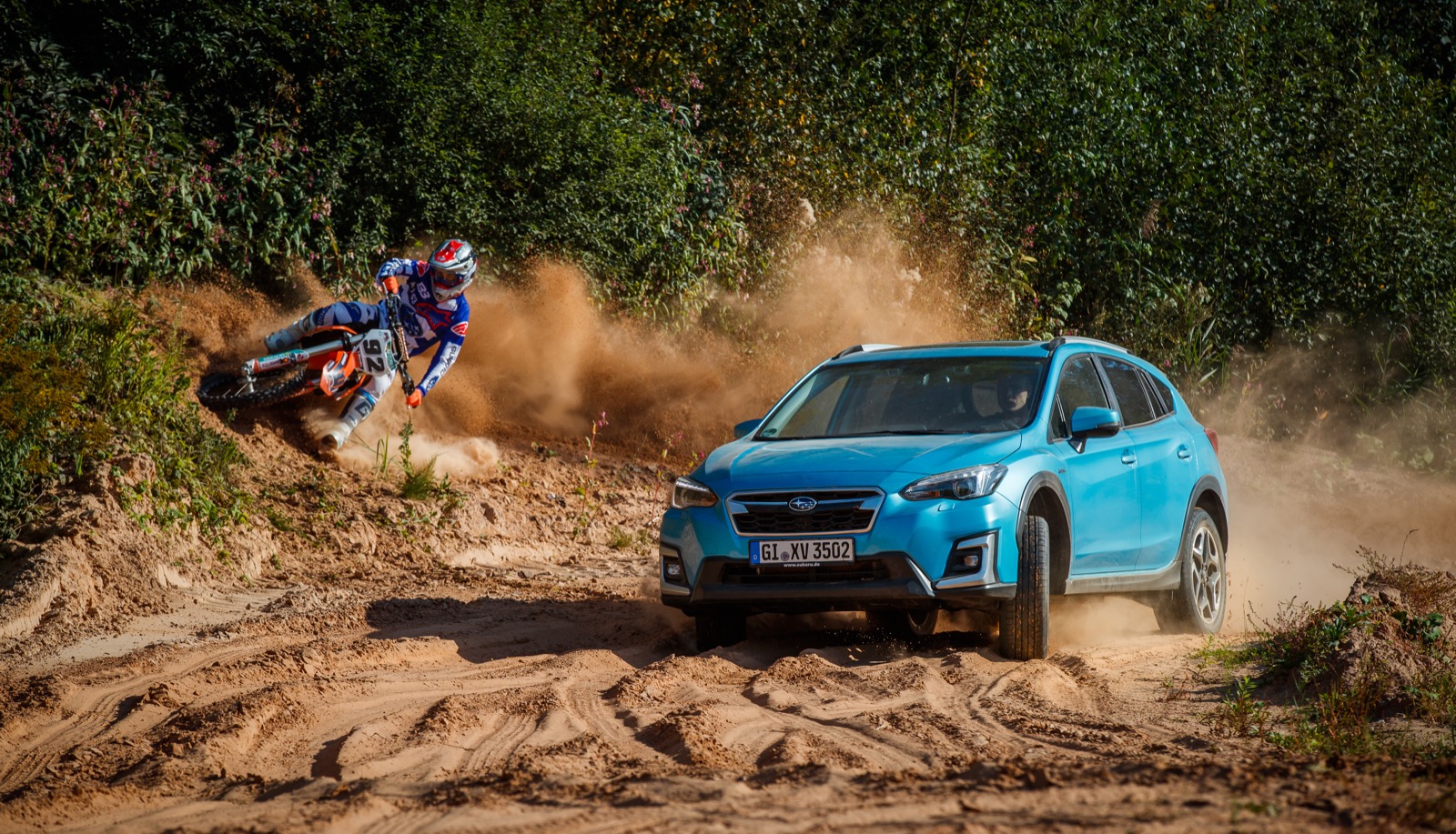
The new Subaru XV Eco Hybrid is the second hybrid model from the brand after the Forester, joining the interesting Bi-Fuel LPG range of Subaru, creating a broad offer with the ECO label from the DGT.
After the road test of the Subaru Forester Eco Hybrid, we now take the wheel of the second electrified version of the Subaru range, the new Subaru XV Eco Hybrid. A model, the XV, that is very important for the Japanese brand.
In Spain, for example, the XV is the best-selling Subaru in the range, having already reached 8,000 units since its launch in 2012. Worldwide, the Subaru XV has accumulated more than 1.2 million units sold around the world, more than 100,000 of them in Europe.
And as in the case of the Forester, we can already say that in the Subaru XV the hybridisation has not meant losing an ounce of the dynamic qualities of the compact crossover. Neither on tarmac nor off it, where the Subaru XV performs better than any of the SUVs that on paper would look more prepared for the countryside.
We will look at it in more detail later, although the video is quite revealing.
https://youtu.be/d7-BrO_r5k4
What changes in the Subaru XV Eco Hybrid
The hybrid version of this second generation of the Subaru XV joins the ones already on sale: the 1.6 petrol and the interesting version of the latter adapted to run on LPG. Here you can read our road test of the Subaru XV Bi-Fuel LPG.
Externally there are some changes that identify the hybrid variant, beyond the ECO-HYBRID logos. They are small details, but they are there. On the bodywork, a silver ring on the headlights, the grille with a black finish and metal surround, the housings of the LED fog lights also with a metallic finish, and new roof rails in silver and black, plus the black rear spoiler.
Inside, in addition to the extra screens in the upper display with the information on the hybrid system, the instrumentation receives a blue background. Here there is also an eye-catching bronze colour on the decorative inserts of the dashboard, and the top-of-the-range version includes two-tone leather upholstery.
The e-BOXER hybrid technology of the Subaru XV
The Subaru XV ECO Hybrid uses the same e-BOXER technology as the Forester. It is not a mild-hybrid system; it is a genuine hybrid, in which the electric motor assists the combustion engine, but can also drive the wheels on its own at low speed in certain driving situations. In the case of the Subaru XV it does so for up to about 2 km and at speeds of up to 40 km/h, provided the power demanded from the accelerator does not exceed what the electric motor can generate; it engages and disengages via a clutch.
The combustion engine is the 2.0 flat-four petrol with direct injection. It has variable valve timing on intake and exhaust, and has been redesigned to suit the hybridisation, with improvements aimed at reducing friction and increasing reliability. The timing is by chain, maintenance-free. It includes an optimised EGR and a petrol particulate filter.
The electric motor, with 12.3 kW of power (about 18 CV) and capable of producing 66 Nm of torque, is integrated into the Lineartronic CVT continuously variable gearbox. The automatic gearbox, which also receives adjustments and improvements, now includes programming to simulate 7 gears, selectable via the steering-wheel paddles, instead of six.
From here, the power generated by the electric motor, the petrol engine, or both working together is transmitted to all four wheels through the Subaru all-wheel drive system.
A self-charging hybrid
The electric motor, which also works as a generator to recover energy during deceleration or braking, is powered by a 0.6 kWh high-voltage battery operating at 118 volts. The battery recharges itself on the move through momentum, when braking or, if necessary because the level drops a lot, also using the combustion engine.
This battery is housed under the boot floor, in a central position. The boot loses about 35 litres, leaving a capacity of 340 litres, with regular and usable shapes. With the rear seats folded it reaches 765 litres, and nearly 1,200 using the height up to the roof.
A notable feature of the XV is that the engine bay houses two conventional 12-volt batteries, one for the electrical system itself, and another to assist the start-stop system and thus “relieve” the high-voltage system battery of work, which benefits its longevity.
On the road with the hybrid Subaru XV
As is usual with hybrid cars, the Subaru XV drives just like a conventional automatic car. The system always starts off at low speed in EV mode. From there, it combines both motors in the pursuit of maximum efficiency and the best performance.
To do so, the electric motor “helps” the petrol engine with its thrust when accelerating, and regenerates energy when lifting off the accelerator or braking. The system’s power is 150 CV, with a maximum torque of 194 Nm, available at 4,000 rpm. Here the electric motor is an invaluable aid for an engine that has no turbocharger to push forcefully from low revs.
Not forgetting the “filter” that a continuously variable automatic gearbox represents, which is not as direct in transmitting power to the ground as a torque-converter automatic or a dual-clutch gearbox.
The Lineartronic CVT has improved greatly. But it remains smoother than quick or effective, even when used in manual mode to choose among one of the 7 fixed gears it simulates through software using the steering-wheel paddles. As well as this Subaru goes, one cannot help thinking what it would gain with a dual-clutch gearbox.
Be that as it may, the hybrid energy contribution allows the XV to reduce its homologated average consumption by around 11%, according to official figures. At the wheel you feel more smoothness and better throttle response, but you have to be “fine” in your driving so that the on-board computer does not record figures that do not match the “ECO” label the XV carries. On our test route we measured on the motorway an average between 8.5 and 9 l/100 km, which drops quickly as soon as you enter the city, where the hybrid system proves decisive.
It may seem a high figure, but let us remember that we are talking about a car with an automatic gearbox that is not the best when it comes to efficiency, and with permanently engaged all-wheel drive, not the switchable type.
As for dynamic behaviour, it is surprising how Subaru manages to make a car with such ground clearance and with suspensions prepared for genuine off-roading offer such a high level of efficacy, comfort and composure.
Off the tarmac: much more 4×4 than it looks
Contributing to this are the rigidity of the platform, the new variable-ratio steering (the ratio changes according to the steering angle), and the torque-vectoring system, which selectively brakes the inner wheels and reduces the engine torque reaching them, increasing that of the outer wheels, so the vehicle is more neutral when cornering.
But what truly changes your perspective when you test the Subaru XV is discovering what it is capable of doing off the tarmac.
Its TT angles are very favourable for a car that is more saloon than SUV: 18 degrees of approach angle, almost 29 of departure and 21.5 of breakover angle, with 220 mm of ground clearance. Of the Symmetrical All-Wheel-Drive system of the Subaru we will reveal little new here.
Like X-Mode – which, incidentally, has effective hill-descent control – it benefits from the advantages of e-BOXER technology, as the electric motor delivers practically instantaneous thrust. We carried out all kinds of tests with the Subaru XV, from an excursion over tracks and paths including steep slopes, loose-stone areas and some water crossings, to obstacles prepared for the occasion, with bridge crossings that pushed the suspension and traction system to the limit.
Only on the muddy track was the limit not set by the car, but by the tyres, which were 100% for tarmac use.
By the way, another feature that users of a car of this type will appreciate is the capacity to tow a trailer. Something that is already becoming common in hybrid cars, but was not easy to find not long ago. The Subaru XV can tow up to 1,270 kg.
Prices, equipment and discounts of the hybrid Subaru XV
Two trim versions are offered by Subaru for the XV Eco Hybrid: Sport Plus and Executive Plus. These are the prices, including the 2,000 euro discount offered by the brand, independently of any additional discount linked to financing:
- Subaru XV 2.0 Hybrid Sport Plus: 30,500 euros
- Subaru XV 2.0 Hybrid Executive Plus: 32,500 euros
For reference, the Subaru XV with the 1.6 CVT LPG engine of 115 CV, which is the most affordable Subaru XV with the ECO label, is available from 24,100 euros in Sport trim, and from 24,500 euros in Sport Plus. That is a 7,000 euro difference with the hybrid at equal equipment.
The Sport Plus version already includes the complete Subaru EyeSight safety package, standard across the range. It also has a very generous specification: directional LED headlights, 18-inch alloy wheels, dual-zone climate control with voice control, rain and light sensors, heated front seats, 8″ multimedia system and rear camera.
Above that, at a surcharge of 2,000 euros, the Executive Plus adds an electric sunroof, two-tone leather upholstery, electric driver’s seat, blind-spot warning, rear cross-traffic detection and keyless entry with push-button start.
Subaru XV Eco Hybrid image gallery


 Peugeot E-208 GTi: a battery-powered toy that revives the spirit of the 1980s sports cars
 New Lexus ES: luxury grows and goes electric
 First contact with the Dacia Sandero Hybrid 155: power and efficiency from €19,890
Comentarios cerrados