2CV Citroen Electric Cars Urban
The Citroën 2CV is back with a fully electric propulsion system
 Javier Cantagalli
26 May 2026
2 min.
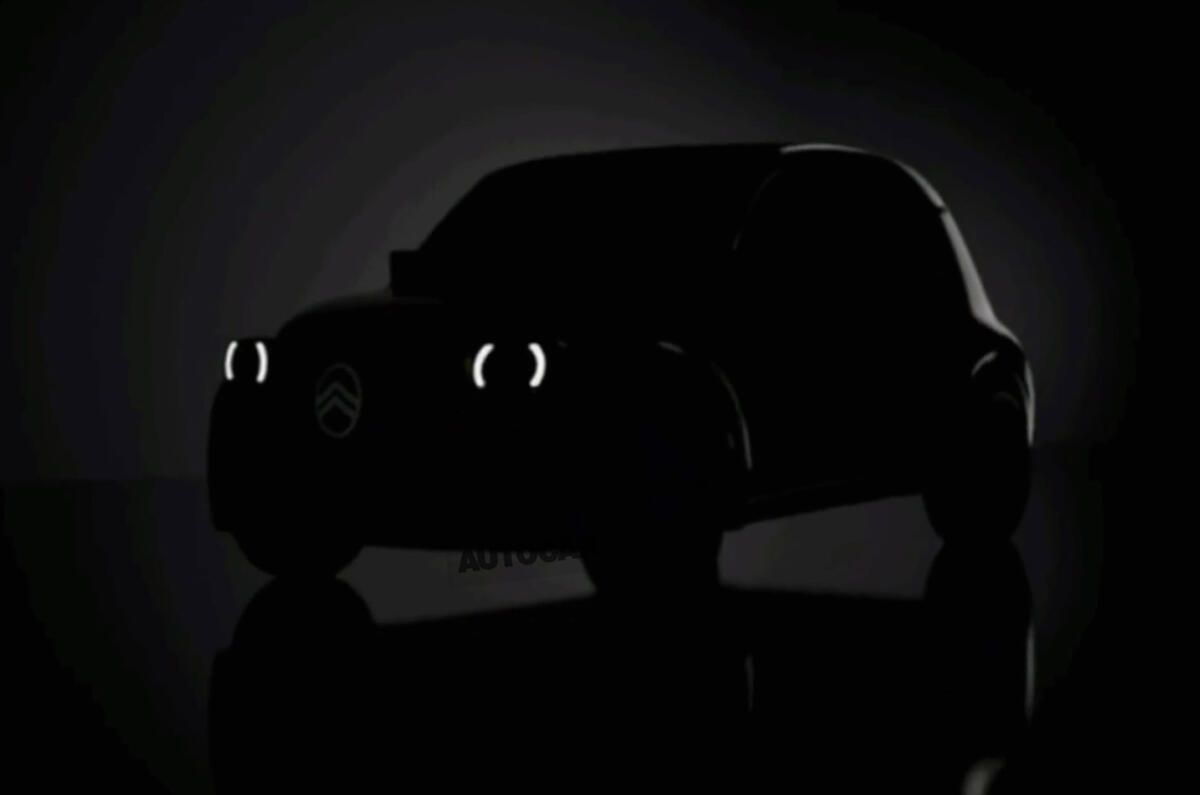
The new 2CV will reach the market in 2028; but much earlier, in October of this year, the French manufacturer is expected to unveil a first prototype close to the production model.
Citroën has just announced that its next affordable electric vehicle aimed at urban use will be a modern reinterpretation of the legendary 2CV, the model that became the signature of the French country after the Second World War.
The new 2CV will stand out mainly for its extremely affordable price, at around 15,000 euros before applying any kind of incentive or public aid. Citroën says it will manage to sell it at this competitive price while keeping its production in Europe, and has even indicated which plant will be in charge of its production: the Stellantis Italian factory in Pomigliano d’Arco, the same one where the FIAT Panda is assembled.
Everything points to the new 2CV entering the new M1E category of the European Union, equivalent to Japanese kei cars, which imposes a length limit of 4.2 metres. Although, unlike in Japan, there is no width restriction.
With everything necessary but with some concessions
Despite its compact size and low-cost approach, this vehicle will scrupulously comply with European safety regulations, including as part of its equipment airbags, traction control and some advanced driver assistance systems. It will be cheaper than the current ë-C3, which is already manufactured in Europe and measures less than 4.2 metres, but the latter costs around 23,000 euros. Quite far off, therefore, in price from the roughly 15,000 euros you will have to pay for a new 2CV.
“Icons generate emotion and reconnect brands with people. Today, one of them is about to return. Yes, the 2CV is coming back”
.
The new 2CV will look surprisingly sporty, with widened wheel arches and a more aggressive stance than expected, while keeping rounded proportions and a large glazed cabin. It will share its platform with a sister version under the FIAT brand, although with a completely different design.
It is expected, however, that the entry-level version of the range will be very austere in order to meet the price target. It will probably have a battery of around 20 kWh, possibly LFP chemistry, power below 100 CV and simple solutions such as manual windows. The use of Chinese technology and components is not ruled out, taking advantage of Stellantis’ alliances with manufacturers from this Asian country, such as Leapmotor.


 Peugeot E-208 GTi: a battery-powered toy that revives the spirit of the 1980s sports cars
 New Lexus ES: luxury grows and goes electric
 First contact with the Dacia Sandero Hybrid 155: power and efficiency from €19,890
Deja un comentario