Charger Dodge Electric Cars Muscle cars
The Dodge Charger Daytona with solid-state battery will hit the roads in 2026
 Javier Cantagalli
25 October 2024
2 min.
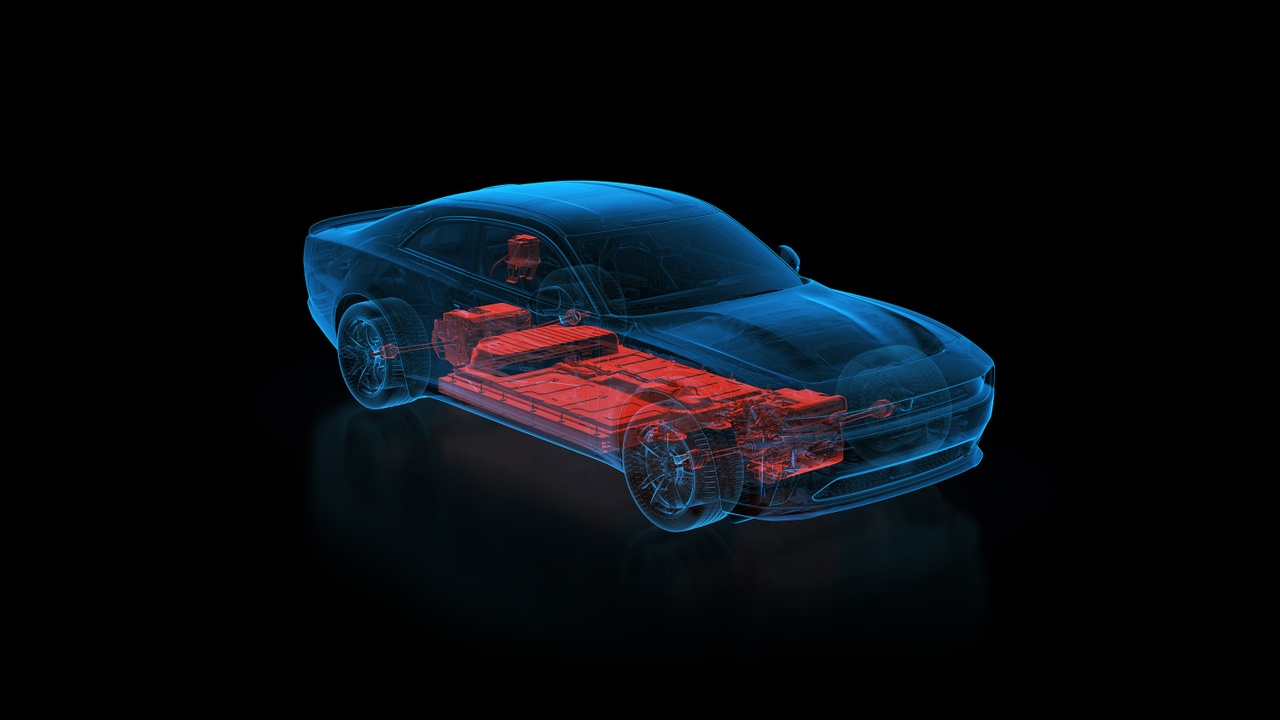
The Dodge Charger Daytona with Factorial Energy’s solid-state battery represents an intriguing fusion of future technology with the legacy of American muscle cars.
Stellantis, in collaboration with Factorial Energy, a US company working on the development of solid-state battery technology, plans to launch a demonstration fleet of the Dodge Charger Daytona with this type of battery in 2026. This initiative stems from the existing collaboration framework between the two companies, which began in 2021 when Stellantis invested 75 million dollars in Factorial Energy alongside Mercedes-Benz.
Stellantis’ aim with this initiative is to validate Factorial Energy’s technology by observing its performance in real-world driving conditions. That said, it is important to point out that the fact that a limited series of units of the Dodge Charger Daytona with solid-state battery will reach the streets is far from a mass commercial launch of electric vehicles with this battery technology.
The Dodge Charger Daytona, presented as an electric muscle car built on the STLA Large platform, will show the advantages and disadvantages, if there are any, of using this battery technology in the electric vehicles of the future.
A different electric
The conventional, series-production Charger Daytona will be built at Stellantis’ Canadian plant in Windsor, Ontario. Production will start with the two-door model and, from mid-2025, the four-door variant will also begin rolling off the plant’s assembly line. Although the Charger Daytona has already been officially presented, its full technical specifications are still not known at this time.
The choice of the Charger Daytona for this initiative has not been accidental, since the STLA Large platform is the most suitable for implementing solid-state batteries. Factorial Energy will supply cells based on its proprietary FEST technology, which promises, among other advantages, a significantly higher energy density than the conventional cells used in electric vehicles today.
Finally, it should be noted that the collaboration between Mercedes-Benz and Factorial Energy is also moving forward steadily. As we already told you here at HighMotor, both companies recently presented a progress update on the development status of a solid-state battery whose market launch is planned for the end of this decade.
Throughout this time, Factorial Energy has also expanded its partner network beyond Stellantis and Mercedes-Benz, including South Korea’s Hyundai Motor Company. The company has also opened a development and production facility near Boston, which has become the largest solid-state battery production line in the entire United States.
 Peugeot E-208 GTi: a battery-powered toy that revives the spirit of the 1980s sports cars
 New Lexus ES: luxury grows and goes electric
 First contact with the Dacia Sandero Hybrid 155: power and efficiency from €19,890
Deja un comentario